Sharm El Sheikh vs Marsa Alam: The Honest Red Sea Comparison Nobody in the Travel Industry Wants to Give You
04/08/2026
I have salt water in my ears more often than not. Over the better part of two decades of diving, guiding, and simply living out of a duffel bag between Sinai and the southern Red Sea coast, I've lost count of how many times someone has cornered me at a dive shop counter, phone in hand, asking the same question: "Sharm El Sheikh or Marsa Alam — which one should I actually book?"
It's a fair question, and it deserves a fair answer — not the kind you get from a resort's marketing page, and not the kind you get from a forum comment written by someone who visited once in 2011 and never went back. This guide is my attempt at giving you the real picture: the numbers, the trade-offs, the small details that only show up once you've had sand in your dive boots in both places.
I'll say this upfront so there's no confusion: neither destination is objectively "better." Anyone who tells you otherwise is usually selling you a package to one of them. Sharm El Sheikh and Marsa Alam are two different personalities wearing the same Red Sea coastline, and the right one for you depends entirely on what you're chasing — nightlife or silence, a five-minute reef entry or a boat ride into the wild, a city with an airport in its backyard or a frontier town where the desert still runs the show.
Let's get into it, with the actual figures, not vague impressions.
Quick-Glance Comparison Table
Before the long version, here's the short one. Bookmark this if you're short on time.
| Category |
Sharm El Sheikh |
Marsa Alam |
| Location |
Southern tip of the Sinai Peninsula |
Southern Red Sea coast, Eastern Desert |
| Distance from Cairo (road) |
≈ 490–500 km, about 5 hours 50 minutes by car |
≈ 737–741 km, about 8 hours by car |
| Flight time from Cairo |
About 1 hour |
About 1 hour 25 minutes (limited weekly frequency) |
| Local airport |
Sharm El Sheikh International Airport (SSH) |
Marsa Alam International Airport (RMF), ~60 km north of town |
| Flagship marine protected area |
Ras Mohammed National Park — 480 km², established 1983 |
Wadi El Gemal National Park — roughly 7,450 km² (about 4,770 km² land, 2,100 km² sea), established 2003 |
| Signature dive site |
SS Thistlegorm wreck, max depth ~30 m |
Elphinstone Reef, roughly 12 km offshore |
| Best known for |
Reef density, wreck diving, nightlife, resort infrastructure |
Dugongs, dolphins, uncrowded reefs, eco-tourism |
| Crowd level on reefs |
Higher — one of the busiest dive regions on Earth |
Noticeably lower, especially on shore-entry sites |
| Nightlife |
Extensive — Naama Bay, Soho Square, bars, clubs |
Minimal — early nights, quiet resort strips |
| Best for |
First-timers, mixed groups, wreck divers, party-and-beach travelers |
Serious divers, snorkelers, couples, wildlife lovers, digital detox seekers |
Now let's unpack every one of those rows, because a table never tells the whole story — and this decision is worth more than a skim.
Geography First: Why the Map Explains Almost Everything
If you only remember one sentence from this article, make it this one: the entire personality difference between these two towns comes down to distance from Cairo, and distance from each other.
Sharm El Sheikh sits at the very southern tip of the Sinai Peninsula, wedged between the Gulf of Suez and the Gulf of Aqaba. It's roughly 490–500 kilometers from Cairo by road — a drive of around five hours and fifty minutes — and a direct flight covers that same corridor in about an hour, since the air distance between the two cities' airports is only around 376 kilometers. That proximity to the capital, plus decades of infrastructure investment, is precisely why Sharm grew into Egypt's flagship international resort town, with a dense strip of hotels, an international airport handling scheduled and charter flights from across Europe, and a downtown built entirely around tourism.
Marsa Alam is a different animal. It sits much further south along the Red Sea coast, roughly 737–741 kilometers from Cairo by road — a journey that stretches past eight hours by car. Its own international airport (RMF) is about 60 kilometers north of the town itself, and while EgyptAir runs a direct connection to Cairo, it's not a daily flight — historically closer to four departures a week, timed around 1 hour and 25 minutes in the air. Marsa Alam is, quite literally, geographically closer to the Sudanese border, Mecca, and the ruins of Upper Egypt than it is to Alexandria. That isolation isn't a flaw. It's the entire reason its reefs stayed as wild as they did for as long as they did.
So before you even think about coral or currents, ask yourself a practical question: are you the kind of traveler who wants an airport gate to a beach chair in under an hour, or are you willing to trade travel time for a place that still feels a little bit undiscovered?
The Diving Debate: Where the Real Argument Lives
This is the section everyone actually came here for, so let's not dance around it.
Sharm El Sheikh: density, variety, and one legendary wreck
Sharm's advantage has always been concentration. Within a short boat ride you have access to Ras Mohammed National Park, the Strait of Tiran, and — for many divers, the crown jewel of the entire northern Red Sea — the SS Thistlegorm, a WWII-era British cargo ship sitting at a maximum depth of around 30 meters, its holds still packed with motorcycles, rifles, and railway wagons frozen in time. You don't need advanced certification to dive most of Sharm's classic sites, and the sheer number of dive centers, day boats, and liveaboards means that even a same-week booking is usually possible. Add in barracuda schools, nudibranchs, coral gardens, and sheer drop-off walls, and it's easy to see why generations of divers cut their teeth here.
The trade-off is traffic. Sharm is, without exaggeration, one of the busiest dive regions on the planet. On a peak-season morning at Ras Mohammed, you may share a mooring line with a dozen other boats. That doesn't make the diving bad — it makes it managed, structured, and occasionally crowded in a way that a solitude-seeker will notice immediately.
Marsa Alam: fewer boats, wilder water, and the dugong factor
Marsa Alam built its reputation on the opposite promise: space. Its dive sites — Elphinstone Reef, Daedalus Reef, the shore-entry bays of Abu Dabbab and Marsa Mubarak, and Shaab Samadai (commonly called Dolphin House) — sit further from any major population center, and that remoteness has helped keep the coral in noticeably better condition, with less breakage and less diver pressure than the busier northern sites.
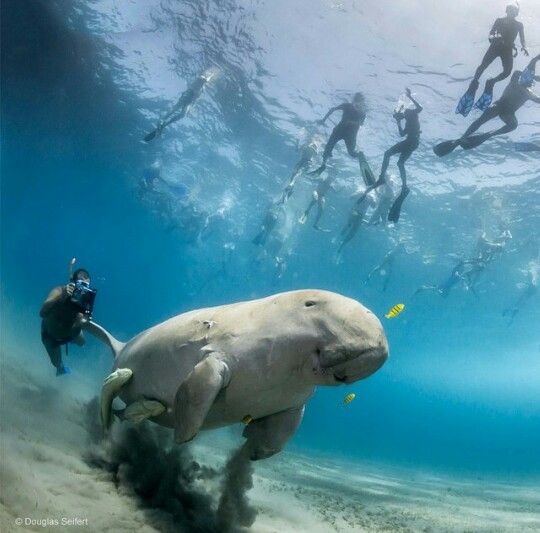
Elphinstone is the headline act: a torpedo-shaped offshore reef roughly 12 kilometers out to sea, known for oceanic whitetip sharks, dramatic drop-offs, and visibility regularly cited between 20 and 40 meters. It's also honestly rated intermediate-to-advanced, since the currents can be strong and the exposure is real — this isn't a lazy afternoon drift for a brand-new Open Water diver. But Marsa Alam isn't only about adrenaline. Abu Dabbab and Marsa Mubarak are gentle, shallow, seagrass-lined bays where dugongs — the Red Sea's real-life "sea cows" — graze in full view of snorkelers who never even need a tank. If you've ever wanted to snorkel beside a dugong or a green turtle without a wetsuit and without a queue of boats, this stretch of coast is genuinely one of the best places on the planet to try.
The honest verdict on diving
If your week is built around ticking off one iconic wreck, diving with a mixed group of certified and uncertified friends, or maximizing the number of different sites in a single trip, Sharm wins on logistics and variety. If your priority is fewer bubbles from other divers, healthier coral, and realistic chances of dugong or oceanic whitetip encounters, Marsa Alam wins on substance. Divers who do ten-plus dives in a week consistently report Marsa Alam feels less congested on the water, while Sharm delivers more site variety within a shorter day-boat radius.
Marine Protected Areas: Two Very Different National Parks
Numbers help cut through marketing language, so here they are.
Ras Mohammed National Park, at the southern tip of Sinai near Sharm El Sheikh, was declared Egypt's first national park in 1983, originally covering around 97 square kilometers before being expanded to its current 480 square kilometers, including the waters around Tiran and Sanafir islands. It's credited with some of the most pristine, sharply defined fringing reefs anywhere in the northern Red Sea, and its narrow continental shelf — only 15 to 30 kilometers wide in this part of the Gulf of Aqaba — concentrates a huge diversity of marine life into a relatively compact area.
Wadi El Gemal National Park, south of Marsa Alam, is a different scale entirely. Established in 2003, it spans roughly 7,450 square kilometers in total — around 4,770 square kilometers of land and 2,100 square kilometers of marine territory, according to figures documented on Wikipedia. Inside its boundaries: over 450 recorded species of coral, more than 1,200 species of fish, five islands that serve as breeding grounds for migratory birds, and some of the largest mangrove stands on the entire Red Sea coast. It is also one of the very few places in Egypt, alongside Ras Mohammed, that protects both a terrestrial desert ecosystem and a marine one under a single designation.
In short: Ras Mohammed is a smaller, denser, more heavily visited jewel box. Wadi El Gemal is a sprawling wilderness that most travelers barely scratch the surface of in a single trip.
Climate and Best Time to Visit
Both regions share the same broad Red Sea desert climate — hot, dry, and sunny for the vast majority of the year — but there are real seasonal differences worth knowing before you commit to dates.
- Peak diving conditions: Both destinations are diveable year-round, but April–June and September–November are generally considered the sweet spot for both — warm water, manageable air temperatures, and (in Marsa Alam especially) calmer wind conditions for reaching offshore sites like Elphinstone and Daedalus.
- Summer (July–August): Air temperatures in both towns regularly climb past 38–40°C. Marsa Alam, being further south and more exposed to desert heat with less surrounding urban shade, can feel even more intense on land — though the water itself stays warm and diveable.
- Winter (December–February): This is when the two destinations diverge more sharply. Sharm El Sheikh's position at the mouth of the Gulf of Aqaba means winter winds can pick up and occasionally disrupt boat schedules to Tiran and the outer reefs. Marsa Alam can also see wind-driven chop affecting access to exposed sites like Elphinstone, so if wreck- or drift-diving is your main goal, shoulder-season bookings (spring or autumn) tend to be the safer bet in both towns.
- Water temperature: Expect roughly 22–24°C in the coolest winter months and up to 28–30°C at the height of summer in both locations — warm enough for a 3mm wetsuit most of the year, though many divers in January and February prefer a 5mm or a shorty-plus-hood combination.
Cost, Accommodation, and Value for Money
This is where purchase decisions actually get made, so let's talk numbers and structure rather than vague "cheap vs expensive" claims.
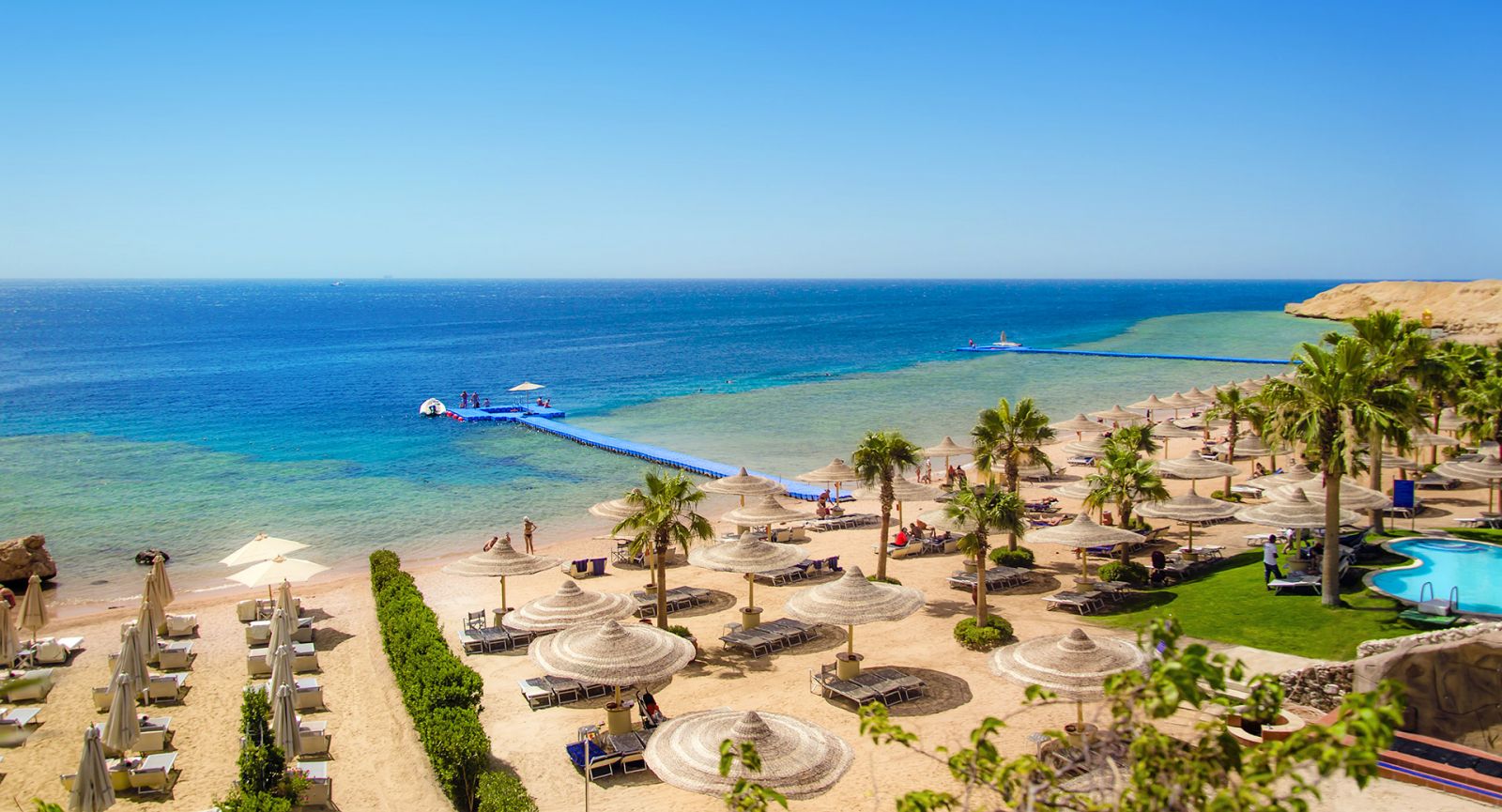
Sharm El Sheikh has by far the larger and more diverse hotel market — from budget dive-focused guesthouses in the older parts of town to sprawling five-star, all-inclusive resort complexes along Naama Bay and Nabq. That scale creates genuine price competition: last-minute deals, package-holiday discounts from European charter operators, and a wide spread of price points from backpacker-friendly to luxury. If you're comparing "cheapest Red Sea all-inclusive holiday" options, Sharm's sheer inventory usually gives you more room to negotiate a good rate, especially outside July–August and the Christmas/New Year peak.
Marsa Alam operates on a smaller, more specialized inventory — largely dive-resort and eco-lodge style properties, many of them beachfront with direct house-reef access. Because there are fewer beds overall and much of the demand comes from committed divers booking dive packages (boat trips, Nitrox, guide fees) rather than pure beach tourism, per-night accommodation prices can sit close to or even above equivalent Sharm properties in peak dive season, even though the destination "feels" quieter and more remote. What you're paying for is proximity to the reef and lower diver density, not a discount.
Getting there also affects your total trip cost. Flights to Sharm El Sheikh are more frequent and more competitively priced from most international hubs, given the shorter route and higher overall traffic. Flights to Marsa Alam are less frequent, and depending on your origin, you may end up connecting through Cairo or Hurghada — worth factoring into your total budget and travel time before you compare headline hotel rates.
Bottom line for travelers with high booking intent: if you're comparing "best value Red Sea package holiday," start your search with Sharm El Sheikh flight-and-hotel bundles, particularly shoulder season. If you're specifically comparing "best liveaboard or dive resort deal for Elphinstone and Daedalus," expect to pay a premium for Marsa Alam's smaller, more specialized supply — and book your dive package and flights well in advance, since the limited flight frequency sells out faster than you'd expect.
Nightlife, Family Travel, and the "Vibe" Question
Sharm El Sheikh has an actual nightlife scene — Naama Bay's promenade, Soho Square with its ice rink and dancing fountains, beach clubs, and a concentration of restaurants and bars that runs well past midnight in high season. For groups, bachelor/bachelorette trips, or families who want kids' clubs, water parks, and a wide choice of evening entertainment without leaving the resort strip, Sharm's infrastructure is simply more built out.
Marsa Alam, by contrast, goes to sleep early. Most resorts sit isolated along a long stretch of coastline with real distances between them, and the evening routine tends to be dinner, a walk along the beach, and bed before a 6 a.m. dive boat departure. That's not a downside if you're there for the reef and the silence — for many divers, it's precisely the point. But if "vibrant nightlife" or "lots of restaurant choice within walking distance" is on your must-have list, Marsa Alam will disappoint you, and no amount of marketing copy changes that reality.
For honeymooners and couples specifically: Marsa Alam's quieter, more secluded resorts and dramatic desert-meets-sea scenery have made it an increasingly popular pick for travelers who want privacy and a slower pace, while Sharm remains the stronger choice for couples who still want some evening buzz and a broader restaurant scene within reach.
Accessibility for Beginners vs. Experienced Divers
If you're a brand-new diver — think your first Discover Scuba dive or your first Open Water certification — Sharm's broader spread of shallow, sheltered, low-current sites gives instructors more flexibility to scale a course around your comfort level, and the sheer number of PADI and SSI centers means better price competition on certification courses.
If you're arriving with an Advanced Open Water card or higher, and your bucket list includes drift-diving a genuinely wild offshore reef with a realistic shot at oceanic whitetip sharks, Marsa Alam's Elphinstone and Daedalus reefs are widely regarded — by instructors, not brochures — as some of the most rewarding advanced dives in the entire Red Sea.
Which One Should You Actually Book? A Traveler-Type Breakdown
- First-time visitor to Egypt, non-diver or beginner diver, traveling with a mixed group: Sharm El Sheikh. The infrastructure, flight frequency, and range of easy activities reduce friction for a group with different interests and skill levels.
- Serious diver chasing sharks, dugongs, and uncrowded reefs: Marsa Alam. Book your flights and dive package early given limited weekly connections.
- Family with young children: Sharm El Sheikh, for the water parks, kids' clubs, and shorter, more predictable travel time from Cairo.
- Couple wanting a quiet, slow-paced, nature-focused escape: Marsa Alam.
- Wreck-diving enthusiast: Sharm El Sheikh, specifically for the Thistlegorm.
- Snorkeler who wants to swim with a dugong without a boat charter: Marsa Alam, at Abu Dabbab or Marsa Mubarak.
- Budget-conscious traveler comparing all-inclusive package prices: Sharm El Sheikh generally offers more competitive package pricing due to higher hotel and flight supply.
- Traveler who wants both: Genuinely consider a split-stay. Many divers now fly into Cairo, spend the first half of their trip in Sharm for the wrecks and reef variety, then transfer south for a few quieter days in Marsa Alam. It costs more in transfer time, but it's the only way to get the full, honest picture of what the Red Sea actually offers.
Getting Around Once You Land
Logistics matter more than most travel articles admit, so a quick word on what actually happens after you clear passport control.
In Sharm El Sheikh, the airport sits close to the main hotel strips of Naama Bay, Nabq Bay, and Sharks Bay — most resort transfers run 20 to 40 minutes, taxis are plentiful, and once you're based at a hotel, day-boat pickups are usually arranged directly from your resort's private jetty or a short shuttle ride away. You genuinely can land, check in, and be in the water the same afternoon.
In Marsa Alam, the airport is roughly 60 kilometers north of the town itself, and most resorts are spread out along a long, sparsely populated coastal road rather than clustered together. Transfer times to individual hotels can run anywhere from 30 minutes to well over an hour depending on how far south your resort sits. This isn't a complaint — it's simply the trade-off for the isolation that keeps the reefs so quiet — but it's worth building into your first-day expectations rather than being caught off guard by a long, dusty desert drive after a flight.
A Word on Reef Etiquette and Why It Matters More in One Place Than the Other
Something I tell every diver before their first splash in either location: your fins are the single biggest threat to the reef you came to see. In Sharm El Sheikh, decades of high visitor volume mean the margin for error is thinner — a careless kick against a coral head in a heavily dived site like Ras Mohammed has a cumulative effect that a healthier, less-visited reef can absorb more easily. Buoyancy control isn't optional here; it's the difference between a reef that survives another decade of tourism and one that doesn't.
In Marsa Alam, the stakes are arguably even higher, precisely because the reefs are in such good condition. Wadi El Gemal's seagrass beds, in particular, are the dugong's entire food source — anchoring a boat carelessly, or crowding an animal for a photo, does measurable damage in a place with far fewer rangers and far more fragile, undisturbed habitat. If you snorkel with a dugong here, keep your distance, don't chase it, and let the encounter happen on the animal's terms. Responsible operators will brief you on this before you even get in the water — if yours doesn't, that's worth noting.
What I'd Tell a Friend Booking Tomorrow
If a friend called me tonight and said "I'm booking flights tomorrow, just tell me where to go," I'd ask two questions before answering: how many dives do you have logged, and how many nights out do you actually want on this trip? Everything else — budget, season, group size — tends to sort itself out once those two answers are clear. A newly certified diver traveling with non-diving friends who want beach clubs and a boat party on night three belongs in Sharm. A diver with forty-plus logged dives who wants to come home with a photo of an oceanic whitetip and doesn't care that dinner is the same three restaurants all week belongs in Marsa Alam. It really is that simple once you strip away the marketing.
Frequently Asked Questions
Is Marsa Alam better than Sharm El Sheikh for diving? It depends on your certification level and what you're chasing. Marsa Alam generally offers less crowded reefs, better-preserved coral, and stronger odds of dugong and shark encounters at sites like Elphinstone. Sharm El Sheikh offers greater site variety within a shorter boat radius, easier beginner-friendly conditions, and access to the SS Thistlegorm wreck, which has no real equivalent further south.
How far is Marsa Alam from Sharm El Sheikh, and can I visit both on one trip? They are on opposite ends of the Red Sea coastline, separated by hundreds of kilometers of desert and sea, with no quick direct road link between them. Most travelers who want to see both fly back through Cairo, or take a combination of a domestic flight and a private transfer. It's possible, but plan an extra travel day rather than trying to do it as a same-day hop.
Which is cheaper, Sharm El Sheikh or Marsa Alam? Sharm El Sheikh generally offers cheaper and more frequent flight options, plus a wider spread of hotel price points due to its much larger tourism infrastructure. Marsa Alam's smaller, more specialized dive-resort market can carry similar or higher per-night rates in peak season, despite the destination's quieter, less commercial feel.
Is Sharm El Sheikh or Marsa Alam better for beginners who have never dived before? Sharm El Sheikh. It has more dive centers, more competitively priced beginner courses, and a wider range of shallow, sheltered sites suited to a first Discover Scuba experience or an Open Water certification.
Can you see dugongs in Sharm El Sheikh? Dugong sightings are occasionally reported in the wider Red Sea, but Marsa Alam's shallow seagrass bays — particularly Abu Dabbab and Marsa Mubarak — are by far the more reliable and famous location for dugong encounters, snorkeling or diving.
What is the best time of year to visit Sharm El Sheikh or Marsa Alam? April through June and September through November tend to offer the best balance of warm water, comfortable air temperatures, and calmer boat conditions in both destinations. Peak summer (July–August) brings intense heat, while winter (December–February) can bring stronger winds that occasionally affect boat access to outer reefs in both locations.
Is Marsa Alam safe and easy to reach for solo travelers? Marsa Alam is generally considered safe for tourists, but its remoteness means fewer flight options and longer transfer times from Cairo compared to Sharm El Sheikh. Solo travelers should book dive packages and airport transfers in advance, since the town has far less walk-up tourism infrastructure than Sharm.
Which destination has better nightlife, Sharm El Sheikh or Marsa Alam? Sharm El Sheikh, without question. Areas like Naama Bay and Soho Square offer bars, restaurants, and evening entertainment that Marsa Alam simply doesn't try to replicate — Marsa Alam's identity is built around early nights and early dive-boat departures.
Do I need a visa to visit either destination in Egypt? Visa requirements depend on your nationality and are the same regardless of which Red Sea town you're visiting, since both fall under Egyptian entry regulations. Check current requirements with Egypt's official consular services or your airline before booking, as policies can change.
Is the coral reef healthier in Marsa Alam or Sharm El Sheikh? Divers and marine researchers consistently note that Marsa Alam's reefs show less visible stress and breakage due to lower diver traffic and its more remote location, while Sharm El Sheikh's reefs — though still spectacular and protected within Ras Mohammed National Park — carry more visible wear from decades of high visitor volume.
The Real Answer
If you made it this far hoping for a single winner, I'm going to disappoint you the same way I disappoint every diver who asks me in person: there isn't one. Sharm El Sheikh is the Red Sea's confident, busy, endlessly convenient front door — the place that will hand you a legendary wreck dive, a lively evening, and a flight home the same day if you need it. Marsa Alam is the quieter room further down the hall, the one that makes you work a little harder to get there and rewards you with a dugong drifting past your mask in water so clear it barely feels real.
Choose based on who you are on this particular trip, not on which name shows up more often in someone else's photos. Book early, check the season, and either way — you're about to spend a week in one of the most extraordinary stretches of coral reef left on the planet. That part, at least, isn't up for debate.
Sources and further reading: Ras Muhammad National Park — Wikipedia; Wadi El Gemal National Park — Wikipedia; The State of Ras Mohammed National Park — Convention on Biological Diversity (CBD.int); Ras Mohammed National Park — IUCN Green List; Distance Cairo–Sharm El Sheikh — Air Miles Calculator; Travel from Marsa Alam to Cairo.

 Ukrainian