Family Nile Cruise Egypt 2026: Complete Guide for Parents, Safety, Prices & Best Itineraries
27/07/2026
My daughter was seven the first time she stood on the sun deck of a Nile cruise ship and watched a felucca sail glide past a water buffalo drinking at the riverbank. She didn't say anything for almost a full minute — which, if you've ever traveled with a seven-year-old, you know is its own kind of miracle. Somewhere between Luxor and Aswan, the Nile does that to kids. It does it to their parents too.
I've spent the better part of fifteen years researching, writing about, and personally sailing the Nile with families of every shape: toddlers in tow, sullen teenagers who "didn't want to come," multigenerational trips with grandparents who'd dreamed of Egypt their whole lives. If you're weighing whether a family Nile cruise in Egypt is worth the money, the jet lag, and the logistics, I want to answer that honestly — with real numbers, real comparisons, and the safety details nobody tells you until you're already on the plane.
This guide covers everything: whether a Nile river cruise is actually safe for children in 2026, how to pick between a 3-night, 4-night, or 7-night itinerary, what a family-friendly Nile cruise package really costs per person, which cabins and ships work best for kids, and the questions parents ask most before they book. Grab a coffee. This is the long version, because your family's trip deserves more than a listicle.
Why Families Keep Choosing the Nile Over Anywhere Else
Here's the thing that surprises first-time visitors: a Nile cruise isn't really a "cruise" in the Caribbean sense. There's no rock climbing wall, no midnight buffet the size of a football field. What you get instead is something better for kids — a slow, unhurried unspooling of one of the most visually dramatic landscapes on Earth, with a new 3,000-year-old temple practically every day, and none of the packing-unpacking exhaustion of a typical multi-city itinerary.
That last point matters more than most parents expect going in. On a standard land tour of Egypt, you might change hotels four or five times in ten days. On a Nile cruise, you unpack once. Your floating hotel carries you, your kids, and all your luggage from Luxor to Aswan (or the reverse) while you sleep, so the "travel days" that usually wreck a family vacation simply disappear.
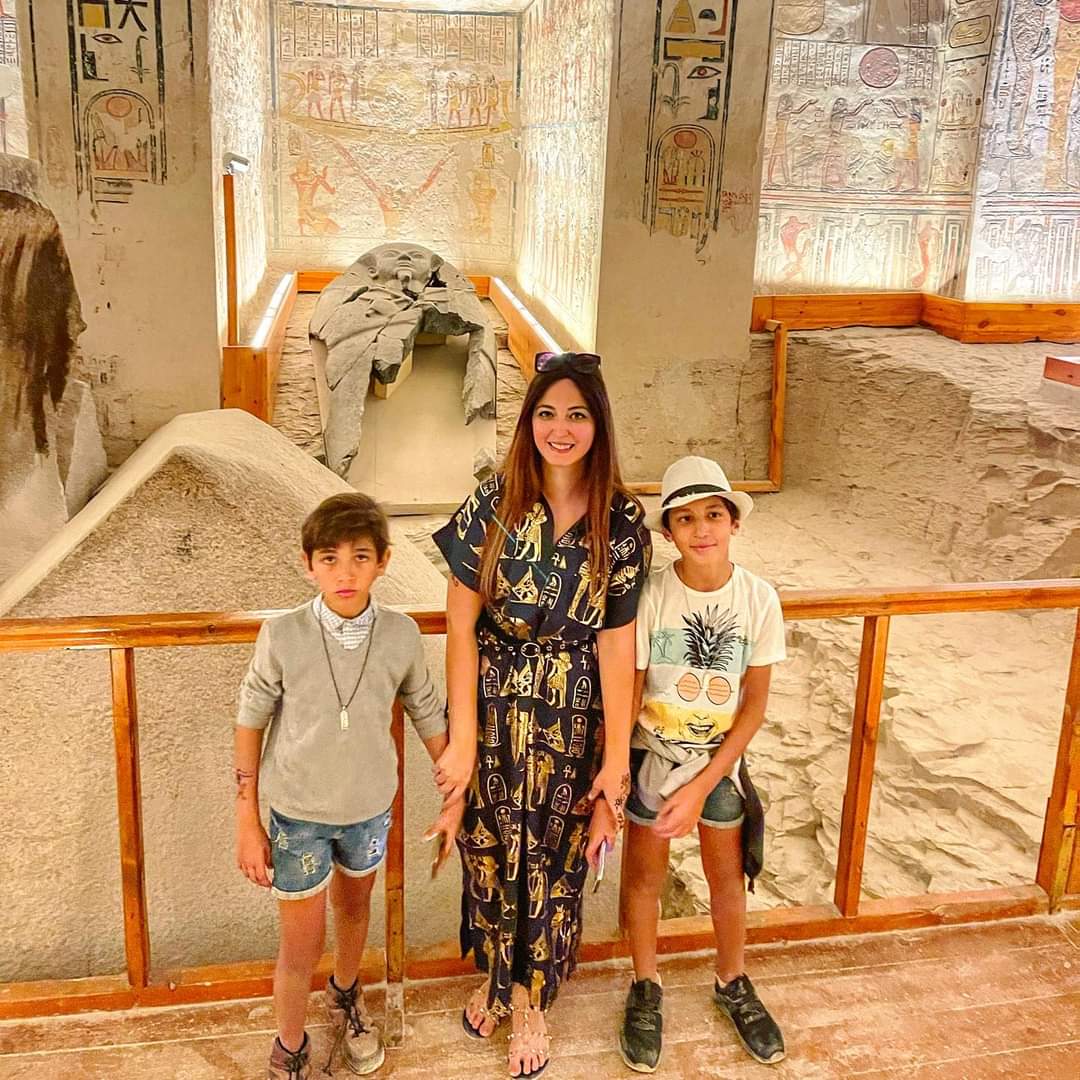
There's also the bonding factor, which sounds like a marketing line until you've actually watched it happen. Egyptology is inherently a subject kids respond to — mummies, pharaohs, curses, gold, hidden tombs. A Nile cruise turns a school textbook chapter into something your child can touch. Standing inside the Great Hypostyle Hall at Karnak Temple, dwarfed by columns taller than a six-story building, does something that no screen ever will.
Is a Nile Cruise Actually Safe for Kids in 2026? Here's What the Data Says
Let's deal with the question every parent asks before anything else, because it's the right question to ask.
According to the U.S. State Department's current travel advisory, Egypt sits at <cite index="3-1">a Level 2 advisory, which means travelers are advised to exercise increased caution rather than avoid travel altogether</cite>. That's the same tier assigned to countries like France, Germany, and the United Kingdom — not a red flag, but a reminder to stay aware. Independent travel-risk trackers currently place Egypt's composite safety score around <cite index="4-1">48 out of 100, a "moderate risk" rating that most travelers navigate comfortably with normal preparation</cite>.
What does that mean in practice for the specific route your family will actually take? <cite index="1-1">Cairo, Luxor, Aswan, Alexandria, Hurghada, and Sharm El-Sheikh continue to welcome millions of visitors each year</cite> — and Luxor-to-Aswan, the classic Nile cruise corridor, is the most heavily traveled tourist route in the entire country, patrolled and monitored accordingly. The areas that advisories actually warn against — the Northern Sinai and the western border near Libya — are hundreds of miles from any cruise itinerary and nowhere near where your ship will dock.
Health and hygiene, not security, is the more realistic thing to plan around. The State Department's own guidance notes that <cite index="3-1">tap water is not safe to drink in many areas, though it is generally safe to eat freshly cooked food in hotels and on Nile cruise boats and in popular restaurants</cite> — which is genuinely reassuring, since cruise ships prepare food in controlled onboard kitchens rather than street stalls. The CDC's Yellow Book, the reference U.S. clinicians use for international travel, confirms that <cite index="8-1">travelers affected by traveler's diarrhea should hydrate and can consider antimotility medication</cite> — sensible, unremarkable advice, and one more reason to pack the same over-the-counter kit you'd bring on any international family trip.
On vaccinations, <cite index="1-1">no vaccinations are legally required to enter Egypt, though the CDC recommends considering hepatitis A and typhoid coverage given food and water exposure</cite>. The CDC also currently flags a <cite index="5-1">global measles advisory, recommending that all international travelers be current on their MMR vaccine</cite> — worth a quick check with your pediatrician regardless of destination. Talk to your family doctor or a travel clinic 4–6 weeks before departure; that's standard practice for any international trip with children, not something unique to Egypt.
My honest, unsponsored take after years of doing this: a well-run Nile cruise is one of the more controlled travel environments you can put a family into, not less. Your child is on a private vessel with security screening at every gangway, surrounded by staff whose entire job is hospitality, sailing between UNESCO-protected sites that see organized tourism every single day of the year.
The Nile River, By the Numbers
A little context makes the trip land differently for kids (and, honestly, for you too):
- The Nile stretches roughly 6,650 kilometers (4,130 miles), making it one of the two longest rivers on the planet.
- The classic family cruise route between Luxor and Aswan covers about 220 kilometers (137 miles) — a comfortable, unhurried 3–4 night sail.
- Egypt is home to seven UNESCO World Heritage Sites, and the Nile Valley cruise corridor alone touches at least three of them.
- <cite index="17-1">The Nubian Monuments from Abu Simbel to Philae were physically rescued from rising floodwaters through an international UNESCO campaign that ran from 1960 to 1980</cite> — a true story of engineering heroism kids find genuinely thrilling once you explain it: entire temples, cut into blocks and reassembled on higher ground, stone by numbered stone.
- The Valley of the Kings alone <cite index="12-1">contains 63 discovered tombs, including Tutankhamun's, with archaeologists still uncovering new chambers today</cite> — a detail that turns a "boring museum walk" into an active treasure hunt in a child's imagination.
- <cite index="12-1">Cairo to Luxor spans 635 kilometers (395 miles)</cite>, typically covered by a short domestic flight or an overnight sleeper train — both of which, in my experience, kids find far more exciting than the actual destination at the other end.
Family Nile Cruise Options, Compared
Not every Nile cruise is built the same, and the differences matter enormously once children are involved. Here's how the main options stack up.
| Cruise Type |
Typical Length |
Ship Size |
Price Range (per adult) |
Best For |
| Standard river cruise ship |
3–7 nights |
60–120 cabins |
$70–$180/night |
Most families; pools, kids' menus, stabilized larger vessels |
| Luxury 5-star Nile cruiser |
4–7 nights |
40–90 cabins |
$200–$450/night |
Families wanting spa, premium dining, larger family suites |
| Dahabiya (small sailboat) |
3–5 nights |
6–12 cabins |
$150–$300/night |
Older kids/teens; intimate, quieter, fewer organized kids' activities |
| Day cruise / lunch cruise |
A few hours |
Varies |
$25–$60/person |
Families with only 1 day in Luxor or Aswan; toddlers with short attention spans |
| Cairo dinner cruise |
2–3 hours |
Large, stationary route on the river |
$30–$90/person |
Quick taste of the Nile without leaving Cairo |
A few observations from actually sailing on several of these with kids:
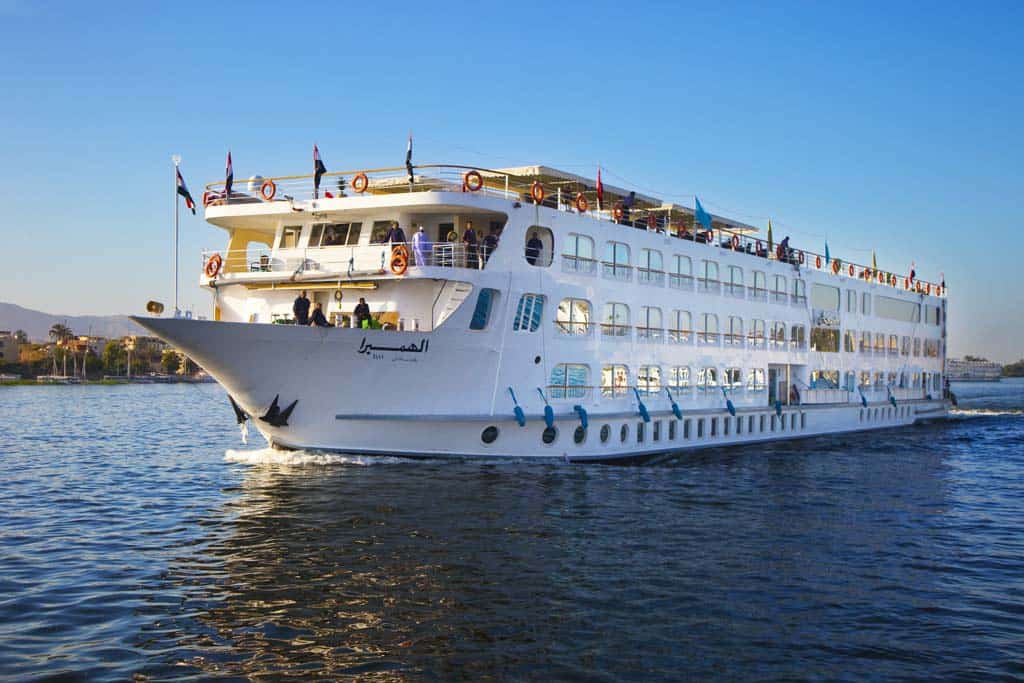
Standard river cruise ships are, for the vast majority of families, the sweet spot. They're large enough to have a real pool (a genuine lifesaver on a 40°C/104°F afternoon in Aswan), a kids' buffet line that isn't just hummus and rice, and enough stabilization that even choppier stretches near Esna Lock don't rattle little stomachs.
Dahabiyas — traditional twin-masted sailboats with a tiny handful of cabins — are gorgeous and quiet, and I'd recommend them without hesitation for a family with older teenagers or a couple traveling with one calm, book-loving child. But with more than one young kid, the lack of a pool and the smaller crew-to-guest ratio for supervision can make a 4-day sail feel long.
Day cruises and lunch cruises are the most underrated option for a specific type of family: those with a toddler or a child who has a short travel-fatigue threshold, or those bolting Luxor onto a broader two-week Egypt trip and simply don't have four spare nights.
Best Family-Friendly Nile Cruise Itineraries
3-Night Luxor to Aswan (or reverse)
The most popular option for a reason. It covers Luxor's East and West Banks (Karnak, Luxor Temple, Valley of the Kings), the Temple of Kom Ombo, and Aswan's Philae Temple and unfinished obelisk — all without exhausting anyone under age ten. This is my default recommendation for first-time family cruisers.
4-Night Luxor to Aswan
Adds a fuller day at Edfu's Temple of Horus and generally builds in more relaxed sea-day time — meaning more pool hours, which, if you're traveling with kids under eight, is not a minor detail.
7-Night Luxor to Aswan and Back (Round-Trip)
Ideal for families who want to add Abu Simbel by boat or optional excursion, plus extra downtime days. This is the itinerary I'd choose for a multigenerational trip, since it gives grandparents rest days that don't feel rushed.
Cairo + 3–4 Night Nile Cruise Combo (Most Popular Overall)
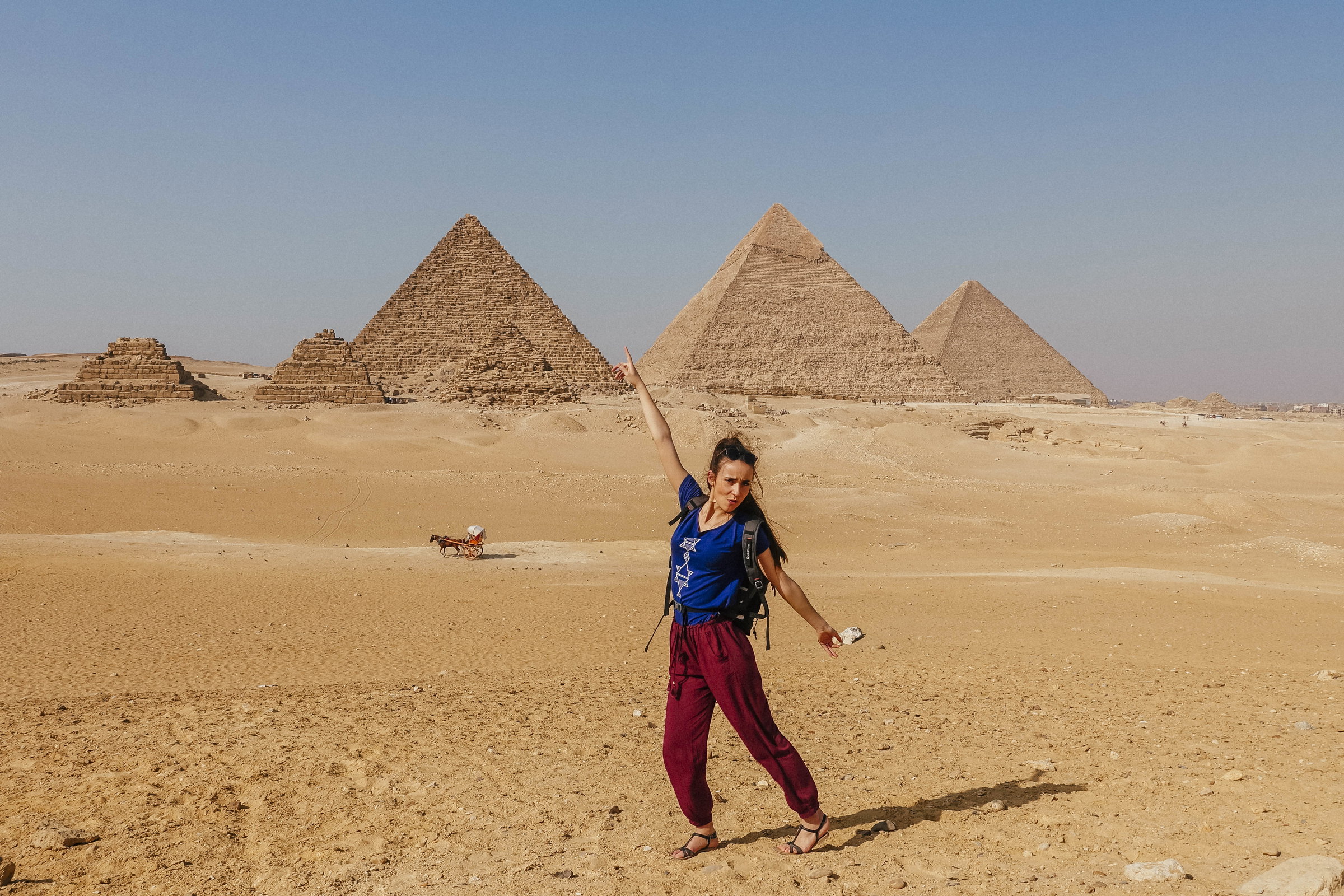
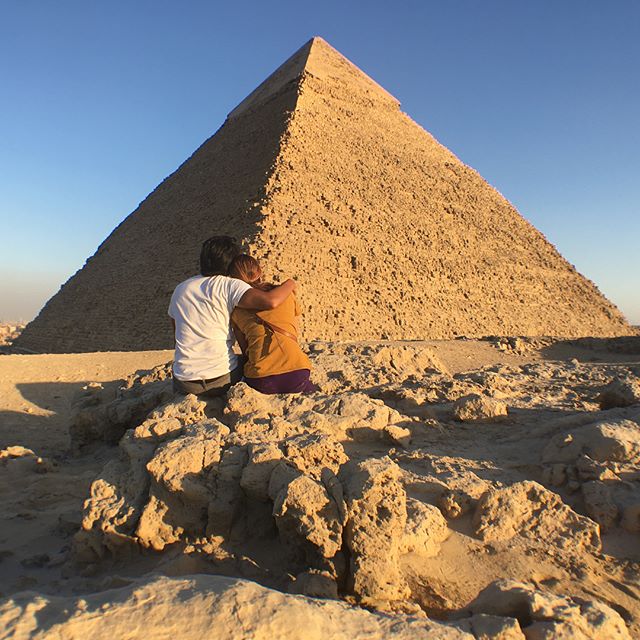
The classic "best of Egypt for families" package: 2–3 nights in Cairo for the Pyramids of Giza and the Egyptian Museum, a short flight or overnight train to Luxor, then 3–4 nights sailing to Aswan. Most all-inclusive family Nile cruise packages you'll find advertised online are built around exactly this structure — and it's the one I recommend most often to families booking their first trip to Egypt.
What a Family Nile Cruise Actually Costs in 2026
Budgeting is where most parents get stuck, so let's be specific rather than vague. Prices below reflect typical per-person, double-occupancy rates for a mid-range to upscale standard river cruise ship, cruise-only (excursions and flights often priced separately):
| Item |
Typical Cost (USD) |
| 4-night Nile cruise, standard ship, per adult |
$350–$700 |
| 4-night Nile cruise, luxury 5-star ship, per adult |
$800–$1,600 |
| Children under 6 sharing parents' cabin |
Often free or 25–50% of adult rate |
| Children 6–12 sharing parents' cabin |
Typically 50–75% of adult rate |
| Guided shore excursions (per stop) |
$15–$40/adult, often half-price for kids |
| Domestic flight Cairo–Luxor or Aswan–Cairo |
$80–$180 per person |
| Overnight sleeper train Cairo–Luxor (family cabin) |
$120–$250 for a 2-berth cabin |
| Entry visa (e-visa or visa on arrival) |
<cite index="1-1">$30 USD per person as of March 2026</cite> |
| Family cabin/suite upgrade |
+$50–$150/night |
A realistic mid-range budget for a family of four (two adults, two kids aged 6–12) doing a 3-night cruise plus 2 nights in Cairo, including flights within Egypt and daily excursions, tends to land between $2,800 and $5,500 total — not counting international airfare to Egypt. Luxury operators can push that well past $8,000. Budget day-cruise-only trips, by contrast, can be done for a few hundred dollars per family if you're already in Luxor or Aswan and just want the Nile experience without a multi-night commitment.
One money-saving reality worth knowing: shoulder-season sailing (October–November and February–April) routinely runs 20–35% cheaper than the December–January peak, with nearly identical weather quality — arguably the single best lever a budget-conscious family has.
Best Time of Year for a Family Nile Cruise
Egypt has essentially two seasons that matter for planning: bearable and brutal.
- October to April is the sweet spot — daytime highs in the comfortable 20s–low 30s °C (70s–low 90s °F), cool evenings, and manageable midday sun for kids on deck.
- December and January are peak season and the most crowded, with the best weather but the highest prices and busiest temple sites.
- May through September brings extreme heat, often exceeding 40°C (104°F) in Luxor and Aswan by midday. It's genuinely not recommended with young children — even adults find outdoor temple visits punishing by 11 a.m. If this is your only available window, book cruises with strong onboard pools and plan excursions for early morning or after 4 p.m.
Choosing the Right Cabin and Ship for Kids
A few practical, non-obvious things I always tell parents before they book:
- Book a lower-deck cabin for less motion, especially if anyone in the family gets queasy — though the Nile itself is remarkably calm compared to ocean cruising.
- Ask specifically about connecting or triple/quad cabins. Many standard double cabins are genuinely tight for a family of four; some ships offer connecting rooms, which is worth the extra cost for sanity alone.
- Confirm pool depth and supervision policy. Most Nile cruise pools are shallow "dip" pools rather than full swimming pools — lovely for cooling off, not built for swim laps, and rarely lifeguarded, so plan supervision accordingly.
- Check the shore excursion pace. Some itineraries schedule two temple visits before 10 a.m., which is ambitious for a five-year-old. Ask your operator or travel advisor for the daily excursion schedule before booking, not after.
- Look for ships with a genuine kids' menu, not just a smaller portion of the adult buffet. Larger, more established operators tend to do this better than smaller boutique ships.
Onboard Life: What Kids Actually Do All Day
This is the part parents underestimate. A day on a family Nile cruise typically looks like:
- Morning excursion (7:30–11:00 a.m.) to a temple or tomb site, timed early specifically to beat the heat.
- Return to the ship for lunch, usually a substantial buffet with international and Egyptian options.
- Free sailing time in the early afternoon — this is when the magic happens for kids: pool time, sun deck games, watching the riverbank scenery drift by, sometimes a galley tour or a simple onboard activity like henna painting or a "become a pharaoh" costume session that many ships run specifically for younger guests.
- Optional second excursion in the late afternoon when temperatures drop.
- Dinner, often followed by a themed evening — a galabeya (traditional dress) party is a near-universal Nile cruise tradition, and it is, without exception, the thing my own kids still bring up years later.
Packing List for a Family Nile Cruise
- Lightweight, breathable, modest clothing (temples and mosques expect shoulders and knees covered)
- Wide-brimmed sun hats for every family member — non-negotiable
- High-SPF, reef-safe sunscreen (reapply constantly; kids underestimate Egyptian sun intensity)
- A reusable water bottle each, refilled from the ship's purified water — never tap water, per <cite index="3-1">official guidance that tap water is not safe to drink in many areas of Egypt</cite>
- Comfortable closed-toe walking shoes for temple floors and uneven ancient stone
- A basic travel health kit: rehydration salts, anti-diarrheal medication, motion sickness tablets, any prescription medicine in original packaging with a copy of the prescription
- Portable hand sanitizer and wet wipes
- A dedicated "temple bag" for kids — water, snacks, a small notebook for a scavenger-hunt style hieroglyph hunt (genuinely keeps young kids engaged for hours)
- Power adapter (Egypt uses Type C/F plugs, 220V)
- Cash in small USD or EGP denominations for tipping — customary and expected throughout Egypt's tourism industry
Booking Smart: What to Look for in an All-Inclusive Family Nile Cruise Package
If you're comparing Nile cruise deals for families online, here's what separates a package worth booking from one that will nickel-and-dime you on day three:
- Confirm what "all-inclusive" actually includes. Some packages cover meals and soft drinks only; others include shore excursions, entry tickets, and gratuities. Ask explicitly — this single question can shift the real price by hundreds of dollars.
- Check the cancellation and reschedule policy. With kids, plans change; flexible-date bookings are worth a slightly higher upfront price.
- Read recent reviews specifically about family experience, not general reviews — a ship rated highly by retirees isn't automatically right for a family with a toddler.
- Ask about single-supplement and child-sharing policies before you book, since these vary enormously between operators and materially affect your total cost.
- Verify licensing. Reputable Nile cruise operators are registered with Egypt's Ministry of Tourism and Antiquities; ask for this if you're booking with a smaller or independent company.
Family Nile Cruise vs. Other Family-Friendly River Cruises
For families weighing Egypt against other river cruise destinations, here's how it actually compares:
| Destination |
Avg. cost/night (family cruise) |
Kid engagement factor |
Climate window |
Flight time from US East Coast |
| Nile River, Egypt |
$90–$220 |
Very high (pyramids, mummies, tombs) |
Oct–Apr ideal |
~11 hrs |
| Danube, Europe |
$150–$300 |
Moderate (castles, cities) |
Apr–Oct ideal |
~9 hrs |
| Mekong, Vietnam/Cambodia |
$100–$250 |
Moderate-high (floating markets, temples) |
Nov–Mar ideal |
~20+ hrs |
| Mississippi, USA |
$250–$450 |
Moderate (paddlewheel novelty) |
Apr–Oct ideal |
Domestic |
The Nile consistently wins on subject-matter appeal for children — there is simply no competing with ancient Egypt in a kid's imagination — while remaining one of the more affordable river cruise options worldwide.
Cultural Etiquette Tips for Traveling with Kids in Egypt
A little cultural preparation goes a long way toward making the trip smoother — and more respectful — for your family.
- Dress modestly at religious and archaeological sites. Shoulders and knees covered is the general rule for both adults and children when visiting temples, mosques, and monasteries. Lightweight linen or cotton layers work well in the heat while still meeting this standard.
- Ask before photographing local people, including vendors and site workers. It's a small courtesy that Egyptians consistently appreciate, and it's a good habit to model for kids.
- Bargaining is expected at markets, but not typically on cruise ships or in fixed-price shops. Turning it into a game — "let's see how low we can go" — tends to delight kids far more than it embarrasses them.
- Friday is the Muslim holy day, so some shops and services outside the main tourist areas may run on a different schedule. Cruise ships and major sites operate normally.
- Tipping (baksheesh) is deeply embedded in Egyptian tourism culture, from your cabin steward to your excursion guide to the guardian who shows you a hidden tomb painting off the main path. Budgeting roughly $10–$15 USD per day per family for incidental tips, on top of any pre-arranged gratuities, avoids awkward moments and is simply part of how the local economy around tourism functions.
- Kids are genuinely welcomed. Egyptian culture is warm toward children, and it's common for staff, guides, and even fellow travelers to go out of their way to make young visitors feel included — a detail that surprises a lot of first-time parents in the best possible way.
What Egyptology Experts Want Families to Know Before They Go
Site guides and archaeologists who work the Luxor–Aswan corridor year-round tend to repeat the same handful of pieces of advice to visiting families, and they're worth internalizing before you land:
- Go early or don't go at all. The single biggest factor in whether kids enjoy a temple visit is the temperature at the time you're standing in it. An 8 a.m. visit to Karnak feels like an adventure; the same site at 1 p.m. in July feels like a punishment.
- Hire a licensed Egyptologist guide, not just a driver. The difference between a child who's bored by "old rocks" and one who's captivated by a pharaoh's actual story usually comes down entirely to the storytelling quality of the guide standing next to them.
- Let kids touch what's allowed to be touched. Many sites permit hands-on contact with certain stones and columns (always confirm with your guide first). That tactile connection is often what makes ancient history click for a child in a way that reading about it never quite does.
- Build in "nothing" time. The temples are the headline, but unstructured deck time — spotting camels on the riverbank, waving at kids on passing feluccas — is frequently what children remember most fondly years later.
Frequently Asked Questions About Family Nile Cruises
Is a Nile cruise safe for children in 2026? Yes, for the vast majority of families. Egypt's main tourist corridor — Cairo, Luxor, and Aswan — sits under a Level 2 "exercise increased caution" advisory, the same tier as many popular European destinations, and cruise ships operate under regular security screening at every stop. The bigger practical concerns are sun exposure and food/water hygiene, both of which are easy to manage with basic precautions.
What is the minimum age for a Nile cruise? There's no official minimum age, and many operators welcome infants. That said, most experienced family travelers find ages 6 and up get the most out of the experience, since the temple visits involve walking, heat, and historical context that younger children may find harder to appreciate.
How many days should a family spend on a Nile cruise? For a first trip, 3–4 nights between Luxor and Aswan strikes the best balance — enough to see the major sites without overtiring young children. Families with more time or older kids often extend to 7 nights round-trip.
Do kids need vaccinations to travel to Egypt? No vaccinations are legally required for entry, but the CDC recommends discussing hepatitis A and typhoid protection with your pediatrician, along with confirming routine vaccines like MMR are current, given ongoing global measles activity.
Is the water on Nile cruise ships safe to drink? Ships typically provide purified or bottled water, and it's standard practice — and official guidance — to avoid tap water throughout Egypt, including brushing teeth with bottled water when possible.
How much does a family Nile cruise cost for 4 people? Expect roughly $2,800–$5,500 total for a mid-range 3–4 night cruise combined with a couple of nights in Cairo, for a family of four, excluding international flights. Luxury operators run considerably higher; budget day-cruise options can cost a few hundred dollars total.
Is it hot on a Nile cruise? It can be, especially May through September, when daytime highs regularly exceed 40°C (104°F). October through April is dramatically more comfortable and is what most family travel experts recommend.
Do Nile cruise ships have pools for kids? Most standard and luxury ships have a shallow onboard pool, ideal for cooling off between excursions, though they're generally not designed for serious swimming and are rarely staffed with a lifeguard, so adult supervision matters.
What should I pack for a child on a Nile cruise? Sun protection is priority one: a wide-brimmed hat, high-SPF sunscreen, and a refillable water bottle. Add comfortable closed-toe shoes for uneven temple floors, modest clothing for religious sites, and a small "explorer kit" — notebook, pencil, magnifying glass — to keep kids engaged during temple visits.
Are Nile cruises worth it compared to a land-only Egypt tour? For families specifically, yes — the single-unpack convenience, built-in kid downtime (pool, deck space), and the sheer density of UNESCO World Heritage sites accessible along the Luxor–Aswan corridor make it one of the most efficient and lowest-stress ways to see ancient Egypt with children in tow.
Final Thoughts: Booking the Trip Your Kids Will Talk About for Years
I've taken families down the Nile who arrived nervous — worried about safety, worried about the heat, worried their kids would be bored by "old rocks," as one memorably unimpressed nine-year-old put it before we'd even left Luxor. By day three, that same kid was the one begging to stay up late for the sound-and-light show at Philae Temple.
There's a reason this stretch of river has pulled travelers in for literal thousands of years. It isn't hype, and it isn't a sales pitch — it's just what happens when you put a curious kid in front of something genuinely, undeniably ancient and let it speak for itself.
If you're ready to book, start by nailing down your dates (shoulder season, if flexibility allows), pick between a 3-night and 7-night itinerary based on how much downtime your family actually needs, and ask any operator directly what's included before you commit. Do that, and the rest — the temples, the sunsets over the water, the galabeya party your kids will still be talking about at their own kids' dinner table someday — takes care of itself.
This guide was compiled from firsthand family travel experience along with current guidance from the U.S. State Department, the CDC's Travelers' Health program, and UNESCO's World Heritage Centre. Travel advisories and entry requirements change; always verify current details directly with official government sources before booking.

 Ukrainian