Luxor Travel Guide 2027: The Complete Insider Guide to Ancient Egypt's Open-Air Museum
31/07/2026
I still remember the exact moment Luxor stopped being a place on a map and became a place in my chest. It was 5:47 a.m., the sky over the East Bank was doing that deep indigo-to-rose-gold thing it only does in the desert, and forty hot air balloons were lifting off the West Bank all at once, drifting silently over the Valley of the Kings like something out of a dream you're embarrassed to admit you had. I'd been to Egypt three times before that morning. I thought I understood it. I didn't, not really, until Luxor.
That's the thing nobody tells you about planning a Luxor travel guide 2027 trip: the logistics matter, but they're not the point. The point is that you are about to walk through the front door of the largest open-air museum on Earth, a city that UNESCO recognizes as part of the Thebes World Heritage Site, where roughly one-third of the world's surviving ancient monuments sit within a 15-kilometer radius. No brochure prepares you for that ratio of history-per-square-mile. This guide will.
I've built this as the resource I wish someone had handed me before my first trip — real 2026/2027 pricing, real opening hours, real comparisons, and the mistakes I made so you don't have to repeat them. Bookmark it. You'll need it more than once.
Why Luxor, and Why Now, in 2027?
Let's talk numbers for a second, because they explain everything about why this destination is having a genuine moment. Egypt welcomed close to <cite index="28-1">19 million tourists in 2025, a 21 percent increase compared to 2024</cite>, according to figures released by the country's Ministry of Tourism and Antiquities. That growth rate <cite index="28-1">significantly outpaced global tourism growth trends</cite> tracked by UN Tourism. Strip out the beach resorts and the newly opened Grand Egyptian Museum, and Egypt's archaeological sites and museums alone <cite index="28-2">welcomed 18.6 million visitors in 2025, a 33.5 percent jump year-on-year</cite>.
Translation: Luxor is no longer a sleepy stop tacked onto a Cairo trip. It's the main event for a fast-growing wave of travelers, and that has real consequences for you as a planner — better flight connectivity, more hotel inventory, a fully cashless ticketing system at the monuments (more on that below), but also bigger crowds at peak hours if you don't time things right. This guide is built to help you beat that curve.
Getting to Luxor: Your Options, Compared
Most travelers arrive in Luxor one of three ways. Here's how they actually stack up.
| Method |
Duration |
Approx. Cost |
Best For |
| Flight from Cairo |
~1 hour |
From $80 one-way |
Time-strapped travelers, most popular option |
| Overnight sleeper train from Cairo |
~10 hours |
~$110 (private cabin) |
Budget romantics who want an experience, not just a transfer |
| Nile cruise from Aswan |
3–4 days |
Varies widely (see cruise section) |
Travelers who want the journey to be the destination |
Cairo to Luxor flights run <cite index="11-2">multiple times daily and take about one hour</cite>, with fares starting around $80 one-way depending on season and how far ahead you book — and this is where I'll say the quiet part loud: if you're searching "cheapest flights to Luxor 2027" or "best time to book Luxor flights," the sweet spot is 6–8 weeks out for shoulder season, and 3+ months out for the December–February peak. Book too late and you'll pay double.
If you're coming from Hurghada, it's roughly a 4-hour drive covering <cite index="11-2">290 kilometers</cite>. From Aswan, you're looking at <cite index="11-2">3 to 4 hours by car covering 220 kilometers, or a multi-night Nile cruise</cite> that ends in Luxor — genuinely one of the best ways to see Upper Egypt if you have the time.
Best Time to Visit Luxor in 2027: A Month-by-Month Reality Check
I'm going to be blunt here because too many "Luxor travel guide" articles are too polite about this: Luxor is a desert city, and its summer heat is not a joke. Here's the real climate picture so you can plan around it instead of getting blindsided.
| Month |
Avg. High |
Avg. Low |
Verdict |
| January |
23°C (73°F) |
5–9°C (41–48°F) |
Best conditions of the year |
| February |
25°C (77°F) |
~9°C (48°F) |
Excellent, slightly warmer |
| March–April |
29–34°C (85–93°F) |
Mild nights |
Good, warming fast |
| May |
38°C+ (100°F+) |
Warm |
Hot, thinning crowds |
| June–August |
Up to 41°C (106°F) |
23–26°C (74–79°F) |
Brutal midday heat, avoid outdoor sites after 11 a.m. |
| September–October |
34–37°C (93–99°F) |
Mild |
Still hot but improving |
| November–December |
24–29°C (75–85°F) |
7–9°C (44–48°F) |
Second-best window of the year |
Luxor's climate is classified as a hot desert (BWh) climate, and the numbers back up what locals will tell you outright: <cite index="18-1,18-2">average maximum daytime temperatures swing from a scorching 41°C (106°F) in July down to a genuinely pleasant 23°C (73°F) in January</cite>, and <cite index="18-2">January, February, November, and December are consistently dry and comfortable, ranging from roughly 23°C to 29°C</cite> with almost zero rain to worry about.
My honest take: if your dates are flexible at all, target December through February. You'll be walking around Karnak's Hypostyle Hall in a light jacket at sunrise instead of sweating through your shirt by 8 a.m. October and March are solid compromises if peak season pricing scares you off — and it should factor into your search if you're comparing "Luxor hotel deals winter vs summer," because winter rates run noticeably higher across the board.
Top Things to Do in Luxor: East Bank vs. West Bank
Luxor splits neatly into two worlds, separated by the Nile, and understanding this split is the single most useful mental model for planning your trip.
The East Bank is the city of the living — where ancient Thebans built their temples to the gods, and where modern Luxor's hotels, restaurants, and Corniche promenade sit today.
The West Bank is the city of the dead — the necropolis, where pharaohs were buried in hidden tombs beneath the desert cliffs, believing the setting sun each evening carried them into the afterlife.
Karnak Temple: The Big One
If you only see one thing in Luxor, most Egyptologists — myself included, after four visits — would point you here over even the Valley of the Kings. It's not close in terms of sheer scale.
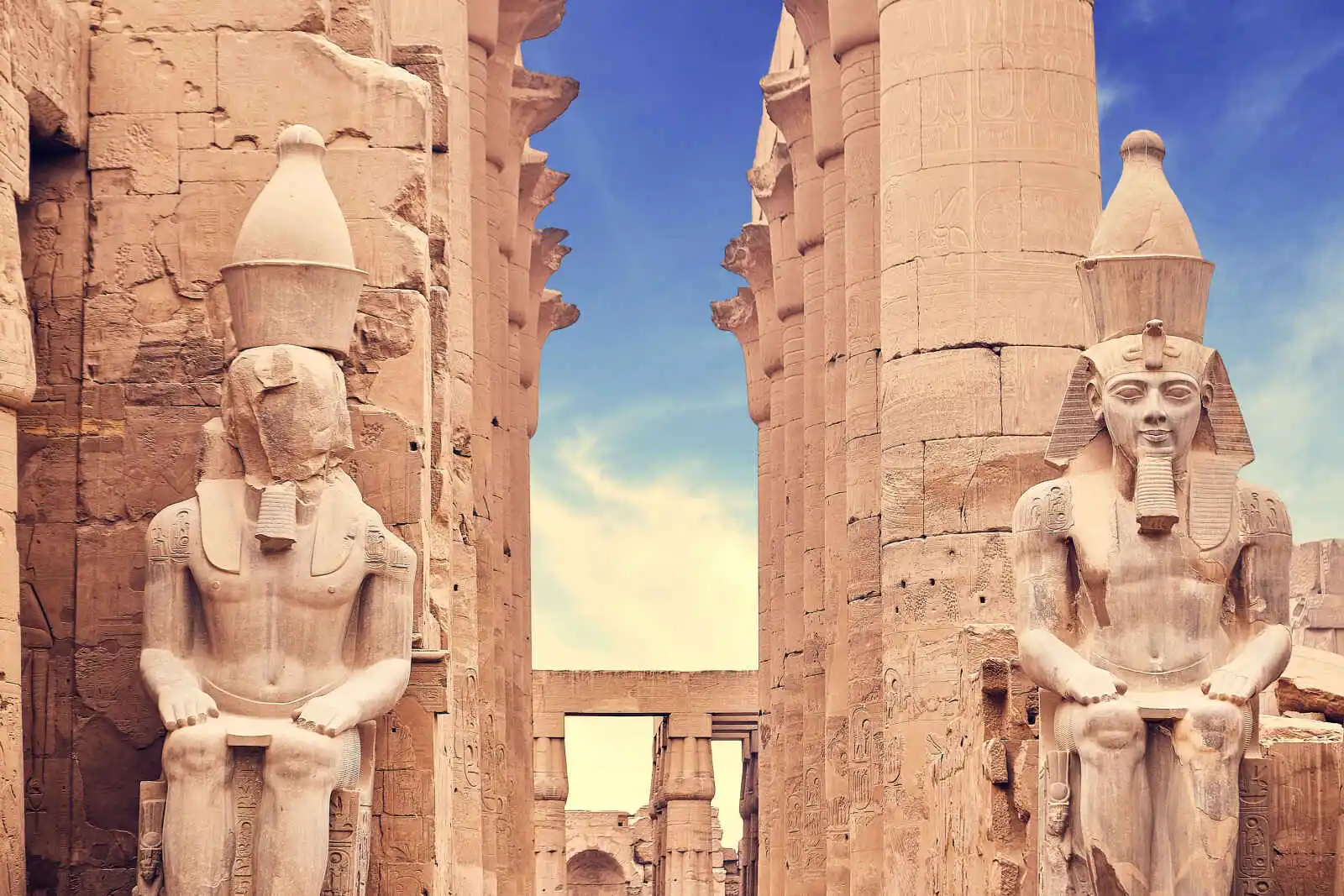
Construction at Karnak began around 2000 BC, and <cite index="10-1">more than 50 pharaohs contributed to its expansion over centuries</cite>, making it less a single temple than a layered timeline of Egyptian history you can physically walk through. The centerpiece is the Great Hypostyle Hall, where <cite index="10-1">134 colossal columns rise as high as 22 meters (72 feet)</cite> — stand under them at 6:15 a.m. before the tour buses arrive and you will feel genuinely, uncomfortably small in the best possible way.
- Entrance fee (2026–2027 planning estimate): ~600 EGP for foreign adults (roughly $12 USD), with significant discounts for students and Egyptian nationals
- Opening hours: 6:00 a.m.–5:30 p.m. (winter), extending to 6:00 p.m. in summer
- Sound and Light Show: three nightly showings, around 300 EGP per adult, roughly 75 minutes, narrated in rotating languages
- Recommended visit time: 2–3 hours minimum
Luxor Temple
Smaller than Karnak but arguably more romantic, especially lit up after dark. The two were once connected by a <cite index="10-1">3-kilometer avenue lined with ram-headed sphinxes</cite>, most of which has now been excavated and reopened to walk between the two sites.
Valley of the Kings: Where the Pharaohs Sleep
This is the site everyone's already pictured in their head, and it does not disappoint — but it does require you to understand a slightly counterintuitive ticketing system before you show up, or you'll waste time at the window like I did on my first visit.
Here's how it actually works. Your standard entrance ticket costs about 750 EGP (roughly $15 USD) and grants access to the valley plus your choice of three tombs from a rotating list of currently open sites — Egypt cycles which tombs are accessible for conservation reasons, so check the current list before you go. On a recent visit, the open rotation included Ramesses IV (KV2), Ramesses IX (KV6), and Ramesses III (KV11), among others — <cite index="3-1">all genuinely fascinating, well-preserved tombs</cite>.
Four tombs sit outside the standard ticket and require a separate, additional purchase:
| Tomb |
Extra Ticket Price (approx.) |
| Tutankhamun (KV62) |
~700 EGP (~$14) |
| Seti I (KV17) |
~2,000 EGP (~$40) |
| Ramesses V & VI (KV9) |
~220 EGP (~$5) |
| Ay |
~200 EGP (~$4) |
Is Seti I's tomb worth $40 on top of your base ticket? I've done both — skipped it once, paid once. My honest answer: if you have any real interest in Egyptian art, yes. It's widely considered the most beautifully decorated tomb in the entire valley, with vivid, near-complete color that most other tombs have lost to time and looting. If budget is tight, skip it guilt-free and spend that money on a private guide instead — the guide will teach you more than the walls alone ever could.
Important 2026–2027 update: Egypt's Ministry of Tourism has finalized a shift toward cashless ticketing at major sites. At the Valley of the Kings specifically, the ticket office does not accept EGP banknotes for entry. Buy your tickets in advance online, save the QR code, or bring a Visa/Mastercard with international transactions enabled — and call your bank 48 hours before you travel, because Egypt-based charges get flagged as fraud more often than you'd expect.
Temple of Hatshepsut and the Rest of the West Bank
- Temple of Hatshepsut (Deir el-Bahari): dramatic terraced architecture cut directly into the cliffs, built for Egypt's most successful female pharaoh. Best photographed in early morning light. Allow 45–60 minutes.
- Colossi of Memnon: two massive seated statues visible from the road — free, and worth a 15-minute stop.
- Medinet Habu: the mortuary temple of Ramesses III, with fewer crowds than Karnak and exceptionally preserved reliefs. Entrance around 220 EGP for foreign adults, 45–60 minutes.
- Valley of the Queens: burial ground of royal wives, including the celebrated tomb of Nefertari, ticketed separately.
- Deir el-Medina: the workmen's village where the artisans who carved the royal tombs actually lived — smaller crowds, some of the most vividly colored tomb paintings in Luxor.
The Sunrise Hot Air Balloon: Worth the Hype?
Yes. Unreservedly, yes — and I say that as someone who's generally allergic to "bucket list" tourist experiences. Balloons lift off before dawn, climb to roughly 450 meters (1,500 feet), and drift silently over the Valley of the Kings, the Temple of Hatshepsut, and the patchwork of sugarcane fields below. Expect to pay from around $65 for a shared sunrise flight, with private and premium combination packages running higher. Pickup from your hotel is standard, and you'll typically be back in time for breakfast, slightly stunned, slightly sunburned, completely converted.
Luxor vs. Cairo vs. Aswan: Which Deserves More of Your Time?
A question I get constantly when people are building a first Egypt itinerary. Here's the honest breakdown.
| Factor |
Luxor |
Cairo |
Aswan |
| Best for |
Ancient temples & tombs |
Pyramids, Grand Egyptian Museum, city energy |
Nubian culture, Nile scenery, Philae Temple |
| Density of monuments |
Extremely high |
High but spread across a huge city |
Moderate |
| Pace |
Slower, contemplative |
Fast, chaotic, exhilarating |
Relaxed |
| Ideal stay length |
3–4 days |
2–3 days |
2 days |
| Heat intensity |
Very high in summer |
High |
High, slightly less humid |
| Crowd levels (2027) |
Rising fast, book ahead |
Very high, especially at GEM |
Moderate |
If you can only pick two, most seasoned travelers pair Cairo with Luxor. If you have the time and budget, add Aswan and let a Nile cruise connect the two — it turns three separate flights into one seamless, scenic journey.
Where to Stay in Luxor: Budget, Mid-Range, and Luxury
Your accommodation choice in Luxor comes down to one geographic decision first: East Bank (city energy, walkable restaurants, Nile-view hotels) or West Bank (quieter, closer to the tombs, fewer tourists). Most first-timers should stay East Bank.
| Tier |
Nightly Price Range (USD) |
What You Get |
| Budget |
$20–45 |
Clean guesthouses, rooftop terraces, often family-run |
| Mid-range |
$60–130 |
4-star hotels, pools, Nile views, breakfast included |
| Luxury |
$180–500+ |
Historic 5-star properties, private balloon add-ons, spa access |
If you're searching "best Luxor hotels 2027" or "where to stay in Luxor for first time," prioritize properties within walking distance of the Corniche — the riverside promenade where evening life actually happens, and where you can watch feluccas drift past at sunset with a cold hibiscus tea in hand.
Nile Cruises: Luxor to Aswan Pricing and What to Expect
A 3–4 night Nile cruise between Luxor and Aswan is, in my opinion, the single best way to experience Upper Egypt if your schedule allows it. You wake up each morning at a new ancient site — Edfu, Kom Ombo, Philae — without ever packing a bag.
Budget cruise ships run from roughly $250–400 per person for a 3-night sailing including meals and basic shore excursions. Mid-range vessels with better cabins, pools, and included guided tours land in the $500–900 range. True luxury dahabiyas — smaller, traditional sailboats with far more intimate service and fewer passengers — start around $1,200 and climb well beyond that for multi-night charters. If you're comparing "Nile cruise Luxor to Aswan price 2027" options, book at least 2–3 months ahead for winter sailings; cabins on the well-reviewed ships sell out fast during peak season.
Daily Budget Breakdown: What Will Luxor Actually Cost You?
| Category |
Backpacker |
Mid-Range |
Luxury |
| Accommodation |
$20–35 |
$70–130 |
$250+ |
| Food |
$8–15 |
$20–40 |
$60+ |
| Site entrance fees |
$15–25 |
$25–40 |
$40–80 (with extra tombs) |
| Local transport |
$5–10 |
$15–25 |
$40+ (private driver) |
| Daily total |
~$50–85 |
~$130–235 |
~$390+ |
Compare that to a European city break and Luxor still comes out remarkably good value for the sheer historical density on offer — you're paying roughly the cost of a mid-range dinner in Paris for entry into one of the most significant temple complexes ever built.
What to Eat in Luxor: A Short, Opinionated Guide
Nobody books a Luxor trip for the food, and that's a shame, because Upper Egyptian cooking is genuinely underrated. Here's what to actually order.
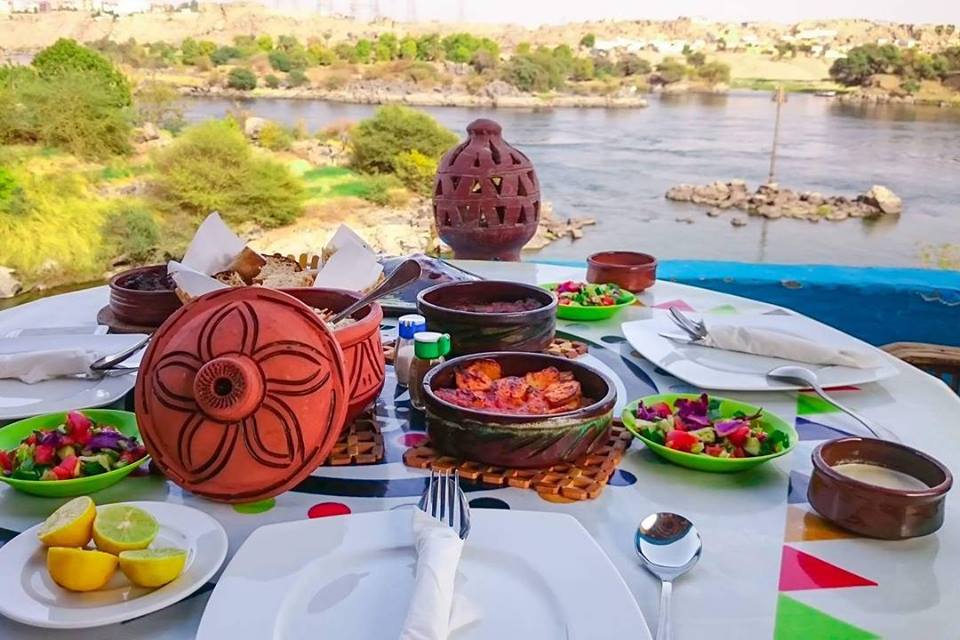
- Molokhia — a garlicky, jute-leaf stew usually served over rice with chicken or rabbit. Sounds strange, tastes incredible. Order it once and you'll understand why locals are obsessed.
- Ta'ameya — Egypt's version of falafel, made from fava beans instead of chickpeas, denser and greener than the Levantine version. Street stalls near the Luxor souk sell it fresh for pennies.
- Koshari — technically more of a Cairo staple, but every decent Luxor restaurant serves a version: lentils, rice, macaroni, crispy onions, and a tangy tomato-vinegar sauce. Cheap, filling, and completely addictive.
- Feteer meshaltet — a flaky, layered pastry, savory or sweet, that functions as breakfast, dessert, and everything in between.
- Hibiscus tea (karkade) — served hot or iced everywhere, and genuinely one of the best ways to cool down after a morning in the sun.
For sit-down dining, the East Bank Corniche has the highest concentration of restaurants with Nile views, and prices run noticeably higher than anywhere two streets back from the river. A full dinner with drinks runs $8–15 at a solid local spot, climbing to $25–45 at a hotel restaurant with a river-view terrace. My advice: eat lunch cheap and local, and save the splurge dinner for your last night, ideally watching the sun drop behind the West Bank hills where the pharaohs are buried — there's something quietly perfect about that view after a day spent inside their tombs.
Pre-Trip Booking Checklist
If you take nothing else from this guide, take this list. Print it, screenshot it, whatever gets it in front of you two weeks before departure.
- Book flights or train tickets to Luxor at least 6–8 weeks ahead for shoulder season, 3+ months for December–February
- Reserve your hotel on the East Bank if it's your first visit, and confirm it's within walking distance of the Corniche
- Pre-purchase Valley of the Kings and Karnak tickets online where possible to avoid gate delays under the cashless system
- Notify your bank of upcoming Egypt transactions to prevent card blocks
- Book your sunrise hot air balloon at least a few days ahead — the good operators sell out, especially in winter
- Line up a licensed Egyptologist guide in advance rather than negotiating with someone at the gate
- Pack for both extremes — sun protection for midday, a light layer for surprisingly cool desert evenings in winter
- Download an offline map of Luxor; mobile signal near the West Bank monuments can be unreliable
Practical Tips Nobody Puts in the Brochure
- Go cashless-ready. As of 2026, major sites including the Valley of the Kings no longer accept EGP banknotes at the ticket window. Buy tickets online in advance where possible, screenshot your QR code, and carry a backup card in case your primary one gets flagged.
- Dress for both heat and modesty. Loose, breathable, light-colored clothing that covers shoulders and knees works for temples, mosques, and the sun alike.
- Start early. Always. The difference between arriving at Karnak at 6:15 a.m. versus 10 a.m. is the difference between a nearly private experience and shuffling through crowds in blistering heat.
- Hire a licensed Egyptologist guide, even for half a day. The stone tells you nothing without context. A good guide turns "big old building" into "this is where Hatshepsut declared herself pharaoh in a country that had never had one." Expect to pay $35–80 for a half-day private guide, depending on group size.
- Unofficial "guides" at the Valley of the Kings will approach you. They're not accredited but often know the site well; agree on a price before you accept help, and expect to negotiate down significantly from any opening offer.
- Notify your bank before you travel. International card transactions from Egypt are frequently flagged as suspicious activity by US and EU banks.
Sample Luxor Itineraries
2-Day Essential Luxor
- Day 1 (East Bank): Sunrise at Karnak Temple → Luxor Museum → Luxor Temple at sunset
- Day 2 (West Bank): Sunrise hot air balloon → Valley of the Kings → Temple of Hatshepsut → Colossi of Memnon
4-Day Deep Dive
- Day 1: Karnak + Luxor Temple
- Day 2: Balloon ride + Valley of the Kings (with Seti I add-on) + Hatshepsut Temple
- Day 3: Medinet Habu + Deir el-Medina + Valley of the Queens (quieter, richly detailed sites most tourists skip)
- Day 4: Felucca sail at sunset, free morning to revisit whichever site moved you most
Common Mistakes First-Time Visitors Make
- Underestimating the heat. Trying to "power through" a full day of sightseeing in June is how trips end early. Front-load activity into early morning hours.
- Skipping advance ticket purchase. With the cashless system now standard, showing up without a plan can mean real delays at the gate.
- Booking the cheapest possible guide or tour with no reviews. Egypt tourism is booming, and quality varies enormously. Read recent reviews, not just star ratings.
- Trying to see everything in one day. Luxor rewards a slower pace. Three unrushed sites beat six rushed ones every time.
- Not budgeting for the "extra" tombs. The headline ticket price is not the full Valley of the Kings experience if Tutankhamun or Seti I are on your must-see list.
Frequently Asked Questions About Visiting Luxor in 2027
Is Luxor safe to visit in 2027? Yes. Luxor remains one of Egypt's most tourism-focused cities, with a heavy, visible security presence around all major sites. The broader surge in visitor numbers — nearly 19 million tourists nationwide in 2025 alone — reflects renewed international confidence in Egypt as a stable, well-managed destination.
How many days do you need in Luxor? Two days covers the essential highlights (Karnak, Luxor Temple, Valley of the Kings, Hatshepsut Temple). Three to four days lets you add Medinet Habu, Deir el-Medina, a felucca sunset sail, and time to simply absorb the place without rushing.
What is the best month to visit Luxor? January and February offer the most comfortable conditions, with highs around 23–25°C (73–77°F). November and December are a close second. Avoid June through August unless you're prepared for daytime highs above 40°C (104°F).
Do I need a guide at Luxor's temples? You don't need one, but you should want one. The temples and tombs have minimal on-site signage, and a licensed Egyptologist transforms the experience from sightseeing into genuine understanding.
How much does it cost to visit the Valley of the Kings? The standard entrance ticket runs about 750 EGP (roughly $15 USD) and includes access to three tombs from the current rotating list. Premium tombs like Tutankhamun's and Seti I's require separate tickets, priced from roughly $5 to $40 extra.
Can I pay in cash at Luxor's monuments? Not for entry tickets at major sites like the Valley of the Kings, as of the 2026 cashless transition. Bring a Visa or Mastercard, and notify your bank ahead of travel to avoid transaction blocks.
Is Luxor or Cairo better for a first trip to Egypt? They serve different purposes. Cairo delivers the Pyramids of Giza and the new Grand Egyptian Museum; Luxor delivers unmatched density of intact ancient temples and tombs. Most itineraries should include both, ideally connected by a short flight or a multi-night Nile cruise.
What should I wear when visiting Luxor's temples? Lightweight, breathable clothing covering shoulders and knees is both comfortable in the heat and respectful at religious and historical sites. A hat and high-SPF sunscreen are non-negotiable, even in winter.
Is the Luxor hot air balloon ride safe? Reputable operators fly daily with strong safety records and are a genuine highlight for most visitors. Book through an established company with visible reviews and proper licensing rather than the cheapest option you can find.
How do I get from Cairo to Luxor? Flying takes about one hour and starts from roughly $80 one-way, with multiple daily departures. The overnight sleeper train takes around 10 hours and costs approximately $110 for a private cabin — a slower but memorable alternative.
Final Thoughts
There's a specific kind of quiet that settles over you inside the Great Hypostyle Hall at Karnak, or standing alone in a tomb corridor in the Valley of the Kings after the tour groups have moved on. It's not really about the scale of the stone, even though the scale is genuinely staggering. It's about standing in a place that people believed, with total conviction, would carry them into eternity — and realizing, three thousand years later, that in a way, it did. They're still here. You're about to meet them.
Book early, start your mornings before the sun gets serious, hire someone who can read the walls for you, and give yourself more time than you think you need. Luxor doesn't reward a rushed itinerary. It rewards patience, curiosity, and a willingness to be genuinely humbled by something older than almost anything else you'll ever stand in front of.
Ready to Explore Luxor?
Our local Egypt specialists can help you build the perfect itinerary, book licensed guides, Nile cruises, airport transfers, and private tours with transparent pricing.
???? Request your free personalized itinerary today. AYAD WORLD TOURS ONLINE
Pricing and entrance fees referenced in this guide reflect 2026 rates published by Egypt's Ministry of Tourism and Antiquities and are provided as planning estimates; confirm current figures before booking, as official rates are subject to change.

 Russian