Why a Nile River Cruise Is the Best Way to Discover Ancient Egypt
14/06/2026
There's a moment — and every traveler who has done it will tell you exactly when it hits — when you're standing on the sun-warmed deck of a Nile cruise ship, drifting silently past a field of sugar cane, and suddenly, without warning, the colossal columns of Karnak Temple rise up from the east bank like something you half-expected to have been exaggerated in travel brochures. They weren't. Nothing prepares you for how big it all is, or how old, or how completely, irreversibly you fall in love with Egypt in that exact second.
That moment doesn't happen on a bus tour. It doesn't happen in a hotel lobby in Cairo. It happens on the Nile — the oldest travel route in the world — and it happens because a Nile River cruise is, without question, the most immersive, most efficient, most breathtaking way to experience ancient Egypt.
This guide will tell you everything you need to know: what to expect, which route to choose, what to pack, when to go, and — most importantly — how to book a Nile cruise that you'll be talking about for the rest of your life.
What Is a Nile River Cruise, Exactly?
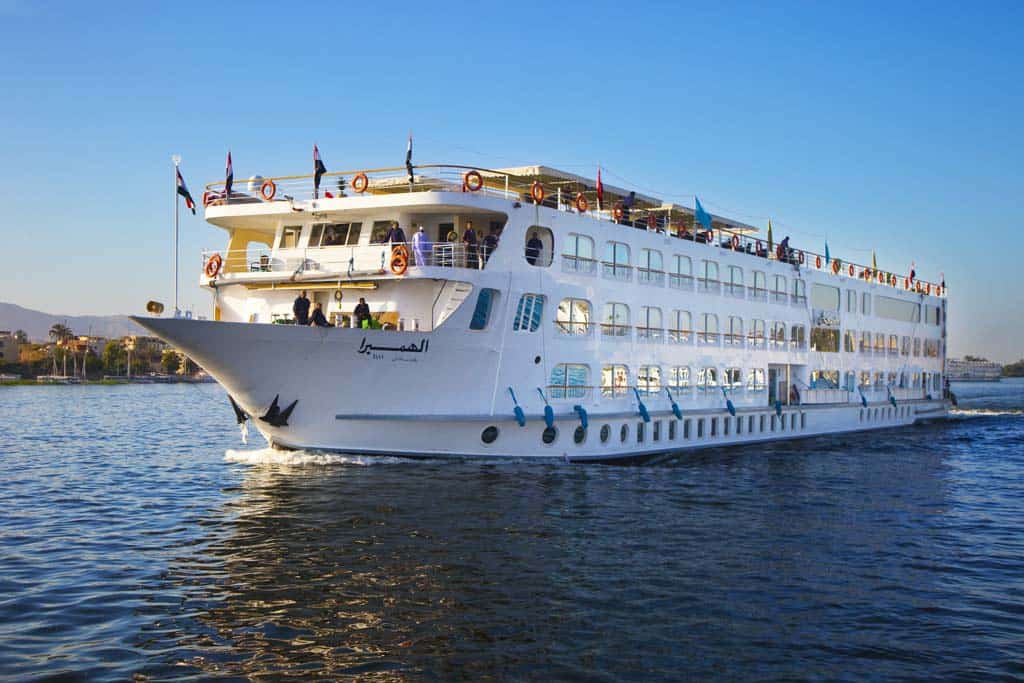
A Nile River cruise is a multi-day journey aboard a dedicated cruise vessel that sails the legendary Nile River between the cities of Luxor and Aswan in Upper Egypt. Most classic itineraries run 4 to 7 nights, though longer voyages extending to Cairo or Lake Nasser are also available for travelers who want to go deeper.
Unlike ocean cruises, a Nile cruise is intimate and purposeful. The river itself is your transport, your backdrop, and your daily theater. Each morning, your ship docks at a new site. You step ashore, explore temples and tombs with a certified Egyptologist guide, and return to your floating hotel for lunch, dinner, and a gentle sail to the next wonder. By the time you arrive at Aswan (or Luxor, if you're sailing north), you will have visited more UNESCO World Heritage sites than most people see in a lifetime of traveling.
The Classic Nile Cruise Route: Luxor to Aswan (or Aswan to Luxor)
The gold standard of Nile cruising covers approximately 225 kilometers between Luxor in the north and Aswan in the south. This stretch of river passes through the heart of ancient Thebes — the most archaeologically rich corridor on the planet.
Highlights along this route include:
- Karnak Temple Complex — The largest religious building ever constructed, Karnak took over 2,000 years and 30 pharaohs to build. Walking its Hypostyle Hall — 134 columns, each 21 meters tall — is like walking inside a forest made of stone.
- Luxor Temple — Dramatically lit at night, this temple built by Amenhotep III and Ramesses II sits right in the heart of modern Luxor, creating one of the most surreal juxtapositions in travel: ancient Egypt and 21st-century life, side by side.
- Valley of the Kings — Where the pharaohs hid their treasures and their bodies for eternity. Tutankhamun's tomb, Ramesses VI, Seti I — over 60 royal tombs carved into golden limestone cliffs. Nothing else like it exists on Earth.
- Hatshepsut's Temple (Deir el-Bahari) — The mortuary temple of Egypt's most powerful female pharaoh, carved directly into a cliff face in three elegant terraces. Architectural genius from 3,500 years ago.
- Edfu Temple — The best-preserved temple in all of Egypt, dedicated to the falcon god Horus. Arriving by felucca (traditional Egyptian sailboat) from the cruise ship is a travel experience unto itself.
- Kom Ombo Temple — Uniquely dedicated to two gods simultaneously — Sobek the crocodile god and Horus the elder — this twin temple perches right at the water's edge and glows amber at sunset.
- Philae Temple (Aswan) — Saved from rising Nile waters by one of history's most ambitious UNESCO rescue operations, the temple of Isis was physically dismantled and rebuilt, stone by stone, on a higher island. Arriving by motorboat at dusk is pure magic.
- Abu Simbel — Technically a day trip from Aswan (or accessible by the extended Lake Nasser cruise), Abu Simbel is Ramesses II's greatest monument — two temples carved entirely from solid rock, featuring four seated colossi each standing 20 meters high. It is, without hyperbole, one of the greatest sights in the world.
Why a Nile Cruise Beats Every Other Way to See Egypt
Let's address the alternatives honestly: you can see Egypt's ancient sites by flying between cities, staying in hotels, and booking day tours. Many people do it. But here's what they miss:
1. The River Itself Is the Experience
The Nile isn't just a logistics route. It is ancient Egypt. Every civilization that built these temples, every pharaoh who commissioned these monuments, every priest, scribe, and laborer — they all lived by this river. They ate from it, prayed to it, and were buried near it. When you travel the Nile, you're not just visiting monuments — you're retracing the actual path of 5,000 years of human history. No airplane ticket gives you that.
2. Unbeatable Value for Money
A quality Nile cruise — including your cabin, all meals, a professional Egyptologist guide, entry fees to most sites, and transfers — typically costs less than a week in a decent European hotel. For first-time visitors, the all-inclusive nature of most Nile cruise packages makes budgeting simple and stress-free.
3. Effortless Exploration, Zero Logistics Stress
Your hotel moves with you. You unpack once, sleep on board, and wake up each morning at a new ancient wonder. No packing and repacking. No taxi negotiations. No worrying about which bus goes where. The cruise handles everything, leaving you free to simply be in one of the most extraordinary places on earth.
4. Exclusive Access and Atmosphere
Many Nile cruise ships dock directly beside temple sites that are difficult to reach independently. Early morning visits — before the day tour buses arrive — offer a quality of access that is genuinely rare. Standing alone in the Hypostyle Hall at Karnak in the early morning light, before the crowds arrive, is a memory that does not fade.
5. The People You Meet
There's something about floating down the Nile together that makes people open up. A Nile cruise tends to attract thoughtful, curious travelers, and the shared experience of watching a sunset over the Valley of the Kings from the deck of the same ship creates friendships quickly.
Types of Nile Cruise Ships: Which One Is Right for You?
Not all Nile cruises are created equal. Understanding the different ship categories will help you choose the experience that fits your travel style and budget.
Luxury 5-Star Nile Cruise Ships
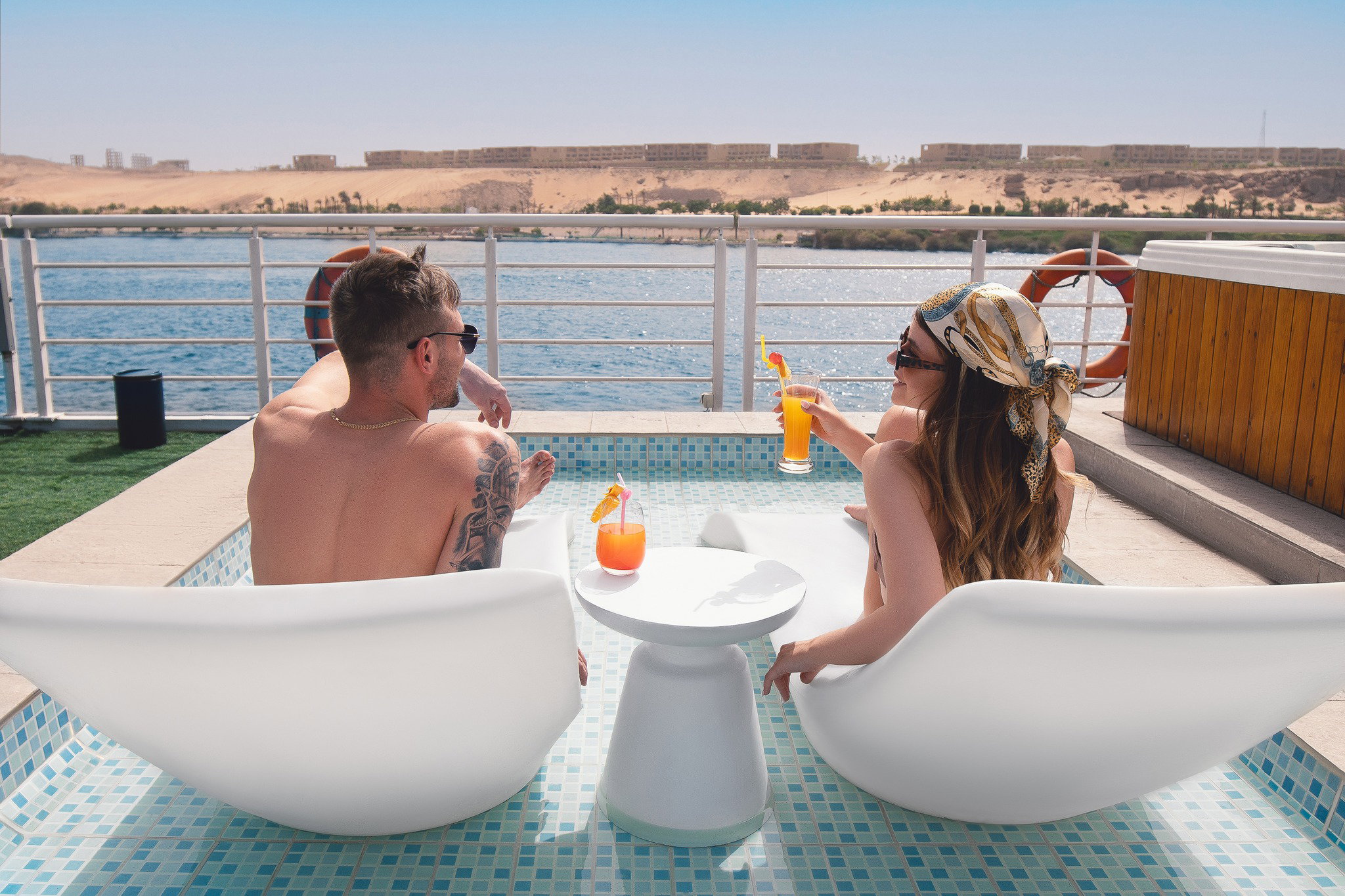
Think spacious cabins with floor-to-ceiling windows, gourmet restaurants, rooftop pools, spa facilities, and expert Egyptologist guides who are available throughout the voyage. Ships like the Oberoi Philae, Sonesta St. George, and Sanctuary Sun Boat IV represent the pinnacle of Nile cruising. If you want to combine world-class comfort with ancient wonders, this is your category.
Boutique & Small-Ship Cruises
For travelers who value atmosphere over amenities, smaller ships (8–20 cabins) offer a more personal, less hotel-like experience. You'll know every fellow passenger by name within 24 hours, and the crew-to-guest ratio is exceptional.
Dahabiyas: The Traditional Choice
A dahabiya is a traditional wooden sailing vessel, a direct descendant of the boats that 19th-century European explorers used to discover Egypt. Wind-powered and intimate, dahabiyas carry 8–16 passengers and offer one of the most romantic ways imaginable to travel the Nile. Slower, quieter, and utterly beautiful — if you have the time, this is extraordinary.
Standard & Mid-Range Cruise Ships
Excellent options for families, budget-conscious travelers, and groups. Facilities are comfortable, guides are knowledgeable, and the experience is genuinely wonderful even at a more modest price point.
The Best Time of Year to Book a Nile River Cruise
Egypt can be visited year-round, but the timing of your Nile cruise significantly affects your comfort and experience.
October to April: Peak Season (Highly Recommended) These months offer the most pleasant cruising weather — daytime temperatures between 20°C and 28°C, cool evenings, and clear blue skies. December and January see the most visitors, but even at peak season, a Nile cruise never feels overcrowded. This is the ideal window for most travelers.
May and September: Shoulder Season Temperatures rise to the 30s, but crowds are thinner and prices are lower. An excellent choice for experienced travelers who don't mind a little heat in exchange for a more peaceful experience.
June to August: Summer Upper Egypt in high summer is genuinely hot — temperatures can reach 42°C or higher in Luxor and Aswan. That said, ships are air-conditioned, many temples are best visited in early morning before the heat builds, and prices during these months are at their lowest. Suitable for travelers on a tight budget who plan carefully.
What to Expect on Board: A Typical Day on a Nile Cruise
6:30 AM — Rise early. The light on the Nile in the early morning is something photographers chase their entire careers. A cup of Egyptian tea on the deck while the river wakes up around you costs nothing and is priceless.
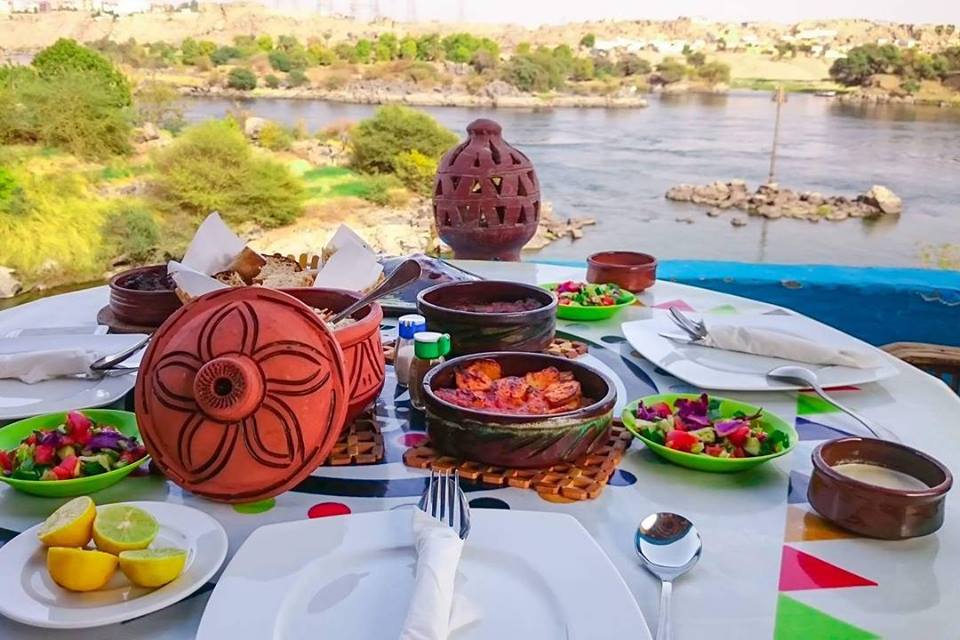
7:30 AM — Breakfast on board. Egyptian breakfast spreads tend to be generous: fresh bread, ful medames (slow-cooked fava beans), eggs, local cheeses, honey, and strong coffee.
8:30 AM — Morning excursion. Your Egyptologist guide leads the group ashore to the day's main site. Morning visits are optimal — cooler air, better light for photography, fewer tourists.
12:30 PM — Return to ship for lunch. This is when the Nile cruise ship will typically weigh anchor and begin the afternoon's sail to the next destination.
2:00–4:00 PM — Leisure time. Read, nap, swim if your ship has a pool, or simply sit on deck and watch the Nile Valley scroll past — villages, palm trees, farmers working the same black river-silt soil that fed pharaohs, fishermen casting nets that look identical to the ones painted on ancient tomb walls.
4:30 PM — Afternoon excursion (on many itineraries). A second site visit, often timed to catch the golden hour light.
7:30 PM — Dinner and evening entertainment. Many ships organize themed evenings — Galabiya Night (traditional Egyptian dress), folkloric performances, or stargazing on the deck. The sky above Upper Egypt, far from any major city, is astonishing.
Practical Guide: How to Prepare for Your Nile Cruise
Documents and Visas
Most nationalities can obtain an Egyptian e-visa online before travel, or a visa on arrival at major airports. Always verify current requirements for your passport.
What to Pack
- Light, breathable clothing in neutral colors (linen is ideal)
- Comfortable walking shoes — temple floors are uneven and surfaces can be dusty
- A warm layer for evening sailing in cooler months
- High-factor sunscreen (SPF 50+) — the Egyptian sun is intense
- A refillable water bottle — hydration is non-negotiable
- A good camera or a phone you trust — you will want to remember every moment
Health Considerations
Stay hydrated. Drink only bottled or filtered water. Most reputable Nile cruise lines maintain excellent food hygiene standards, but it's wise to carry basic stomach medication just in case. Consult your doctor about vaccinations before travel.
Currency and Tipping
The Egyptian Pound (EGP) is the local currency. Credit cards are accepted at most hotels and shops, but cash is preferred for tips and smaller purchases. Tipping (known locally as "baksheesh") is an important part of Egyptian service culture — the guide, the cabin steward, and the crew all depend on tips as a meaningful part of their income.
Combining a Nile Cruise with Cairo
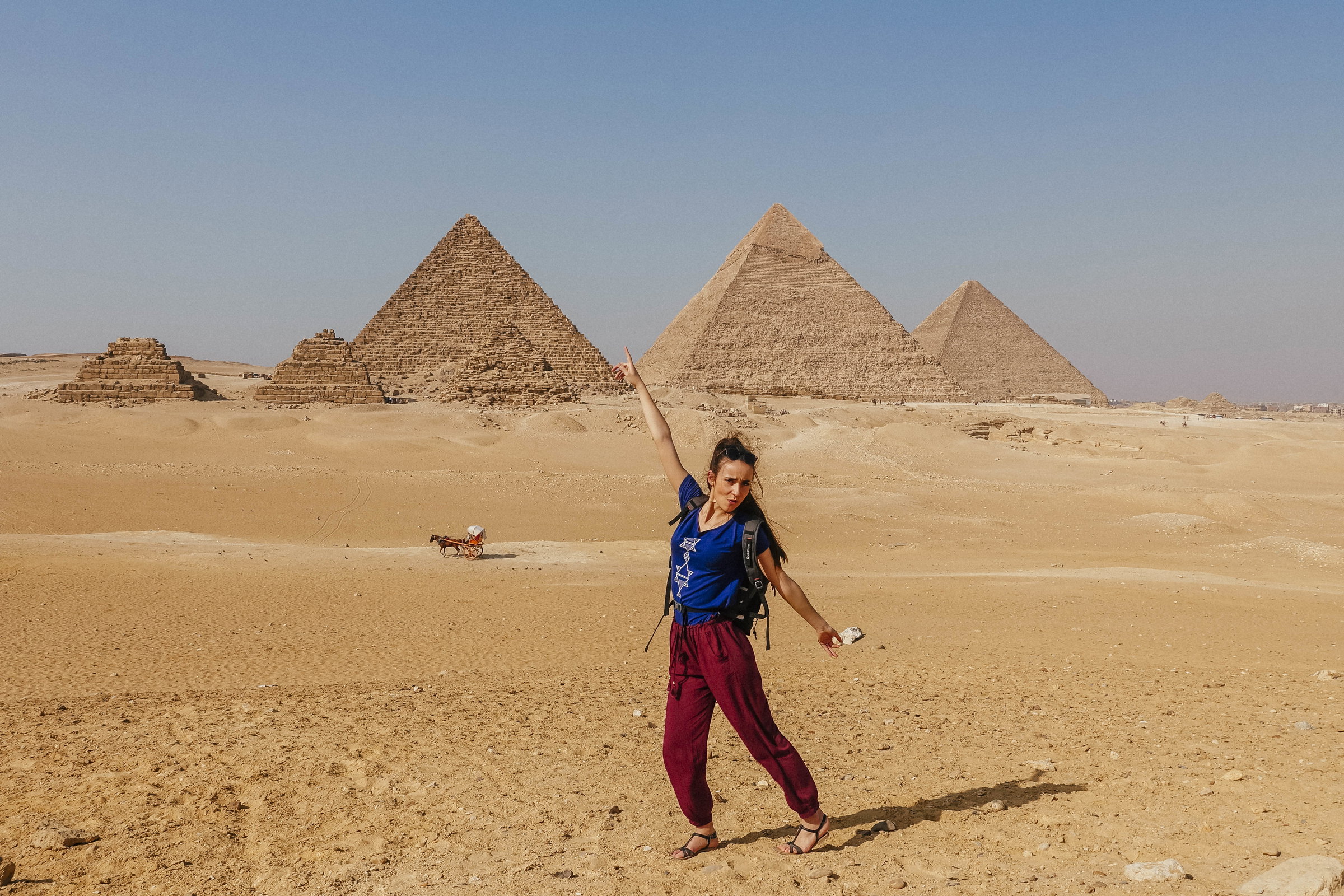
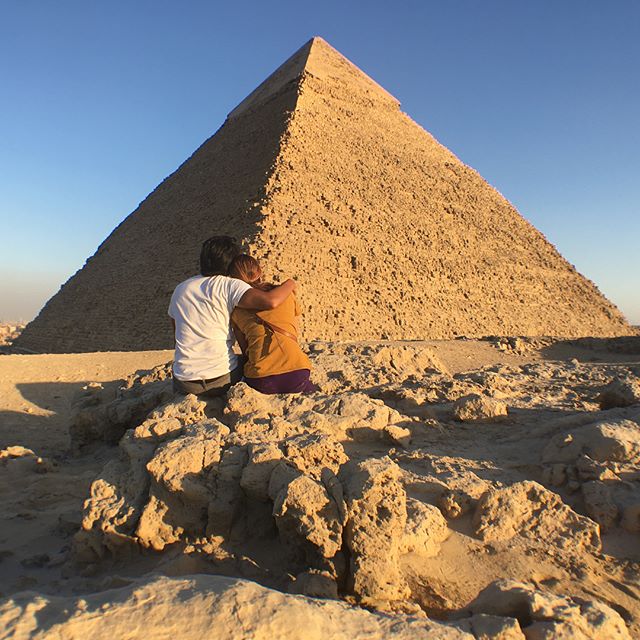
For most first-time visitors to Egypt, the ideal itinerary combines 2–3 days in Cairo with a 5–7 night Nile cruise. Cairo offers the Egyptian Museum (home to Tutankhamun's treasures and one of the world's great collections), the Islamic Cairo quarter, and — of course — the Great Pyramids of Giza and the Sphinx.
A common and highly effective itinerary runs as follows:
- Days 1–3: Cairo — Pyramids, Sphinx, Egyptian Museum, Khan el-Khalili bazaar
- Days 4–10: Nile cruise Luxor to Aswan (or reverse)
- Day 11: Day trip to Abu Simbel from Aswan
- Day 12: Return home
This itinerary covers the essential highlights of ancient Egypt without feeling rushed, and it creates a natural narrative arc — beginning with the Old Kingdom monuments of Giza and ending with the New Kingdom temples of Upper Egypt.
Solo Travel on the Nile: Everything You Need to Know
Egypt is one of the safest destinations in North Africa for solo travelers, and a Nile cruise is arguably the best way for a solo traveler to experience the country. Here's why:
The group dynamic of a cruise means you're never truly alone — meals are shared, excursions are communal, and fellow passengers naturally become companions. At the same time, you retain total freedom during leisure hours on board. The all-inclusive format eliminates the logistical headaches that solo travel in unfamiliar destinations can involve.
Many cruise operators offer solo supplements, and some ships have dedicated single cabins. It's worth asking specifically about single supplements when booking — they vary widely.
Family Travel on the Nile: Is It Right for Children?
Absolutely — with a few considerations. Children who are naturally curious and enjoy outdoor exploration tend to find a Nile cruise genuinely thrilling. Ancient Egypt captivates young imaginations in a way that few destinations can match.
Practical tips for families:
- Choose a cruise ship with a swimming pool — this is essential for children during warmer months
- Opt for a 5-night rather than 4-night itinerary to allow a more relaxed pace
- Book early morning excursions to avoid the hottest part of the day
- Bring children's sunscreen, hats, and plenty of snacks
- Engage children in the history before you go — even basic knowledge of pharaohs and mummies transforms the experience
How to Choose a Reputable Nile Cruise Operator
With hundreds of ships operating on the Nile, quality varies significantly. Here's how to separate the excellent from the merely adequate:
1. Check for a licensed Egyptologist guide. A certified guide with genuine academic credentials makes the difference between a surface-level tour and a transformative experience. Ask specifically whether guides hold degrees in Egyptology or archaeology.
2. Read recent reviews on multiple platforms. TripAdvisor, Google Reviews, and specialist travel forums all provide useful perspectives. Look for reviews from the past 12 months — ships can change management quickly.
3. Verify what's included. Quality operators are transparent about what's included in the price: meals, entrance fees, excursions, tips, and transfers. Hidden costs are a red flag.
4. Ask about ship size and passenger capacity. Smaller ships (under 50 passengers) offer a more personal experience; larger ships (100+ passengers) may feel more like a floating resort.
5. Look for affiliations. Membership in reputable travel organizations, associations, or international tour operator networks is a good indicator of professional standards.
Frequently Asked Questions About Nile River Cruises
How long should my Nile cruise be?
The most popular option is 5 nights/6 days, which allows comfortable coverage of the main sites between Luxor and Aswan without feeling rushed. A 4-night cruise is possible but can feel slightly hurried. For a truly immersive experience, 7 nights is ideal — especially if combined with Abu Simbel.
Is it safe to travel to Egypt?
Egypt is a safe destination for international tourists, and the Nile cruise corridor in Upper Egypt (Luxor to Aswan) has an excellent safety record. The Egyptian government places a high priority on protecting tourists. As with any international travel, standard precautions apply: be aware of your surroundings, keep valuables secure, and follow your guide's advice.
What is the difference between a Nile cruise and a felucca trip?
A traditional felucca is a small wooden sailing boat typically used for short trips (a few hours to 2 days) between Aswan and Kom Ombo. It's a romantic, budget-friendly option but lacks cabin facilities, running water, and guided excursions. A Nile cruise ship provides full hotel-style accommodation, all meals, private bathrooms, and expert guiding — a completely different level of experience.
Can I book a Nile cruise last minute?
While last-minute deals do exist (particularly during shoulder season), the best cabins on the most reputable ships book up months in advance, especially for the October–April peak season. For most travelers, booking 3–6 months ahead is advisable to secure the best choice of ship, cabin category, and departure date.
Do I need to know anything about ancient Egypt before I go?
Not at all — that's what your Egyptologist guide is for. However, reading even a basic introductory book or watching a documentary about ancient Egyptian history before your trip will dramatically enrich the experience. We recommend "The Oxford History of Ancient Egypt" for deeper reading, or the BBC documentary series "Egypt" as an accessible starting point.
Is vegetarian / vegan food available on Nile cruises?
Yes. Egyptian cuisine is naturally rich in plant-based dishes — ful medames, koshari, molokhia, stuffed vine leaves, and an abundance of fresh vegetables and legumes. Reputable cruise lines are accustomed to catering to vegetarian and vegan guests, and most can accommodate other dietary requirements with advance notice.
What is the ideal season for photography on the Nile?
October to February offers the best photographic conditions — warm, golden light without the harsh midday glare of summer. Sunrise over the Nile, sunset at Karnak, and the early morning mist on the river between Esna and Edfu are particularly extraordinary.
How should I tip on a Nile cruise?
Tipping is an important custom in Egypt. A general guideline for a 5-night cruise: approximately $3–5 per person per day for the cabin steward, and $5–10 per person per day for the Egyptologist guide (who is the most important person in your experience and deserves appropriate recognition). Many cruise lines provide a tipping envelope at the end of the voyage.
Can I extend my trip to include Abu Simbel?
Absolutely, and we strongly recommend it. Abu Simbel is accessible as a day trip by early-morning flight from Aswan (approximately 45 minutes each way), which most operators can arrange. Alternatively, a Lake Nasser cruise extends the journey south from Aswan to Abu Simbel by water — a truly spectacular option for those with additional time.
What is the cancellation policy for Nile cruise bookings?
Cancellation policies vary by operator, but most reputable cruise lines offer full refunds for cancellations made more than 60 days before departure, with partial refunds between 30–60 days and reduced refunds closer to the date. Travel insurance that covers cancellation is strongly recommended for any international booking.
Ready to Book Your Nile Cruise? Here's What to Do Next
If reading this has made you feel the pull of the river — that quiet but unmistakable certainty that this is a journey you need to take — then trust that feeling. It's right.
A Nile River cruise is not simply a holiday. It is a conversation with 5,000 years of human civilization, conducted in the most beautiful natural corridor on Earth. People who have done it return home with something they didn't have before: a sense of scale, a deep respect for what humans are capable of, and a particular kind of joy that comes from standing in a place that has made people feel wonder for millennia.
The best time to book is now. Peak season cabins on reputable ships fill months in advance. Prices rise as departure dates approach. And every day you wait is a day someone else is standing on that deck, watching Karnak Temple rise from the river, having exactly the moment you're picturing right now.
Contact our team today to discuss itinerary options, ship recommendations tailored to your travel style, group or family pricing, and our exclusive early-booking rates. We've helped thousands of travelers discover ancient Egypt by Nile — and we'd love to help you plan yours.
Nile Cruise Deals, Cheap Nile Cruise Deals, Nile Cruise Holidays

 Italian