Why Indian Travelers Choose Ayad World Tours: The Complete Guide to an Egypt Trip That Actually Feels Like Home
06/08/2026
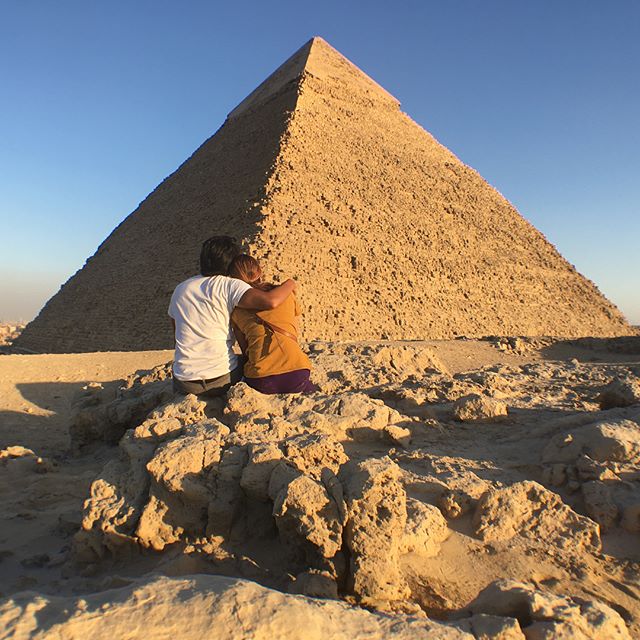
I have lost count of how many Indian families I have watched step off a coach at the Giza Plateau for the first time. There is always the same sequence. First the silence — the Great Pyramid does that to people, even the ones who swore they wouldn't be impressed. Then the phones come out. Then, almost without fail, someone in the group turns to the guide and asks, half-joking, half-serious: "Bhaiya, yahan pe achha vegetarian khana milega na?" (Brother, we will get good vegetarian food here, won't we?)
That question — asked in Hindi, Gujarati, Tamil, Marathi, Bengali, sometimes all in the same group — tells you everything about what actually makes or breaks an Egypt trip for an Indian traveler. It is not the pyramids. Egypt sells itself. What sells a tour operator is whether the food will be edible, whether the guide understands what "pure veg" and "Jain" actually mean without you having to explain it three times, and whether someone competent is standing next to you when the Cairo heat, the crowds, and the sheer scale of 4,500-year-old history start to feel overwhelming.
This is the gap that Ayad World Tours, a Cairo-based operator, has spent over a decade closing — and it is why, review after review on TripAdvisor, Indian travelers keep saying the same thing in different words: this didn't feel like a foreign trip, it felt like being looked after.
If you are researching best Egypt tour packages for Indian families, Egypt tour with Indian food and vegetarian options, or Jain-friendly Egypt tour packages from India, this guide walks through exactly why Ayad World Tours keeps showing up at the top of that search — with real numbers, real comparisons, and real traveler voices, not marketing fluff.
Table of Contents
- Why Egypt Is Suddenly Every Indian Traveler's Next Big Trip
- The Real Problem: It's Never the Pyramids, It's the Plate
- Inside Ayad World Tours: 11 Years, Nearly 100 Reviews, One Rating
- What Indian Travelers Are Actually Saying (TripAdvisor, In Their Own Words)
- Vegetarian, Jain, and Indian Food in Egypt — The Honest Guide
- The Guide Factor: Why "Who Takes You Around" Matters More Than "Where You Go"
- Ayad World Tours vs. the Typical Egypt Package: A Side-by-Side Comparison
- Sample Itinerary: 7 Days in Egypt, Built for Indian Travelers
- What an Indian-Friendly Egypt Package Should Actually Cost
- Best Time for Indian Travelers to Visit Egypt
- Frequently Asked Questions
- Final Word: Booking With Confidence
1. Why Egypt Is Suddenly Every Indian Traveler's Next Big Trip
Something shifted in Indian outbound travel over the last two years, and Egypt has been one of the biggest beneficiaries of it. Egypt's Ministry of Tourism and Antiquities reported that the country welcomed close to <cite index="18-1">19 million tourists in 2025, a 21 percent increase compared to 2024 — a growth rate well above the global average tracked by UN Tourism</cite>. Cultural sites alone — the pyramids, temples, and museums, not even counting the new Grand Egyptian Museum — pulled in <cite index="18-2">18.6 million visitors, a 33.5 percent jump year-on-year</cite>.
Meanwhile, India's own outbound appetite has never been stronger. India now sends out tens of millions of international travelers annually, and <cite index="23-1">Indian outbound numbers put the country among the world's most active travel markets, with millions of non-resident Indian arrivals recorded abroad each year</cite>. Put those two trend lines together and you get exactly what Cairo hotel lobbies look like in November through March right now: family groups from Mumbai, Surat, Delhi, and Chennai comparing notes on the Nile Cruise while their kids run around the ship deck.
But growing numbers alone don't explain loyalty. Plenty of tourists visit Egypt once and never think about it again. The travelers who leave 5-star reviews, who tag their tour guide by name months later, who tell their cousin's travel agent "book with the same company we used" — that is a different, much smaller group. And a disproportionate number of them, when you actually read what they wrote, booked with Ayad World Tours.
2. The Real Problem: It's Never the Pyramids, It's the Plate
Here is what nobody tells you before you book an Egypt trip from India: the monuments are the easy part. Every operator can drive you to Giza. Every operator can get you onto a Nile cruise ship. The difference between a trip you rave about and a trip you quietly regret comes down to three things that have nothing to do with archaeology:
- Can you actually eat comfortably for 7–10 days straight? Egyptian cuisine leans heavily on meat, and while it is delicious, a vegetarian Gujarati family or a Jain traveler avoiding onion and garlic can find themselves stuck with plain rice and salad for days if nobody has planned around it.
- Does your guide understand why you're asking these questions, rather than looking mildly confused when you explain that "vegetarian" doesn't mean "chicken is fine"?
- Is there someone reachable at 9 p.m. when your flight gets delayed, your grandmother's knees can't handle the desert sand, or your teenager has a stomach upset in the middle of the Valley of the Kings?
Every one of these questions is a service-design problem, not a sightseeing problem. And service design is exactly where Ayad World Tours has built its reputation among Indian travel agents and independent Indian travelers alike.
3. Inside Ayad World Tours: 11 Years, Nearly 100 Reviews, One Rating
Ayad World Tours started in Cairo roughly eleven years ago as a small operation. According to the company's own account of its growth, it began with a modest team working out of Egypt and has since <cite index="5-1">expanded across Europe, Africa, and Asia, eventually welcoming travelers from five continents by the end of 2025</cite>. What is more telling than the growth story, though, is the consistency of the reviews behind it.
On TripAdvisor, the company has maintained <cite index="5-1">a 5.0-star rating across nearly a hundred independent reviews — a rating that is difficult to sustain artificially — which contributed to it winning the TripAdvisor Travelers' Choice Award four years running, from 2022 through 2025</cite>. That is not a one-season spike. That is four consecutive annual cycles of travelers, most of whom will never interact with each other, independently rating the same company at the top of the scale.
Read enough of those reviews and certain names surface again and again — guides who get mentioned by first name, months and even years apart, by travelers who have never met each other. That pattern is one of the more reliable signals in the entire tour-operator industry, because reputations built purely on marketing spend do not survive repeated, specific, first-name callouts across dozens of unrelated reviews.
4. What Indian Travelers Are Actually Saying (TripAdvisor, In Their Own Words)
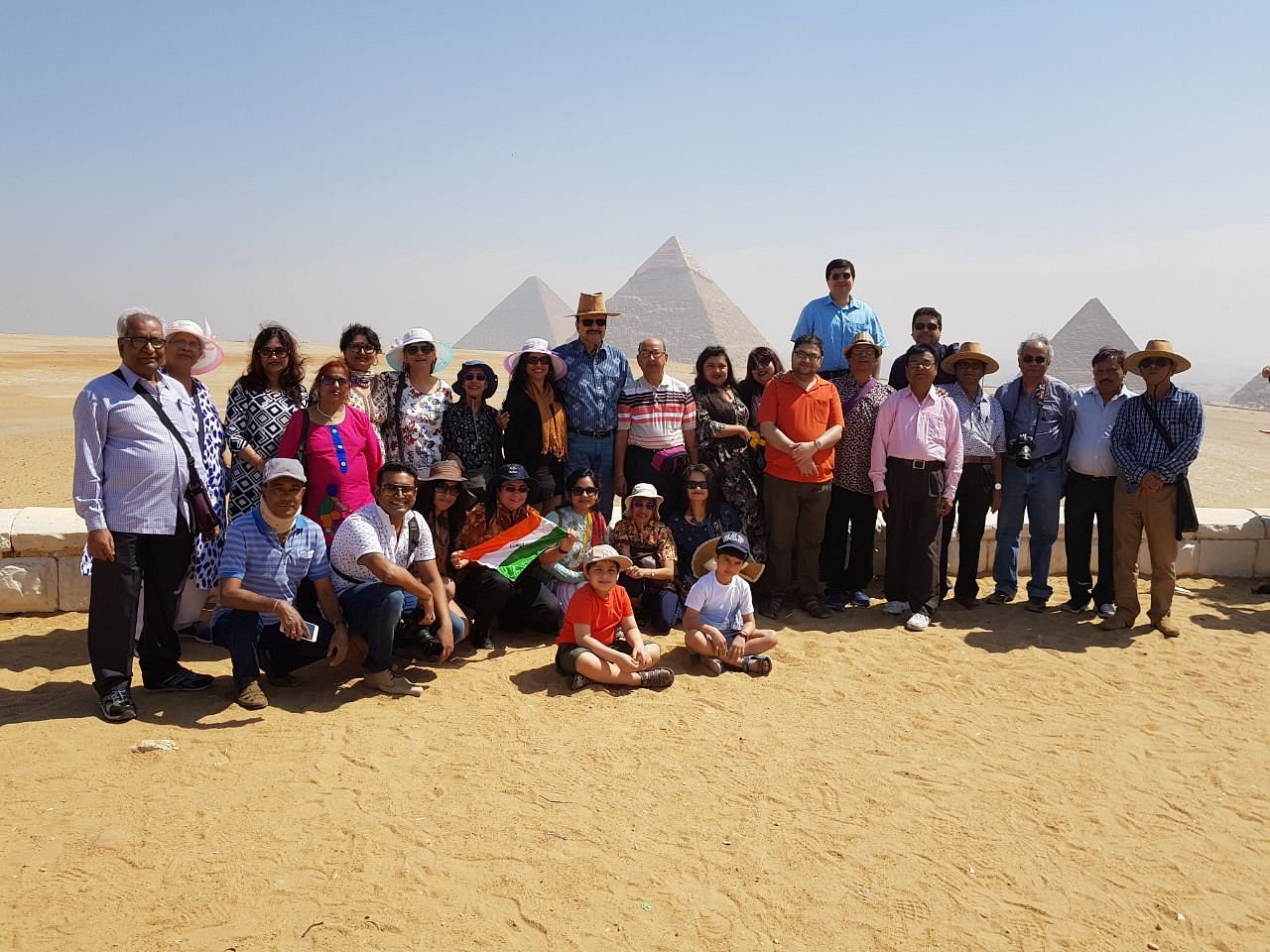
Rather than paraphrase in the abstract, it's worth looking at what Indian tour leaders and travelers have actually posted publicly. One tour leader from Kolkata, writing about a group trip organized through an Indian travel agency, described bringing <cite index="1-1">a group of 36 travelers from Kolkata to Egypt in April 2018, partnering with Ayad World Tours for the first time despite having organized an Egypt trip once before, back in 2007</cite>. The comparison between the two experiences is the interesting part — she noted that this time, the <cite index="1-1">journey was hassle-free, the group loved the choice of hotels and the spacious rooms, and the Nile Cruise stood out for its sightseeing and hospitality</cite>. As the person responsible for 36 people's satisfaction, she added that she was <cite index="1-1">personally impressed by the warm, professional behavior of the company's founder, describing him as proactive, cooperative, and someone who delivered on every promise made — enough that she said she would recommend the company to future travelers planning Egypt trips</cite>.
Another traveler, describing a first-time visit built entirely around a childhood dream of seeing the pyramids, wrote that after comparing many agencies, <cite index="1-1">Ayad World Tours offered the most flexible itinerary at a genuinely affordable cost, delivering a trip full of adventure that the traveler described as comfortable thanks to the founder personally, whom they called a kind-hearted person</cite> — enough that they said they were already planning to return for a Nile Cruise and would book with the same company again.
A separate review, from a guest who took a private day tour, singled out the on-ground team by name — describing staff member Ahmed as professional from day one, driver Mohammed as attentive throughout the trip, and the guide who accompanied them for a day of sightseeing as making the visit unforgettable, closing with an emphatic recommendation to future travelers.
This is a recurring texture across the reviews: guests don't just say "good service." They name the driver. They name the guide. They describe specific human moments — someone waiting patiently, someone explaining a monument with visible enthusiasm, someone remembering a dietary restriction without being reminded twice. For Indian families traveling with elderly parents or small children, that kind of specific, person-level trust is worth more than any five-star rating on its own.
5. Vegetarian, Jain, and Indian Food in Egypt — The Honest Guide
Let's be direct about this, because it's the single most-asked question by Indian travelers researching Egypt, and most tour operator websites answer it with vague reassurance instead of specifics.
Egypt is genuinely workable for vegetarians and Jains — but only if your operator plans for it. Left to chance, a vegetarian traveler in Egypt can end up living on bread, rice, and salad for a week. Planned properly, it's a different story entirely.
Egyptian dishes that are naturally vegetarian-friendly
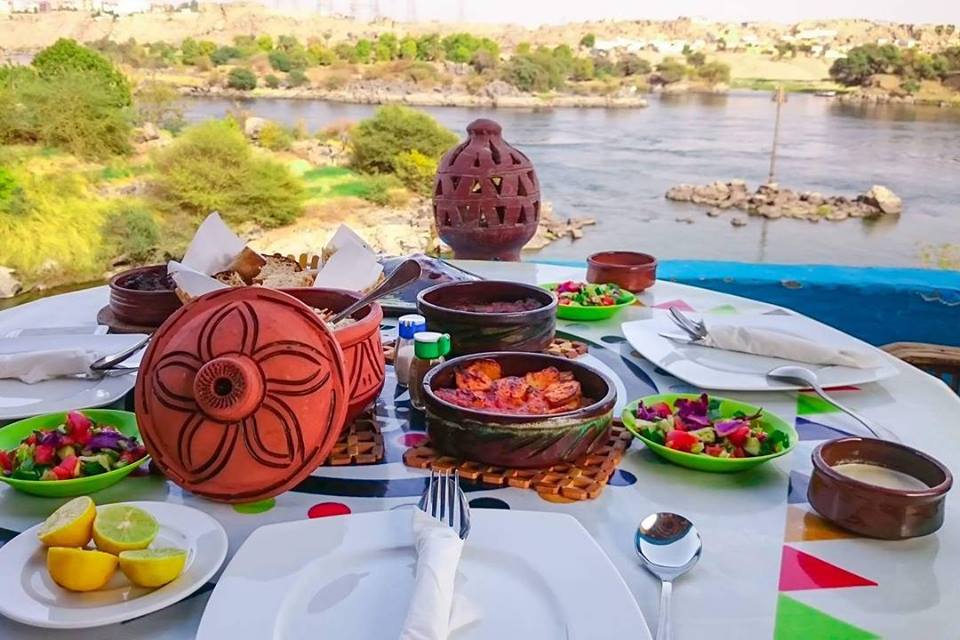
Cairo's own street food culture has more overlap with Indian vegetarian eating than most people expect. Koshary — <cite index="15-1">widely considered Egypt's national dish and its most filling vegan option</cite> — is a carb-and-lentil bowl of rice, macaroni, chickpeas, and lentils topped with a spiced tomato sauce, and it has become something of a comfort-food discovery for Indian travelers who try it. Foul (stewed fava beans), falafel, baba ghanoush, and hummus round out a genuinely satisfying plant-based street food scene, and <cite index="15-1">chains like Zooba serve Egyptian classics across several Cairo branches, including inside the Grand Egyptian Museum itself, with plenty of vegetarian options on the menu</cite>.
The Indian restaurant scene in Cairo has grown for a reason
Cairo now has a genuine cluster of Indian restaurants, driven partly by a <cite index="12-1">growing resident Indian expatriate community alongside a broader appetite among locals for international cuisine</cite>. A few worth knowing about if you're planning your own meals or want to ask your guide to build them into your schedule:
- The Raj, inside the Hilton Cairo Heliopolis, is frequently singled out for its <cite index="12-1">authentic tandoori grills, curries, biryanis, and vegetarian dishes, prepared by an Indian chef named Satya who is repeatedly praised in reviews for both his cooking and his hospitality</cite>.
- Namaste Restaurant, located inside the Ramses Hilton on the Nile Corniche, is known for its <cite index="11-1">open kitchen where guests can watch chefs prepare tandoori dishes and fresh naan, alongside a menu built around contemporary Indian and vegetarian dishes</cite>.
- Indira, situated in the Holiday Inn Cairo Citystars, is noted for its <cite index="11-1">smoky tandoor-cooked kebabs and its focus on freshness, with a menu spanning both vegetarian and non-vegetarian dishes across Indian regional flavors</cite>.
- Nawab, on Bahgat Aly Street in Zamalek, is <cite index="9-1">consistently listed as one of Cairo's better Indian kitchens for spice-forward regional cooking</cite>, with a sister branch <cite index="10-1">reviewed positively for its family-friendly atmosphere by travelers specifically searching for genuine Indian cuisine in Cairo</cite>.
- Ghazala Indian Restaurant, tucked inside the historic Khan El Khalili market, is worth calling out for its <cite index="13-1">thali platters, which let diners sample several dishes at once in a market setting that feels close to an Indian bazaar experience</cite>.
- Beyond Cairo, options like Amaya on the Red Sea's Safaga Road and Tandoor in El Gouna extend the same standard of vegetarian-friendly North Indian cooking to travelers who add beach time to their itinerary, with <cite index="9-1">Amaya in particular known for its Indian Thaali and its Mango Lassi, alongside a welcoming, well-designed dining room</cite>.
Why this matters for Jain travelers specifically
Jain dietary requirements (no onion, no garlic, no root vegetables) are more specific than general vegetarianism, and this is exactly where an inexperienced tour operator falls apart. It is not enough to book a "vegetarian meal" with a hotel — most hotel kitchens outside dedicated Indian restaurants do not know what a Jain thali means without explicit, advance coordination. Travelers researching this topic online have flagged it themselves in vegetarian travel forums, with one prospective visitor specifically asking fellow travelers for help finding veg and Jain food guidance ahead of a December family trip — a question that comes up often enough to be its own recurring thread among Indian travelers planning Egypt.
This is precisely the kind of detail that separates an operator who has actually hosted hundreds of Indian travelers from one who is guessing. A tour company that has repeatedly coordinated Jain thalis with Cairo kitchens, pre-arranged onion-and-garlic-free meals on Nile cruise ships, and briefed its guides on what "strict Jain" versus "vegetarian" actually means in practice will save you the awkward, repeated explanations that eat into your actual holiday time.
6. The Guide Factor: Why "Who Takes You Around" Matters More Than "Where You Go"
Anyone can hand you a printed itinerary that lists the Great Pyramid, the Sphinx, Karnak Temple, and the Valley of the Kings. The itinerary is not the product. The guide standing next to you, translating four and a half thousand years of history into something that actually lands emotionally, is the product.
This is where the recurring names in Ayad World Tours' reviews matter more than they might first appear. Reviewers describe guides who go beyond reciting dates — the kind of guide who notices an elderly grandmother struggling with the heat and quietly slows the pace, who fields the fortieth "why did they build it like this" question from an eight-year-old with the same patience as the first, who understands that an Indian family's idea of a "temple visit" already carries deep cultural resonance from home, and leans into that connection rather than treating it as just another stop on a checklist.
Egyptology is also, frankly, a field with real depth — licensed Egyptian guides go through formal training and certification, and the good ones can speak to hieroglyphics, dynastic history, and archaeological context with a level of detail that separates a guided visit from simply wandering a monument with an audio pamphlet. For a country where the entire value proposition is history you can't get anywhere else, the quality of the person interpreting that history for you is not a minor detail. It is arguably the single biggest driver of whether you leave Egypt saying "incredible trip" or just "nice photos."
7. Ayad World Tours vs. the Typical Egypt Package: A Side-by-Side Comparison
| Factor |
Typical Mass-Market Egypt Package |
Ayad World Tours (Indian-traveler experience) |
| Vegetarian/Jain meal planning |
Generic "veg meal available" note, coordinated on arrival |
Meals pre-coordinated with hotels and cruise kitchens in advance, including Jain (no onion/garlic) requests |
| Indian food access |
Left to the traveler to find independently |
Indian restaurant stops built into itineraries on request (Nawab, Raj, Namaste, Indira, and others) |
| Guide continuity |
Rotating guides, sometimes different each day |
Named, repeat-praised guides, often requested by returning travelers |
| TripAdvisor rating |
Varies widely, often mixed |
5.0 stars across nearly 100 reviews; 4x TripAdvisor Travelers' Choice Award (2022–2025) |
| Support after hours |
Office-hours only, response next business day |
Team described in reviews as reachable and responsive outside standard hours |
| Group experience |
Often merged with unrelated nationalities and paces |
Itineraries adaptable to Indian family travel patterns — multi-generational groups, kids, elderly parents |
| Pricing transparency |
Add-ons and "optional" fees revealed late |
Reviewers repeatedly describe pricing as flexible and delivering value at the quoted cost |
8. Sample Itinerary: 7 Days in Egypt, Built for Indian Travelers
This is a realistic structure used by Indian family groups, built around comfortable pacing, vegetarian and Jain-friendly meals, and a genuine Nile Cruise.
Day 1 — Arrival in Cairo. Airport pickup, hotel check-in, welcome dinner at an Indian or Indian-friendly restaurant to ease into the trip after a long flight.
Day 2 — Giza Plateau & Sphinx. The Great Pyramid, the Sphinx, camel or horse-cart option at the plateau, and the Solar Boat Museum. Evening free for Khan El Khalili bazaar and a stop at Ghazala for a thali-style dinner.
Day 3 — Egyptian Museum & Old Cairo. Full day covering Tutankhamun's treasures at the Egyptian Museum (or the Grand Egyptian Museum, depending on season and access), followed by Coptic Cairo and Al-Muizz Street.
Day 4 — Fly to Luxor, board the Nile Cruise. Karnak and Luxor Temples in the afternoon, cruise embarkation and dinner onboard with pre-arranged vegetarian/Jain menu.
Day 5 — Valley of the Kings & Hatshepsut Temple. Full day of West Bank sites, cruise sails toward Edfu overnight.
Day 6 — Edfu & Kom Ombo temples. Cruise continues to Aswan; evening felucca sail on the Nile at sunset.
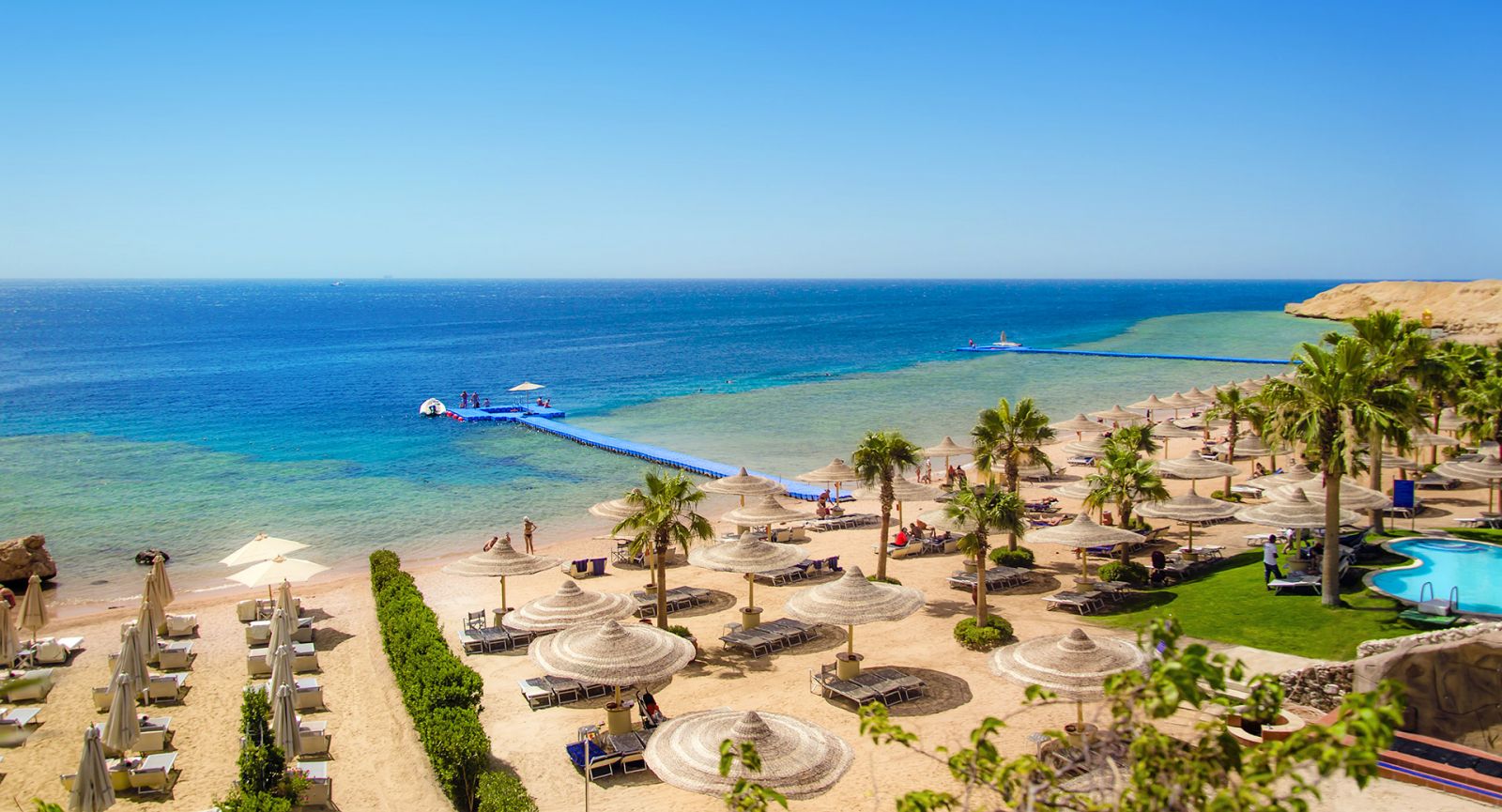
Day 7 — Aswan sightseeing, fly back to Cairo, departure or extension. High Dam, Philae Temple, and a final Indian dinner before departure — or an extension to Hurghada or Sharm El Sheikh for beach time.
This structure balances the "must-see" monuments Indian travelers specifically research before booking with realistic pacing for multi-generational groups — not a checklist rushed through in four exhausting days.
9. What an Indian-Friendly Egypt Package Should Actually Cost
Pricing varies with season, hotel category, and group size, but as a general benchmark for Indian travelers comparing quotes: a 7-day Cairo-plus-Nile-Cruise package with 4-star hotels, private transfers, English or Hindi-speaking guiding, and pre-arranged vegetarian/Jain meals typically runs in a mid-range band per person on twin-sharing, with 5-star and luxury cruise upgrades pushing costs meaningfully higher. The details worth interrogating in any quote — regardless of which operator you book with — are:
- Is guiding private or shared with a large mixed-nationality group?
- Are entrance fees to major sites included, or added as "optional" on the ground?
- Is the Nile Cruise cabin category specified, or left vague?
- Has the operator explicitly confirmed vegetarian/Jain meal handling in writing, or just verbally implied it?
- Is there a named contact for emergencies, or just a generic company email?
A lower headline price that skips these confirmations often costs more once the "optional" add-ons appear on the ground in Cairo.
10. Best Time for Indian Travelers to Visit Egypt
October through April is the sweet spot — daytime temperatures are manageable for sightseeing (especially at outdoor sites like Giza and Karnak, where midday summer heat can exceed 40°C), and this window aligns conveniently with Diwali, Christmas, and winter school-holiday travel patterns common among Indian families. December and January are peak season, so booking 2–3 months ahead is worth it for better hotel categories and cruise cabin availability. May through September is considerably hotter and quieter — a reasonable option for budget-conscious travelers who prioritize early mornings and don't mind trading comfort for lower prices.
10.5 What to Pack and Prepare Before Your Egypt Trip From India
A few practical notes that Indian travelers consistently say they wish they'd known earlier:
- Modest clothing works better than swimwear-style outfits at religious and historical sites — lightweight cotton kurtas and salwar suits, which most Indian travelers already pack instinctively, are ideal for both comfort in the heat and cultural appropriateness at temples and mosques.
- Carry your own digestive basics — a strip of standard travel medication for stomach upset, rehydration salts, and any regular prescription medicines, since pharmacy brand names differ from what you'd recognize at home.
- Sun protection is non-negotiable, even in the cooler months — desert sun at Giza or Luxor is intense by late morning, so a good hat, sunscreen, and a refillable water bottle matter more than most first-time visitors expect.
- Cash in small denominations (Egyptian pounds and US dollars) is useful for tipping — a customary practice in Egypt for guides, drivers, and hotel staff — and having this sorted before the trip avoids awkward moments at the end of each day.
- Download offline maps and keep your operator's emergency contact saved, not just emailed — Wi-Fi can be patchy at desert sites and aboard some cruise stretches.
None of this is complicated, but it's exactly the kind of pre-trip checklist a good tour operator will walk you through in a pre-departure call rather than leaving you to discover it after landing.
11. Frequently Asked Questions
Is Egypt safe for Indian tourists, including solo women travelers and families with children? Yes. Egypt's major tourist circuits — Cairo, Giza, Luxor, Aswan, and the Nile Cruise route — are among the most heavily monitored and tourist-experienced regions in the country, and the sharp rise in international arrivals in recent years reflects sustained traveler confidence. As with any international destination, staying with a reputable operator, avoiding unlicensed transport, and keeping a local emergency contact are sensible precautions rather than red flags.
Will I actually get vegetarian and Jain food throughout the trip, not just at the hotel breakfast buffet? With advance planning, yes. Cairo's growing Indian restaurant scene, Egypt's own vegetarian-friendly street food (koshary, foul, falafel), and hotel and Nile Cruise kitchens that have been briefed in advance on Jain requirements (no onion, no garlic) can realistically cover every meal of a 7–10 day trip. The key is confirming this with your operator before you fly, not after you land.
Do I need a visa to travel to Egypt from India? Indian passport holders generally need a visa to enter Egypt, available as an e-Visa online or visa-on-arrival at major airports for eligible travelers, though requirements can change. Confirm current requirements with the Egyptian consulate or your tour operator before booking flights.
How many days do I actually need for a proper Egypt trip? Seven days covers Cairo and a Nile Cruise comfortably. Five days is workable if you skip the cruise and focus on Cairo, Luxor (by flight), and Aswan highlights. Ten to twelve days allows you to add a Red Sea extension (Hurghada or Sharm El Sheikh) for beach time and diving.
Is a Nile Cruise worth the extra cost, or should I just do day trips from Cairo? For most Indian families, yes — the cruise covers Luxor, Edfu, Kom Ombo, and Aswan in one continuous, low-hassle journey, with meals, accommodation, and sightseeing bundled together, rather than requiring multiple internal flights and hotel changes.
Can group tours be adapted for elderly parents or young children? A good operator will ask about this before finalizing your itinerary — adjusting walking distances, adding rest breaks at major sites, and pacing the day around nap times or reduced mobility rather than forcing a fixed group schedule onto every traveler.
How far in advance should I book an Egypt tour package from India? For peak season (November to February), 8–12 weeks ahead is a safe window to secure preferred hotel categories and Nile Cruise cabins. Off-peak travel can often be booked 3–4 weeks out.
What language do guides speak — will communication be a problem? English-speaking guides are standard across established operators, and Hindi-speaking or Hindi-familiar guides are increasingly available given the volume of Indian travelers now visiting Egypt — worth specifically requesting when you book.
12. Final Word: Booking With Confidence
Egypt is not a destination you visit casually. For most Indian travelers, it is a once-in-a-lifetime trip, often planned around a milestone — a retirement, a family reunion, an anniversary. That is exactly why the choice of operator matters as much as the choice of destination. The pyramids will be there regardless of who drives you to them. What determines whether you come home saying "we have to go back" or "well, that's done" is whether someone understood, without you having to over-explain, that your grandmother needs a slower pace, that your family eats strictly vegetarian, that a Jain thali means something specific, and that a good guide can turn a pile of ancient stone into a story you carry home with you.
That is the gap nearly a hundred TripAdvisor reviews, four consecutive Travelers' Choice Awards, and eleven years of repeat Indian travelers keep pointing to when they talk about Ayad World Tours. Not the marketing. The plate in front of you, and the person standing next to you when you look up at the Great Pyramid for the first time.
This article draws on publicly available TripAdvisor reviews, Egypt Ministry of Tourism data, India's Ministry of Tourism data, and independent food and travel publications. Always confirm current visa rules, pricing, and itinerary details directly with your chosen operator before booking.

 French