Luxury Dahabiya Nile Cruise: The Most Romantic Way to Explore Egypt
19/06/2026
There's a particular kind of silence that settles over the Nile just after sunset, when the felucca sails have been furled for the night and the only sound left is water sliding past a wooden hull. If you've never experienced it, it's hard to explain why so many travelers describe a dahabiya Nile cruise as the single most romantic thing they've ever done. If you have experienced it, you already know, and you're probably here because you're trying to figure out how to get back.
This guide is for both of you. Whether you're planning a honeymoon in Egypt, a wedding anniversary trip, a proposal you've been quietly plotting for months, or simply a luxury Nile cruise that doesn't feel like a floating hotel packed with three hundred strangers, a private dahabiya boat is almost certainly the answer you're looking for. Let's walk through exactly why, what to expect, what it costs, and how to book the right dahabiya cruise Egypt experience for your trip.
What Exactly Is a Dahabiya, and Why Does It Matter for Romance?
A dahabiya is a traditional Egyptian sailing boat, twin-masted, low to the water, and built more like a private yacht than a cruise ship. The word itself comes from "dahab," the Arabic word for gold, and these vessels were historically reserved for Egyptian nobility and wealthy travelers — think Florence Nightingale, Gustave Flaubert, and later Agatha Christie, all of whom sailed the Nile on dahabiyas long before "Death on the Nile" made the river famous to the rest of the world.
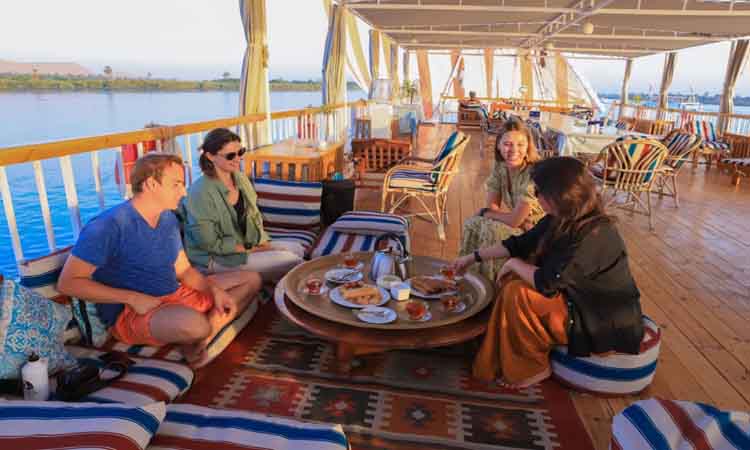
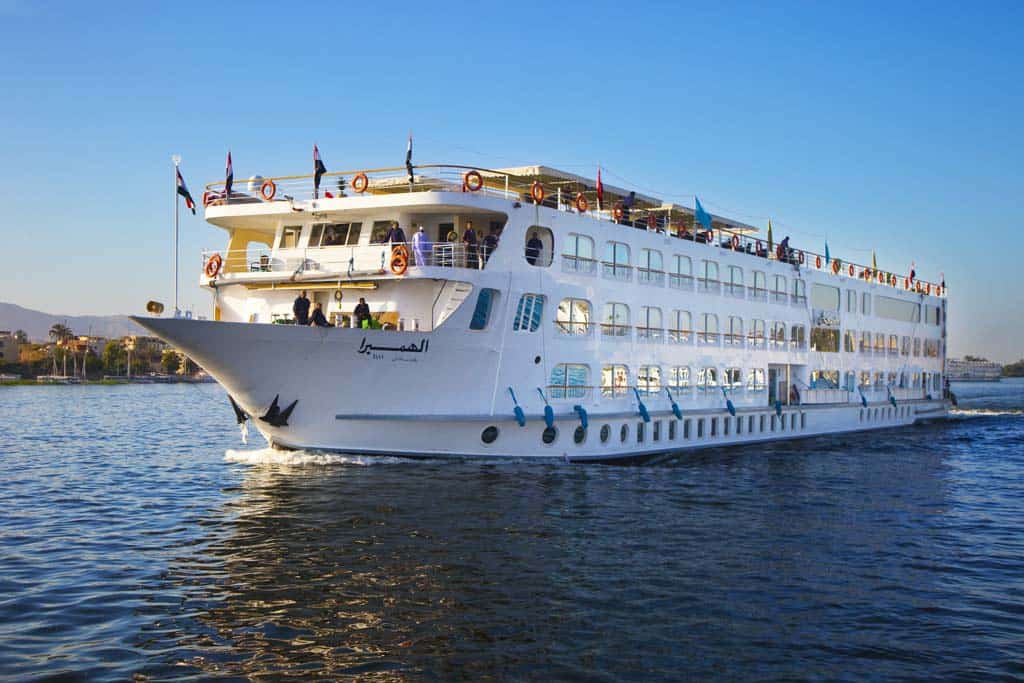
Modern dahabiya boats keep that old-world elegance but add the comforts a 21st-century traveler expects: en-suite cabins, sun decks with daybeds, a small dining room where every meal feels like a private chef's table, and crews who know your name by the second day. Most dahabiyas carry somewhere between 6 and 20 cabins, which means you're sharing the boat with a handful of other couples and families rather than hundreds of tourists rotating through a buffet line.
This is the single biggest difference between a dahabiya Nile cruise and a standard Nile river cruise on one of the large motor vessels that dominate the Luxor-to-Aswan route. The big boats are efficient, comfortable, and perfectly fine for a first visit to Egypt. But they are not intimate. They cannot sail silently. They cannot pull over and moor at a quiet riverbank with no other boat in sight, just because the light is beautiful and someone wants to take a photograph. A dahabiya can.
Why Couples Choose a Private Dahabiya Over a Standard Nile Cruise Ship
If you're comparing a Nile cruise honeymoon on a large ship versus a private dahabiya charter, here's what tends to tip the decision for most couples.
1. Genuine Privacy, Not Just a Private Cabin
On a large Nile cruise ship, "privacy" usually means you have your own room. On a dahabiya, privacy means the entire upper deck might belong to you and three other couples for the whole trip. Some travelers go further and book a full private dahabiya charter, taking over the entire boat for just their group — a popular choice for honeymooners, milestone anniversaries, and small destination weddings in Egypt.
2. The Pace Is Completely Different
Large ships run on a tight schedule because they need to keep hundreds of passengers entertained and fed on a fixed itinerary. Dahabiyas drift with the current more than they motor against it, which naturally slows everything down. Sailing days are quiet, contemplative, and almost meditative. You'll find yourself reading on a daybed, sipping karkade (hibiscus tea) as the riverbank slides by, and genuinely not checking your phone — not because you're told to disconnect, but because there's simply nothing pulling you back to it.
3. Access to Places the Big Boats Can't Reach
Because dahabiyas are smaller and have a shallower draft, they can moor at riverbanks and visit sites that the larger cruise ships skip entirely — quiet temples, local villages, and lesser-known Ptolemaic and Greco-Roman ruins along the Nile between Esna and Edfu that rarely see a tour bus. For couples who want their honeymoon in Egypt to feel like a discovery rather than a checklist, this matters enormously.
4. The Food Feels Personal
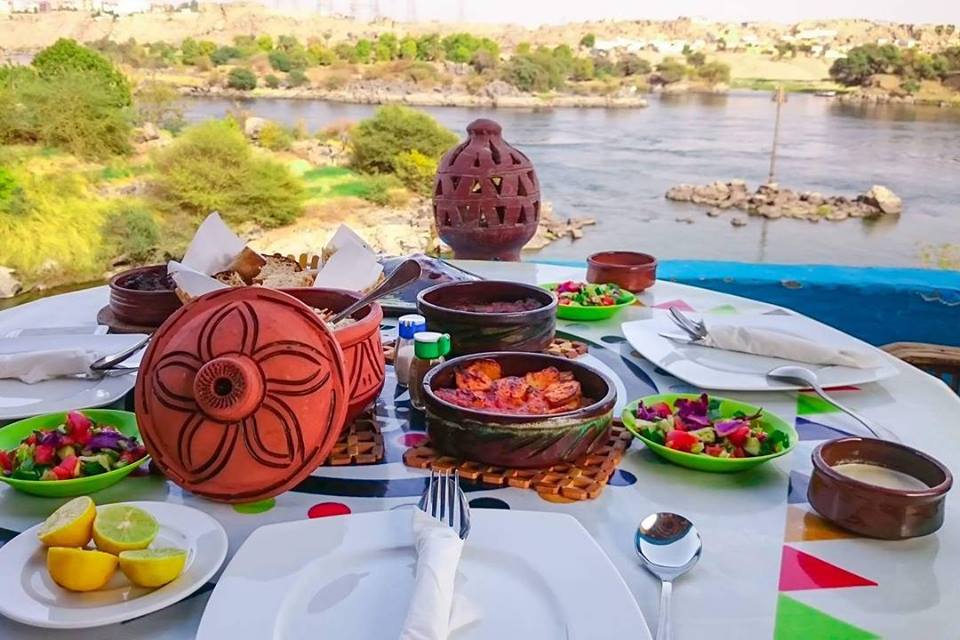
Most dahabiyas operate with a single chef cooking for a handful of guests rather than a buffet line feeding hundreds. Meals are often served family-style on deck, sometimes candlelit, sometimes built around whatever fresh produce the crew picked up at a riverside market that morning. It's the difference between hotel catering and a dinner party — and it shows.
5. Sunset and Sunrise Become the Main Event
Without a packed schedule of shows, lectures, and shore excursions every few hours, dahabiya days leave space for the river itself to be the entertainment. Sunset on the Nile from the deck of a dahabiya, a glass of Egyptian wine in hand, is the image most travelers carry home — and it's the moment that turns "we went to Egypt" into "we fell in love with Egypt."
The Best Dahabiya Nile Cruise Route: Luxor to Aswan (or Aswan to Luxor)
Almost every luxury dahabiya itinerary runs along the same magical stretch of river between Luxor and Aswan, typically over 4, 5, or 7 nights. This is the most temple-dense, history-rich section of the entire Nile, and it's compact enough to explore at a slow sailing pace without feeling rushed.
Typical Highlights Along the Way
Luxor — The trip usually begins or ends here, giving you time to explore Karnak Temple, the Temple of Luxor lit up at night, and the Valley of the Kings on the West Bank, where pharaohs including Tutankhamun were laid to rest.
Esna — A quieter Nile-side town, home to the beautifully preserved Temple of Khnum, recently restored to reveal vivid original ceiling colors that most travelers never expect to see this well-preserved.
Edfu — Stop here for the Temple of Horus, one of the best-preserved temples in all of Egypt, often reached from the dahabiya by a short, scenic horse-drawn carriage ride through the town.
Kom Ombo — Home to a striking double temple dedicated to Sobek, the crocodile god, and Haroeris, sitting directly on the riverbank in a way that makes for one of the most photogenic stops of the entire cruise.
Gebel Silsila — A dramatic sandstone gorge with ancient quarry sites and ancient rock-cut shrines, frequently visited only by dahabiya passengers since larger ships can't moor there.
Aswan — The journey's other bookend, where you can visit the Temple of Philae on its own island, the unfinished obelisk, and take a felucca ride around Elephantine Island at sunset — arguably the single most romantic hour you'll spend in Egypt.
Some operators also offer extended dahabiya itineraries that include Abydos and Dendera, two extraordinary temple complexes slightly off the main river route, for travelers who want an even deeper, less-touristed experience.
What a Day on a Luxury Dahabiya Actually Looks Like
People often ask what there is to "do" on a sailing boat for several days, half-expecting boredom. In practice, the days fill themselves naturally:
- Wake to coffee or tea brought to the upper deck as the sun rises over the eastern riverbank
- A relaxed breakfast spread, often featuring fresh-baked bread, local cheese, and seasonal fruit
- A morning excursion to a temple or village, usually before the midday heat sets in
- Return to the boat for lunch while it gently sails or motors to the next mooring point
- A long, unhurried afternoon for reading, swimming if the boat has a small plunge pool, or simply watching Egypt drift by
- Tea time on deck, often with homemade pastries
- An evening excursion if the schedule calls for one, or simply sunset drinks on deck
- A multi-course dinner, frequently candlelit, sometimes followed by traditional music or stories from the crew under the stars
It is, in the best possible sense, an itinerary built around doing very little — and feeling enormously enriched anyway.
Best Time to Book a Dahabiya Nile Cruise
Egypt's Nile cruise season runs roughly from October through April, when daytime temperatures are pleasant and evenings on deck are comfortable rather than scorching. The cooler months of December and January are the most popular — and the most heavily booked — for honeymooners and couples celebrating anniversaries, so early reservations matter, especially for full private dahabiya charters, which have very limited cabin counts to begin with.
Shoulder months like October, November, March, and April offer a sweet spot: lovely weather, slightly easier availability, and often more attractive rates, while still avoiding the intense Egyptian summer heat. Summer dahabiya cruises do exist and can be booked at a discount, but the midday heat means excursions are typically limited to early morning and late afternoon.
If your trip has any flexibility at all, booking 3 to 6 months ahead for peak season — and ideally even earlier if you want a full boat buyout for a honeymoon or wedding — will give you far more choice over cabin category and exact departure dates.
How Much Does a Luxury Dahabiya Nile Cruise Cost?
Pricing varies by boat, season, cabin category, and length of cruise, but here's a general sense of what to expect:
- Mid-range dahabiya cruises typically run from around $250 to $450 per person per night, usually including full board, daily excursions, and an English-speaking Egyptologist guide
- High-end luxury dahabiyas with larger suites, private plunge pools, and a higher staff-to-guest ratio often range from $450 to $900+ per person per night
- Full private charters of an entire dahabiya for a small group, family, or honeymoon couple are priced per boat rather than per cabin and can represent excellent value when split across several couples or a small wedding party
What's typically included: all meals, soft drinks, a private Egyptologist guide, entrance fees to listed sites, and onboard accommodation. What's often extra: alcoholic beverages, tipping for the crew and guide (an important part of Egyptian hospitality culture), spa treatments if offered, and any add-on excursions like hot air balloon rides over Luxor.
Compared to a one-night stay at a five-star resort in many destinations, a multi-night dahabiya cruise with all meals, a private guide, and daily excursions to UNESCO World Heritage sites often represents remarkable value for what is, genuinely, a once-in-a-lifetime experience.
Why a Dahabiya Cruise Is the Ultimate Egypt Honeymoon Idea
If you're searching for honeymoon ideas in Egypt, or trying to decide between a Red Sea resort, a Cairo and pyramids itinerary, or a Nile cruise, here's the honest answer: many couples do all three, but the dahabiya is consistently the part of the trip they talk about years later.
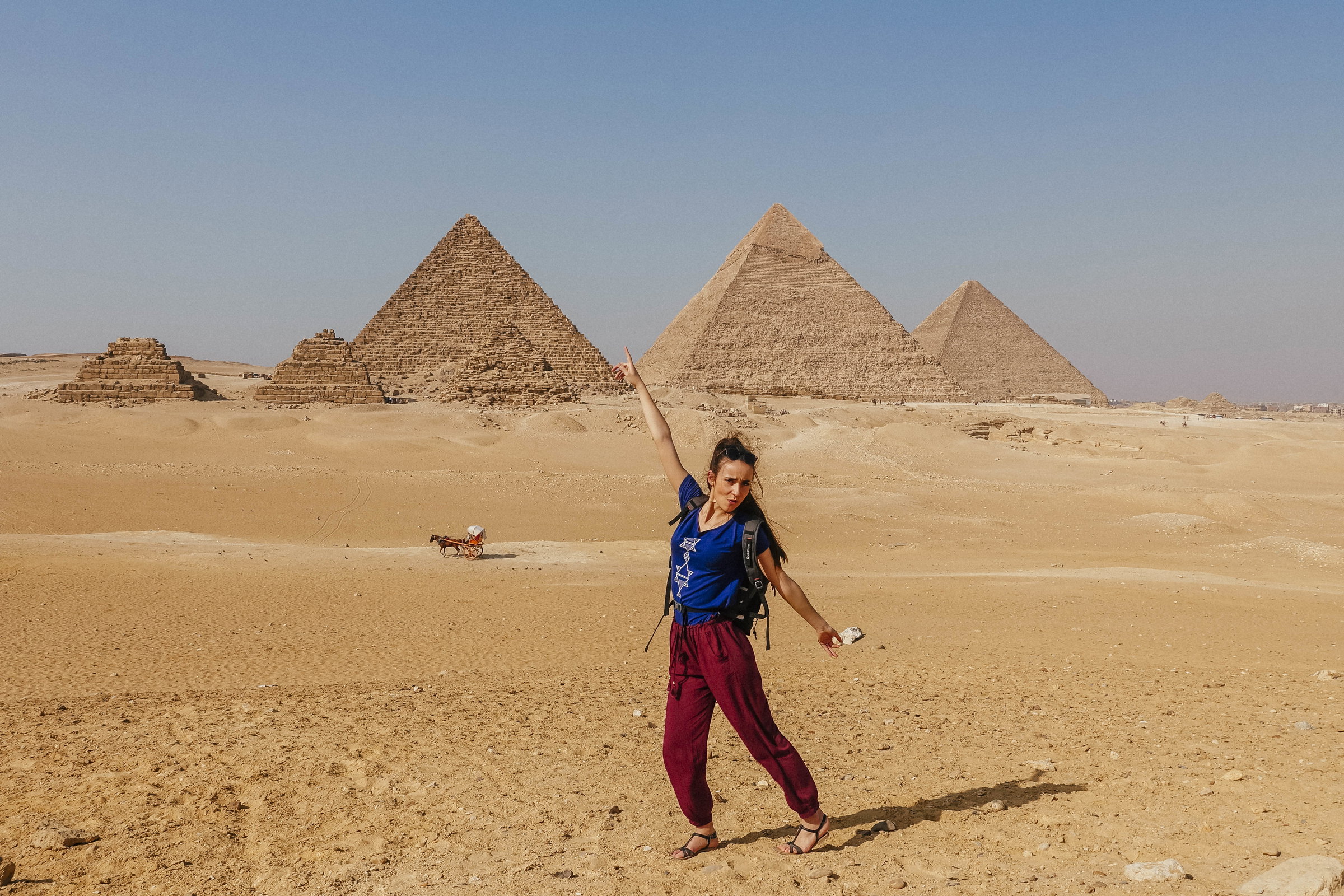
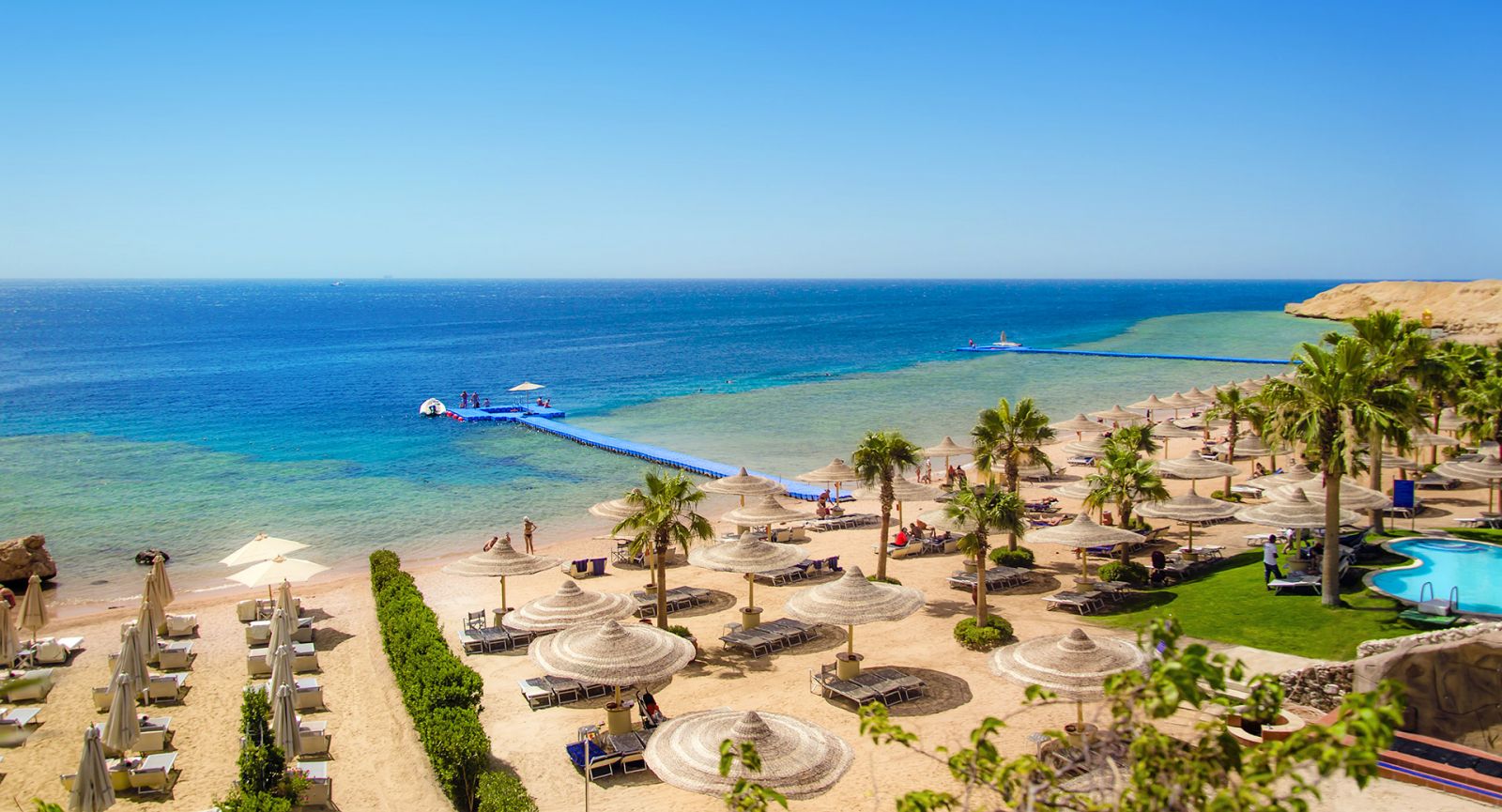
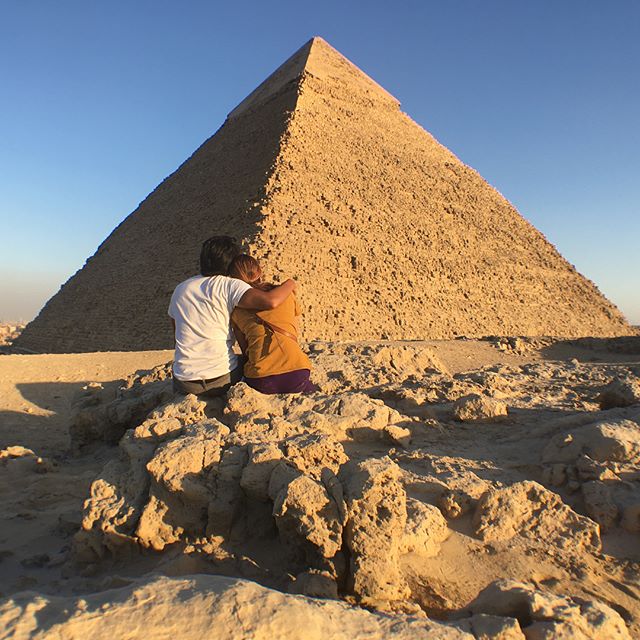
A Cairo stay gives you the pyramids of Giza and the Egyptian Museum. A Red Sea extension in Hurghada or Marsa Alam gives you beach time and diving. But the dahabiya gives you something neither of those can: days of uninterrupted time together, away from crowds, surrounded by some of the most extraordinary ancient history on Earth, with no real schedule to keep except sunrise and sunset.
It's also, quietly, one of the best settings for a proposal anywhere in the world. The combination of dramatic temple backdrops, candlelit dinners on deck, and a crew that will happily help arrange a surprise — flowers in the cabin, a special cake, a quiet moment timed perfectly with sunset over Philae Temple — makes it a favorite among travel planners who specialize in engagement trips.
Frequently Asked Questions About Dahabiya Nile Cruises
What is the difference between a dahabiya and a regular Nile cruise ship? A dahabiya is a small, traditional sailing boat carrying roughly 6 to 20 cabins, while a standard Nile cruise ship is a large motor vessel carrying anywhere from 100 to over 300 passengers. Dahabiyas sail more quietly, dock at quieter locations, and offer a far more intimate, personalized experience with smaller crews and more flexible schedules.
Is a dahabiya cruise comfortable, or is it very basic and rustic? Modern luxury dahabiyas are genuinely comfortable, with en-suite bathrooms, air conditioning, comfortable beds, sun decks with daybeds, and high-quality dining. They keep the traditional sailing-boat charm on the outside while offering full modern comfort inside the cabins.
How many nights should a dahabiya Nile cruise be? Most dahabiya itineraries run 4, 5, or 7 nights between Luxor and Aswan. A 5-night cruise is the most popular choice, offering enough time to see the major temples without feeling rushed, while still leaving room in a wider Egypt itinerary for Cairo or the Red Sea.
Can we book a private dahabiya just for the two of us? Yes. Many operators offer full dahabiya charters, where a couple, family, or small group books the entire boat exclusively. This is an especially popular option for honeymoons, anniversaries, proposals, and small destination weddings in Egypt, since it guarantees complete privacy for the entire trip.
Is it safe to travel to Egypt and take a Nile cruise right now? Egypt's Nile Valley, including Luxor and Aswan, remains one of the most visited and well-secured tourist regions in the country, with millions of international travelers cruising the Nile every season. As with any international trip, it's worth checking current travel advisories from your home country before departure, but the Luxor–Aswan dahabiya route has long been considered one of the safest and most established tourism corridors in Egypt.
What should we pack for a dahabiya Nile cruise? Lightweight, breathable clothing for daytime excursions, a light layer or shawl for cooler evenings on deck, comfortable walking shoes for temple visits, a sun hat, sunscreen, and a swimsuit if your dahabiya has a plunge pool. Modest clothing is appreciated when visiting religious and historic sites.
Do dahabiya cruises include excursions and a guide? Yes, virtually all dahabiya cruise packages include daily guided excursions led by a licensed, English-speaking Egyptologist, along with entrance fees to the listed temples and historic sites on the itinerary.
Is a dahabiya cruise suitable for honeymoons and anniversaries? It's one of the most highly recommended honeymoon and anniversary experiences in Egypt. The combination of privacy, romantic onboard dining, stunning temple visits, and unforgettable sunsets over the Nile makes it a favorite among couples celebrating a special occasion.
How far in advance should we book a dahabiya cruise? For peak season (December and January), booking 4 to 6 months ahead is strongly recommended, especially for full private charters or specific cabin categories. For shoulder season months like October, November, March, and April, 2 to 3 months ahead is usually sufficient, though earlier is always better for the best selection.
What's the best route — Luxor to Aswan or Aswan to Luxor? Both directions visit the same sites, so the choice mostly comes down to your onward travel plans. Many travelers prefer ending in Aswan, since it pairs nicely with a flight onward to Abu Simbel or back to Cairo, while sailing downstream from Aswan to Luxor can occasionally allow for slightly more time under sail with the current.
Ready to Book Your Dahabiya Nile Cruise?
A luxury dahabiya cruise is not just a way to see Egypt's ancient temples — it's a way to experience the Nile the way travelers did over a century ago, at a pace that lets the country's history and beauty actually settle in. For couples planning a honeymoon, an anniversary trip, or simply the most romantic chapter of a longer Egypt itinerary, very few experiences compare to waking up on a private sailing boat, coffee in hand, watching the riverbank slowly come to life.
Cabin availability on luxury dahabiyas is limited by design, and the best departure dates in peak season fill up well in advance. If a dahabiya Nile cruise sounds like the romantic escape you've been picturing, the next step is simple: check availability for your travel dates, compare full charter options if you want complete privacy, and reserve your cabin before the season's best dates are gone. Reach out to Ayad World Tours today to start planning your dahabiya cruise itinerary, get a personalized quote, and secure your dates on the Nile.

 English