A Local’s Guide to Luxor: Top Sights, Food & Hidden Corners
The Morning Luxor Taught Me to Slow Down
It’s 5:10 a.m. on the West Bank, and the only sounds are a rooster arguing with the call to prayer and the hiss of propane burners somewhere in the dark. I’m standing in a dusty field, holding a paper cup of sweet tea that’s already gone lukewarm, watching a hot air balloon swell like a lung taking its first breath.
I’ve lived around Luxor long enough to know every shortcut to Karnak. I know which tea vendor waters down his karkade and which one doesn’t. And still, every few months, this city does something to me. That morning the sun lifted over the Theban hills, and the whole valley turned the colour of honey. The Nile was a ribbon of hammered silver. Below us, a farmer in a grey galabeya was leading a donkey along the same canal his grandfather probably walked.
Three thousand years of history, and somebody still had to get the sugarcane to market by seven.
That’s the thing nobody tells you about Luxor. The guidebooks hand you the pharaohs. The city gives you the people living in their shadow.
If you’re planning a Luxor trip, you’ll find plenty of lists of “the top 10 temples.” This guide is different. I’m going to walk you through Luxor the way I’d walk a cousin who flew in from abroad: where to go, when to go, what to skip, what to eat, how much things roughly cost, and the corners most visitors never see. If you want a head start on organising the logistics, the Luxor tours and excursions collection at Ayadworld is a handy place to see how day trips and private tours are typically structured.
Let’s start with why this place deserves your time.
Why Luxor Is Unlike Anywhere Else on Earth
Luxor sits on the site of ancient Thebes, the capital of Egypt during much of the New Kingdom (roughly 1550–1070 BC). It’s often called the world’s greatest open-air museum, and for once the cliché is fair. UNESCO inscribed Ancient Thebes with its Necropolis on the World Heritage List in 1979, covering the temples of Karnak and Luxor on the East Bank and the royal tombs and funerary temples on the West Bank.
Here’s what makes it special, in plain numbers:
| Fact | Figure |
|---|---|
| Karnak Temple complex area | roughly 100 hectares (about 250 acres) |
| Columns in Karnak’s Hypostyle Hall | 134, arranged in 16 rows |
| Height of the tallest central columns | around 21 m (69 ft) |
| Length of the Avenue of Sphinxes | approx. 2.7 km (1.7 miles) |
| Numbered tombs in the Valley of the Kings | 60+ (KV1 onward) |
| Height of the Colossi of Memnon | roughly 18 m (59 ft) each |
| Distance Luxor → Aswan | about 210 km (130 miles) |
| Distance Luxor → Cairo | about 500 km by air line, longer by road |
| Average winter daytime high | 22–26 °C (72–79 °F) |
| Average summer daytime high | 40 °C+ (104 °F+) |
Luxor is also compact. You can cross the river in ten minutes. You can see an extraordinary amount in three or four days without ever feeling like you’re on a conveyor belt, something you can’t say about Cairo or Giza on a busy day.
The best way to understand the city is to know it’s two cities split by water.
East Bank vs. West Bank: Understanding Luxor’s Two Worlds
The ancient Egyptians built the city of the living on the east, where the sun rises, and the city of the dead on the west, where it sets. That logic still shapes your trip today.
| East Bank | West Bank | |
|---|---|---|
| Ancient role | City of the living, temples to the gods | City of the dead, royal tombs and mortuary temples |
| Atmosphere | Busy, urban, souq and cafés | Rural, sugarcane fields, village life |
| Main sights | Karnak, Luxor Temple, Luxor Museum | Valley of the Kings, Hatshepsut, Medinet Habu |
| Best for | Evening strolls, food, shopping | Sunrise, quiet, photography |
| Hotels | Wider range, closer to restaurants | Smaller guesthouses, more peaceful |
| Transport | Easy to walk and taxi | Needs a driver, bike or tuk-tuk for distances |
Most first-timers split their days: temples on the East Bank in the early morning or late afternoon, tombs on the West Bank when the light is still gentle. Do it the other way around in July, and you’ll learn very quickly why locals nap at noon.
The East Bank: Where the Gods Still Feel Close
Karnak Temple: Go Early, Go Slowly
If you only have time for one temple, make it Karnak. It’s not really a temple. It’s a city of temples built, rebuilt and argued over by about thirty pharaohs across roughly 2,000 years.
Walk in through the avenue of ram-headed sphinxes and don’t rush to the famous bit. The Great Hypostyle Hall, with its forest of 134 colossal papyrus-shaped columns, is the moment people gasp. But the real pleasure is what comes after: the obelisk of Hatshepsut rising above the ruins, the Sacred Lake where priests purified themselves, the scarab statue that visitors still circle for luck.
My local tips for Karnak:
- Arrive at opening time. Tour buses start rolling in by mid-morning, and the Hypostyle Hall is a very different place at 8:00 a.m. than at 11:00.
- Bring water and a hat. There’s more shade in the hall than outside it, but not much.
- Give it at least 2.5 hours. Three is better. Photographers can easily spend half a day.
- Look up. Traces of the original paint still survive on some ceiling and column sections. Most people stare straight ahead and miss them.
- Consider returning at night. The Sound and Light show is a bit theatrical, but standing in the dark among those columns has a certain magic, especially if you’ve already seen the place in daylight.
For historical context, the Britannica entry on Luxor offers a solid, neutral overview of the city’s development from Thebes to today.
The Avenue of Sphinxes: Egypt’s Reopened Road
For centuries this ceremonial road, about 2.7 km long, linking Karnak to Luxor Temple, lay half-buried under homes and streets. It was formally reopened in November 2021 with a grand parade that was broadcast worldwide. It’s now a walkable pathway lined with sphinx statues, and walking it at golden hour is one of the loveliest free-flowing experiences in the city.
It was used during the annual Opet Festival, when statues of the gods Amun, Mut and Khonsu were carried in a procession from Karnak to Luxor Temple. Imagine the music, the incense, the crowds. Then notice a boy on a bicycle ringing his bell behind you. That’s Luxor: the past never quite leaves the room.
Luxor Temple: The One That Glows at Night
Luxor Temple is smaller than Karnak but arguably more romantic. It was largely built under Amenhotep III and expanded by Ramesses II, who added the great pylon and the colossal statues you see at the entrance. The single remaining obelisk is a quiet tragedy: its twin now stands in the Place de la Concorde in Paris.
Visit near sunset. When the floodlights turn on, the sandstone goes gold, then amber, then a deep rosy brown. Around the temple you’ll see something rare: a mosque (the Abu al-Haggag mosque) built on top of the ancient structure, still in use today. Pharaonic columns, a medieval mosque, and a modern city, all layered on each other like pages in one very long book.
Luxor Museum and the Mummification Museum
Skip these at your own risk. Luxor Museum is small, beautifully curated, and well lit. It’s one of those rare places where you can look at a statue properly rather than over forty shoulders. The Mummification Museum, on the corniche, explains the process in a simple, fascinating way, and it’s a great stop for families because kids actually get it.
Both are indoors and air-conditioned, which makes them perfect for the hottest part of the day.
The West Bank: Valleys, Queens and Quiet Mornings
The Valley of the Kings: What to Expect (and What to Skip)
Hidden in the dry hills behind Deir el-Bahari, the Valley of the Kings holds the rock-cut tombs of pharaohs from the 18th to the 20th dynasties. The most famous is KV62, Tutankhamun’s tomb, discovered by Howard Carter in November 1922.
Here’s my honest take: Tutankhamun’s tomb is small, and it requires a separate ticket. The boy king’s treasures are in the Egyptian Museum in Cairo and the Grand Egyptian Museum complex. If you’re short on budget, you could reasonably skip it and spend that ticket on a more impressive tomb.
The standard Valley of the Kings ticket usually admits you to three tombs from those open on a rotating basis. Pricey tombs such as Seti I’s (KV17) and Nefertari’s (in the Valley of the Queens) require special tickets, and are well worth it if painting is your thing.
Which tombs are usually worth your three slots?
- Ramesses VI (KV9): a dazzling astronomical ceiling and richly coloured passages.
- Ramesses III (KV11): famous for its “Harpers’ Tomb” scenes and long, vivid corridors.
- Ramesses IV (KV2): relatively simple, but the colours are remarkably fresh.
- Merenptah (KV8): a deep, dramatic descent with a huge burial chamber.
Open tombs change over time as conservation work rotates them, so check the official Egyptian Ministry of Tourism and Antiquities site for current information. For anyone who really loves the details, the Theban Mapping Project is a superb, university-run database with plans and photographs of every numbered tomb.
Practical points:
- Photography rules in tombs have changed over the years, so ask at the entrance.
- Tombs can be hot, humid and crowded. If you’re claustrophobic, pick the wider ones.
- The Valley has little shade. Go first thing in the morning.
Hatshepsut’s Temple at Deir el-Bahari
Look at this temple from the road and you’ll swear it was designed last year. Its clean terraces and long ramps, set against a limestone cliff, feel startlingly modern. It was built around 1470 BC for Hatshepsut, one of Egypt’s few female pharaohs, who ruled for roughly two decades.
The story is better than the stone. After her death, many of her images were chiselled away, probably by a successor who wanted to erase her from the record. Walk the colonnades and you’ll see the damage: faces hacked out, cartouches scratched off. Yet she’s one of the most talked-about rulers in Egyptian history. Erasure didn’t work.
Go early, before the heat and tour groups arrive. In winter, the soft light on the cliff face is worth getting up for.
Medinet Habu: My Favourite Temple (Don’t Tell Karnak)
If you ask me what’s the most underrated big monument in Luxor, I’ll say Medinet Habu without hesitation. It’s the mortuary temple of Ramesses III, and it’s astonishingly well preserved. Painted reliefs still hold colour on their ceilings and walls, the carvings are deep and sharp, and the scenes of battle against the Sea Peoples are some of the most dramatic in Egypt.
And the best part? It’s rarely crowded. Many visitors come for the Valley of the Kings, snap a photo of the Colossi of Memnon, and head back to their hotel. Medinet Habu waits quietly, sometimes with only a few other travellers, a couple of guards and a whole lot of silence.
The Colossi of Memnon: A Quick Stop, Not a Long One
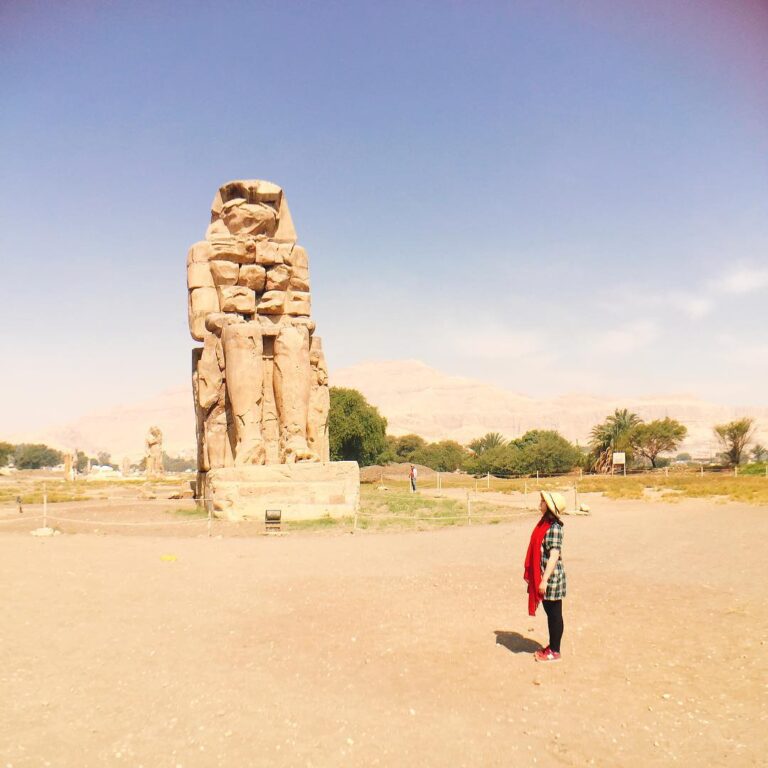
Two enormous seated statues of Amenhotep III, each roughly 18 m tall, guard the road on the West Bank. They once stood in front of what was probably the largest mortuary temple in Egypt, now almost entirely vanished. It’s a free stop and takes ten minutes, so combine it with a visit to Medinet Habu or the Ramesseum.
Deir el-Medina: The Village of the Tomb Builders
This might be my favourite place for anyone who likes people more than pyramids. Deir el-Medina was the home of the artisans who built and decorated the royal tombs. They left behind ostraca (pottery shards with notes, jokes, shopping lists and complaints about work), and archaeologists have even found records of what’s often described as one of the world’s earliest recorded labour strikes, during the reign of Ramesses III.
The small tombs here, such as Sennedjem’s, are vivid and intimate, painted in bright yellows, blues and reds. You’re not looking at a god-king’s final journey. You’re looking at a craftsman’s idea of a good afterlife: fields of wheat, a loving family, plenty to eat.
Tombs of the Nobles: Where the Colours Are Best
The Tombs of the Nobles on the hillside of Sheikh Abd el-Qurna are less visited than the Valley of the Kings, yet some are more beautiful. Sennefer’s “Tomb of the Vineyards” has a ceiling painted with grapevines, so lifelike you almost reach for a bunch. Rekhmire’s tomb shows foreign tribute-bearers and craftsmen at work, a bit like an ancient documentary.
If you’re a photographer, an art lover, or someone who gets bored of kings, put these on your list.
The Hot Air Balloon Question: Is It Worth It?
Short answer: yes, if you love early mornings and don’t mind a little queasiness at the thought of heights.
Luxor is one of the most famous places in the world for hot air ballooning, thanks to its flat landscape, calm dawn winds and extraordinary views. A flight typically lasts 30 to 45 minutes and drifts over the Nile, farmland and temples as the sun rises. Pickup is usually well before dawn, often around 4:30 to 5:30 a.m. depending on the season.
| Option | Approx. price per person* | Duration | Best for |
|---|---|---|---|
| Standard group balloon flight | roughly $50–$120 | 30–45 min flight, 3–4 hrs total | Most visitors, couples, solo travellers |
| Private or small-group basket | considerably higher | Same | Honeymooners, proposals, photography |
| Skip the balloon, watch from the ground | Free | n/a | Budget travellers, nervous flyers |
*Prices fluctuate with season and operator, so treat these as rough ranges and confirm before booking.
Local advice on ballooning:
- Flights depend on weather and wind. If one is cancelled, ask about rescheduling the next morning.
- Choose operators with a visible safety record and licensed pilots. A bargain price is not worth a sketchy burner.
- Don’t plan the balloon on your last morning if you have an early flight. Weather delays happen.
- Bring a light jacket in winter. It’s colder at dawn than people expect.
If you’d rather not wrestle with the logistics yourself, it can be smart to book a package that includes hotel pickup and the ferry crossing. You’ll find examples of that approach on the Luxor excursions page, where trips are grouped by theme and duration.
On the Nile: Felucca, Ferry, or Full Cruise?
You can’t understand Luxor without spending time on the river. But how you do it depends on your mood and your budget.
| Option | Typical cost | Time | Vibe |
|---|---|---|---|
| Public local ferry (East ↔ West Bank) | very cheap, a few Egyptian pounds | 10 min | Authentic, crowded, fun |
| Felucca sunset sail | about $5–$15 per boat hour, negotiable | 1–2 hrs | Romantic, breezy, simple |
| Private motor boat | higher | flexible | Photography, families |
| Luxor–Aswan Nile cruise (3–4 nights) | mid-range to luxury | 3–4 days | Slow travel, all-inclusive comfort |
My personal favourite is a late-afternoon felucca ride, just before sunset. The sail catches the last light, the breeze drops, someone in the boat starts clapping a rhythm, and for a moment the whole river feels like it’s holding its breath.
If you’ve got four or five days, a Nile cruise from Luxor to Aswan (stopping at Edfu and Kom Ombo) is a lovely way to connect two very different Upper Egypt cities. The route covers roughly 210 km. Compared with the road, it’s slower but far more beautiful. You wake up each morning with a different bit of riverbank outside your window.
Day Trips Worth Your Time
Luxor is a great base. Here are the best nearby excursions, with approximate distances.
| Destination | Distance from Luxor | What you’ll see | Verdict |
|---|---|---|---|
| Dendera Temple | approx. 60 km north | Temple of Hathor with a famous astronomical ceiling | Excellent, well preserved |
| Abydos | approx. 160 km north | Temple of Seti I with exquisite reliefs, Osireion | Stunning for art lovers, long day |
| Esna | approx. 55 km south | Temple of Khnum, fine columns, ongoing restoration | Short, easy stop |
| Edfu | approx. 115 km south | Temple of Horus, one of Egypt’s best preserved | Highly recommended |
| Kom Ombo | approx. 165 km south | Double temple of Sobek and Horus | Beautiful on the riverbank |
| Aswan | approx. 210 km south | Philae, Nubian villages, granite quarries | Worth a separate stay |
Dendera and Abydos make a beautiful pairing for a single day, though it’s a long drive. Edfu and Kom Ombo are common stops on the road toward Aswan. If you want to maximise time, a private driver with an English-speaking guide is usually much better value than trying to arrange it all piecemeal.
What to Eat in Luxor: A Local’s Table
Luxor food is Upper Egyptian food: generous, rustic, and big on bread, grains, stewed vegetables and grilled meat. The best meals are often the unglamorous ones.
Dishes you shouldn’t leave without trying:
- Ful medames and taameya. Fava beans and Egyptian falafel (made with fava, not chickpeas), the beloved breakfast of millions. Eat it with fresh aish baladi, the local flatbread.
- Koshari. Rice, lentils, pasta and crispy onions, topped with tomato sauce and a spicy vinegar-garlic kick. It’s cheap, filling and wonderfully chaotic.
- Fatta. Layers of rice, crisp bread and garlicky tomato-vinegar sauce, often topped with lamb or beef. Pure comfort.
- Hamam mahshi. Stuffed pigeon, a regional speciality, usually stuffed with seasoned rice or freekeh. It’s an acquired texture, but locals love it.
- Molokhia. A silky green soup made from jute leaves, served with rice or bread, often with rabbit or chicken.
- Grilled meats and kofta. Smoky, juicy, best eaten with salad, tahini and warm bread.
Drinks and sweets:
- Karkade (hibiscus tea). Served hot in winter, ice-cold in summer. The signature drink of the south.
- Sugarcane juice (asab). Pressed fresh in front of you. The West Bank cane fields are visible all around.
- Egyptian tea with mint. Strong, sweet, constantly refilled.
- Basbousa and konafa. Sticky semolina cake and crunchy shredded-pastry dessert. Ask for them fresh, not from yesterday’s tray.
Where to Eat: The Local Logic
Rather than give you a list of venues that will change by next year, here’s how to choose:
- Eat where Egyptians eat. A packed koshari shop at lunchtime is always a better sign than an empty restaurant with a photo menu.
- Ask your hotel host or guide where their family eats. Not a recommendation for tourists, a recommendation for people they love.
- Try a rooftop at sunset. East Bank rooftop cafés look across to the Theban hills as the sun goes down. Order a tea and just watch.
- Seek out a home-cooked meal. On the West Bank, some local families host visitors for lunch. It’s among the most memorable experiences you can have, and it feels less like a “tourist activity” than being welcomed into someone’s life.
- Check prices before ordering. Ask if the menu has prices, or confirm the total before you sit. It avoids awkwardness later.
| Meal type | Approx. cost per person (local-style) | Approx. cost (tourist-oriented restaurant) |
|---|---|---|
| Breakfast: ful, taameya, tea | very low | moderate |
| Lunch: koshari or grilled meat | low to moderate | moderate to high |
| Dinner: multi-course with drinks | moderate | high |
Eating locally can easily cost a fraction of what you’d pay at a hotel-adjacent restaurant. That’s not to say hotel restaurants are bad, only that variety saves money and gives you better stories.
Hidden Corners Most Visitors Never See
This is the part I love writing. After the big temples, here are the small places I’d take a friend.
1. Banana Island at Golden Hour
A short boat ride from the West Bank takes you to a green island with banana plantations, mango trees and tiny footpaths. It’s not an archaeological site, just a breather: quiet, shady, a little musical with birdsong. Have a fresh juice and a slow wander.
2. The Gurna Village Lanes
Take a walk through the old village of Gurna on the West Bank. Many of its residents once lived on the hillside above the tombs. Today, the community is smaller, but you can still find alabaster workshops, little cafés and artists’ studios. Buy something directly from the craftsperson if you can, and be willing to bargain with a smile.
3. The Temple of Seti I at Qurna
Often overlooked, this mortuary temple has delicate reliefs and a calm, almost private atmosphere. If you’re already on the West Bank, it’s a quick stop and a pleasant break from crowds.
4. Mut Temple Precinct at Karnak
Tucked south of the main Karnak complex, this site is quiet and atmospheric, with numerous statues of the lioness goddess Sekhmet. It requires a separate ticket in some seasons, and not everyone bothers. You’re almost always alone.
5. Luxor’s Local Souq (Not Just the Tourist Strip)
Wander the lanes behind the main tourist stretch to see the working market: spices piled in cones, tailors with ancient sewing machines, butchers, sugar-sellers, a man who repairs shoes in a doorway the width of a wardrobe. It’s loud and slightly overwhelming, in the very best way.
6. Sunset at Medinet Habu or the West Bank Fields
Many people watch sunset from the Nile. Fewer see the Theban hills turn gold from a canal path among sugarcane. Ask your driver to stop somewhere with a view and just sit.
7. Dawn Walk on the Corniche
Before the heat and the horse carriages, the East Bank corniche is peaceful. Fishermen cast their nets, old men play backgammon, and the river hasn’t yet woken up. It costs nothing and you’ll remember it.
Where to Stay: East Bank or West Bank?
This question comes up all the time, and my honest answer is: it depends on the traveller you are.
| Traveller type | Best choice | Why |
|---|---|---|
| First-timer, short stay | East Bank | Easy access to restaurants, temples, transport |
| Couples seeking peace | West Bank | Quiet gardens, sunrise views, rural charm |
| Families with kids | East Bank | More dining options, easier logistics |
| Photographers | West Bank | Dawn light, fields, hills, balloons overhead |
| Budget backpackers | Either | Both have budget guesthouses |
| Luxury seekers | East Bank (riverfront) | Grand hotels, spas, Nile-view suites |
Many travellers enjoy splitting their stay: two nights on the West Bank for the countryside feel, two on the East Bank for the buzz. It doesn’t take long to switch, and it makes the trip feel richer.
What to look for in a hotel:
- Air conditioning that works (non-negotiable from May to September).
- A shaded pool or rooftop to rest during the hottest hours.
- A host who can arrange early-morning transport and a reliable guide.
- Recent guest reviews from the last six months, not just the last six years.
How Many Days Do You Really Need in Luxor?
| Trip length | What you can realistically see | My honest take |
|---|---|---|
| 1 day | Karnak and Valley of the Kings, or Karnak and Luxor Temple | Rushed but doable |
| 2 days | East Bank + West Bank highlights | Minimum I’d recommend |
| 3 days | Add Medinet Habu, Deir el-Medina, a felucca, a balloon flight | The sweet spot |
| 4 days | Add Dendera/Abydos or Edfu/Kom Ombo | Ideal for curious travellers |
| 5+ days | Add Aswan, Nubian villages, slow mornings | Luxor starts to feel like home |
If you can spare three nights, take them. Luxor rewards people who slow down. The magic happens between the monuments: the tea in a village café, a conversation with your driver, the felucca captain who sings off-key and doesn’t care.
Best Time to Visit Luxor: Month-by-Month
Luxor is one of the hottest cities in Egypt, and timing matters more than you might think.
| Season | Months | Typical daytime temp | Crowds | Verdict |
|---|---|---|---|---|
| Peak winter | Dec–Feb | 22–26 °C | High | Perfect weather, cool nights, book early |
| Spring | Mar–Apr | 28–35 °C | Medium | Warm, good balance |
| Early summer | May–Jun | 36–40 °C | Low | Hot, start at sunrise |
| High summer | Jul–Aug | 40 °C+ | Lowest | Very hot, best for budget and quiet |
| Autumn | Sep–Oct | 33–38 °C | Medium | Cooling, shoulder season |
| Late autumn | Nov | 27–30 °C | Medium-high | Lovely, increasingly popular |
My recommendation: late October through March is the comfort zone. If you travel in summer, plan outdoor sights between 6:00 and 10:00 a.m., rest from noon to 4:00 p.m., then head out again in the evening. It’s not a hardship. It’s how the locals live.
Do you need to book ahead? In peak season (late December especially), yes. Balloons, Nile cruises, popular hotels and licensed private guides can fill up weeks in advance. Booking early also tends to secure better rates, which matters if you’re travelling as a family or group.
Private Tour, Group Tour, or Go Solo? A Frank Comparison
I’m a fan of independent travel, but Luxor isn’t a place where going fully solo always saves you money or stress. Here’s how the three styles compare.
| Go solo | Small-group tour | Private guided tour | |
|---|---|---|---|
| Cost | Lowest on paper | Medium | Highest per person (but fair split among 2–4) |
| Flexibility | Total | Fixed schedule | Fully customisable |
| Insider knowledge | Depends on research | Good | Excellent with a licensed Egyptologist |
| Hassle with transport | High | Low | Very low |
| Time wasted queuing/haggling | More | Less | Least |
| Best for | Repeat visitors, backpackers | Social travellers | Families, couples, photographers, first-timers |
If you’re travelling with children, older parents, or you simply have limited days, a private tour with hotel pickup, an air-conditioned vehicle and a licensed guide can change the whole trip. A guide doesn’t just read the hieroglyphs. They know when to enter a temple to dodge crowds, which tomb is actually open this week, and where to find a decent lunch without the markup.
When you’re comparing operators, look for these signals:
- Licensed Egyptologist guides (ask to see credentials).
- Transparent pricing with what’s included (entrance fees, lunch, transport, tips).
- Recent, detailed reviews from real travellers, not just star ratings.
- Flexible cancellation terms.
- Clear communication before you pay. If answers are vague now, they’ll be vague later.
For a sense of how Luxor day trips and private excursions can be packaged, the Ayadworld Luxor excursions listing is a good place to compare itineraries side by side before you decide what suits your pace and budget.
Sample Itineraries You Can Steal
The 2-Day “Highlights” Plan
Day 1 (East Bank): Karnak at opening → lunch near the souq → rest → Luxor Temple at sunset → dinner on a rooftop.
Day 2 (West Bank): Valley of the Kings → Hatshepsut’s Temple → lunch → Colossi of Memnon → Medinet Habu in late afternoon.
The 3-Day “Slow and Deep” Plan
Day 1: Balloon at dawn → breakfast → Karnak → afternoon rest → Avenue of Sphinxes at golden hour.
Day 2: Valley of the Kings → Deir el-Bahari → Deir el-Medina → Tombs of the Nobles → felucca at sunset.
Day 3: Luxor Museum → Mummification Museum → souq wander → Luxor Temple at night.
The 4-Day “Curious Traveller” Plan
Take the 3-day plan and swap Day 3 for a private excursion to Dendera and Abydos. Return to Luxor Temple on the last night, when the lights come on, to say goodbye properly.
Rough Budget Guide (Per Person, Per Day)
Prices change often, and entry fees for foreign visitors are set in Egyptian pounds and have been revised several times. Use these as ballpark figures only.
| Style | Daily spend range (USD, approx.) | What it covers |
|---|---|---|
| Backpacker | $30–$60 | Budget room, local food, ferry, a couple of site tickets |
| Mid-range | $80–$160 | Comfortable hotel, mixed dining, a guide for part of the day |
| Comfort / private | $180–$350 | Nice hotel, private driver and guide, one or two special experiences |
| Luxury | $400+ | Riverfront five-star, balloon, private cruise or dinner |
Always check the latest official ticket prices on the Ministry of Tourism and Antiquities site before you budget, since sites sometimes add or change fees for special tombs or exhibits.
Practical Know-How From Someone Who Lives Here
What to wear. Light, loose, breathable clothes. Cover your shoulders and knees, partly out of respect, partly to avoid sunburn. A wide hat, good sunglasses and sturdy sandals or trainers matter more than fashion.
Sun and water. Carry more water than you think you need. In summer, the heat at midday can be dangerous. Take it seriously.
Tipping (baksheesh). It’s part of the economy. A few small notes handed to a guard who points out a hidden detail, a driver, or a restroom attendant is normal and appreciated. Carry small bills.
Bargaining. Expected in souqs and with felucca captains, but do it with humour. Agree on the price before you start, not after.
Common annoyances. You’ll meet persistent sellers. A calm “la, shukran” (no, thank you) with a smile works better than ignoring them. Most vendors are just trying to make a living in a tough tourism market.
Safety and health. Luxor is a heavily visited, well-policed destination. Sensible travel habits apply: keep valuables out of sight, drink bottled or filtered water, wash your hands, and check your government’s latest travel guidance before departure. If your stomach is sensitive, ease into street food.
Photography. Rules vary. Some tombs and museums charge for camera use or restrict flash. Always ask. Never photograph local people, especially women and children, without permission.
Respect. Luxor is a living community, not just an archaeological park. Dress modestly in villages, and avoid public displays of affection.
Mistakes I See Travellers Make (So You Don’t)
- Visiting everything between 10 a.m. and 2 p.m. That’s the hottest, busiest window. Start early.
- Cramming too much into a single day. Temples blur after the third one. Leave space.
- Paying for every special tomb ticket. Pick one or two. The standard tombs are impressive.
- Skipping the West Bank villages. The temples are the headline. The people are the story.
- Not booking balloons or cruises in advance during peak season. Sold-out signs are real.
- Ignoring the Nile. Even an hour on a felucca changes your sense of the city.
- Treating Luxor as a quick add-on to Cairo. It deserves at least two nights.
Frequently Asked Questions About Visiting Luxor
How many days do I need in Luxor?
Two full days is the minimum for the major highlights. Three to four days lets you add a hot air balloon, a felucca ride, lesser-known sites and a day trip to Dendera or Abydos without rushing.
Is Luxor worth visiting compared with Cairo or Aswan?
They offer different experiences. Cairo has the pyramids and a huge museum scene, Aswan has Nubian culture and a laid-back river atmosphere, and Luxor has the greatest concentration of temples and tombs, plus a slower pace. If you love ancient history, Luxor is hard to beat.
What is the best month to visit Luxor?
November to February offers the most comfortable weather, with daytime temperatures roughly 22–26 °C. March and October are good shoulder months. Summer is very hot, but cheaper and quieter.
Is Luxor safe for tourists?
Luxor is a long-established tourist destination with a strong security and tourism-police presence at major sites. As with any travel, stay alert, use licensed guides and drivers, and check your government’s current travel advisory before booking.
Do I need a guide in Luxor?
Not legally, but I strongly recommend one for at least Karnak and the West Bank. A knowledgeable Egyptologist turns blank stone into story, and saves you time, confusion and over-priced detours.
How much does a private tour in Luxor cost?
Prices vary by season, group size and inclusions, but a private full-day guided tour with transport typically falls in a broad range of around $60–$150 per day for the group or per person depending on what’s covered. Always confirm whether entrance tickets, lunch and tips are included.
How early should I book a hot air balloon?
In high season (December to February), book as early as you can, ideally several weeks ahead. In low season you can often book a few days before, but weather cancellations make some flexibility wise.
Can I visit the Valley of the Kings and Karnak on the same day?
Yes, but it’s a full day. Start with the West Bank (Valley of the Kings) at opening, return for lunch and a rest, then visit Karnak in the late afternoon when it’s cooler. Or the reverse: Karnak at dawn, the tombs after lunch.
Is the Avenue of Sphinxes open to visitors?
Yes, since its formal reopening in 2021 the route linking Karnak and Luxor Temple has been presented as a walkable heritage route. Opening conditions and ticketing can change, so check current information locally.
What should I wear in Luxor?
Lightweight, loose, breathable clothing covering shoulders and knees, along with a hat, sunglasses, sunscreen and comfortable closed or sturdy shoes. Bring a light layer for chilly winter mornings and balloon flights.
What’s the best way to get between the East and West Banks?
Public ferries are the cheapest and most local, private motorboats are faster and flexible, and the bridge south of the city is an option by road (taxi or private car). Ferries are great for a short, atmospheric crossing.
Can I do Luxor as a day trip from Hurghada, Sharm El Sheikh or Cairo?
Technically yes, via long drives or flights, but it’s exhausting and you’ll spend more time in transit than at the sites. If you can, stay at least one night.
Is Luxor good for families with children?
Absolutely. Kids love boats, balloons (check minimum age and height rules with operators), the Mummification Museum and the scale of Karnak. Plan early mornings and plenty of water and shade breaks.
Where can I find reliable information on archaeological sites?
Start with UNESCO’s Ancient Thebes with its Necropolis page, the Egyptian Ministry of Tourism and Antiquities website, the Theban Mapping Project, and Britannica’s overview of Luxor. These give dependable background, plans and historical context.
Should I choose a Nile cruise or stay in a hotel in Luxor?
If you want to see Luxor, Edfu, Kom Ombo and Aswan with minimal packing and unpacking, a cruise is wonderful. If you prefer flexibility and deeper time in Luxor itself, stay in a hotel and add day trips.
One Last Story Before You Go
On my last evening of last winter’s season, I took a friend, a first-time visitor, to Luxor Temple just as the lights came up. She’d been quiet all day, a little overwhelmed, the way people get when history stops being an abstract idea and becomes a wall you can touch.
We sat on a low stone wall while the call to prayer drifted across the river and a group of local teenagers argued about football a few metres away. She looked up at the columns, then at the teenagers, then at me, and said, “It doesn’t feel like a museum. It feels like somebody’s home.”
That’s it. That’s Luxor.
It’s not a place you tick off. It’s a place you borrow for a while, and it leaves a little of itself in you. Come early, stay a bit longer than planned, eat something you can’t pronounce, say yes to the tea. And when the sun rises over the hills of Thebes, let yourself be quiet for a minute.
When you’re ready to plan, start by exploring options on the Luxor excursions page, pick the pace that suits your travel style, and give yourself time to be surprised.
Sources and Further Reading